Plant Overview
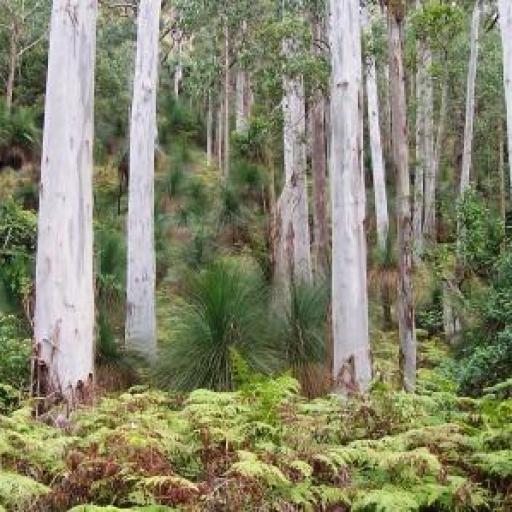
Known as the Sydney Blue Gum, this Australian icon is a true forest giant, reaching dizzying heights in its native coastal habitats. With its shimmering blue-grey bark and soaring, straight trunk, it is a favorite for both timber and large-scale landscaping. In the wild, it forms the backbone of lush forests, providing a high-rise sanctuary for a variety of unique wildlife.
🔍 How to Identify
- 🌳 Bark Contrast: The lower part of the trunk features a "stocking" of rough, persistent brownish bark, while the upper trunk is spectacularly smooth and shed in strips to reveal grey-white or blue-tinged patches.
- 🍃 Lush Foliage: The adult leaves are dark green, glossy, and lance-shaped (sickle-like), often measuring up to 15 centimeters long with a distinct paler underside.
- 🌼 Buds and Blooms: It produces clusters of seven to eleven small white flowers that look like tiny pom-poms, emerging from woody, bell-shaped fruit known as "gumnuts."
🏡 In Your Garden
- 🏗️ Space Requirements: This is not a plant for small suburban yards or indoor pots. Due to its massive height and rapid growth, it needs significant room to stretch its roots and canopy far away from power lines or house foundations.
- 💧 Moisture Lover: Unlike some desert-dwelling Eucalypts, the Sydney Blue Gum thrives in fertile, moist soils. It is a "thirsty" tree that helps stabilize soil in areas with high rainfall but can be sensitive to prolonged, harsh droughts when young.
⚠️ Safety & Toxicity
- 🐾 Pet Safety: Like most Eucalyptus species, the leaves contain concentrated essential oils (eucalyptol) that are toxic to dogs, cats, and horses if ingested in significant quantities.
- 🧒 Child Safety: While the medicinal scent is pleasant, the leaves and fallen fruit should not be eaten. Ingestion can cause stomach upset, nausea, or dizziness.
✨ Fun Fact
- 🐨 Koala Cafeteria: The Sydney Blue Gum is one of the "primary browse" species for Koalas in New South Wales. These notoriously picky eaters specifically seek out its nutrient-rich leaves, making this tree a vital pillar for their survival in the wild!

Detailed Care Instructions
To grow Eucalyptus Saligna plants, you can follow these steps:
- Obtain seeds or saplings: You can either collect seeds from existing plants or purchase them from a nursery. Alternatively, you can also buy young saplings.
- Choose a suitable location: Eucalyptus Saligna plants require full sun and well-drained soil. Select a location with enough space for the tree to grow to its full size, as this species can reach heights of 50 to 70 feet (15-21 meters).
- Prepare the soil: Eucalyptus plants prefer soil that is slightly acidic to neutral. Ensure that the soil is well-drained by adding organic matter or sand if needed.
- Plant the seeds or saplings: If you are using seeds, sow them in seed trays or pots filled with seed-raising mix. Cover the seeds lightly with soil and water gently. If you are using saplings, dig a hole roughly twice the size of the root ball and place the sapling in the hole. Backfill the hole with soil, ensuring that the plant is upright.
- Water regularly: Eucalyptus Saligna plants require regular watering, especially during the first year. Water deeply, but avoid waterlogging the soil. Once established, they can tolerate drought conditions.
- Provide regular care: Regularly weed around the plant to reduce competition for nutrients. Spread mulch around the base to retain soil moisture and prevent weed growth.
- Prune if necessary: Eucalyptus Saligna plants often require pruning to shape them or remove dead or damaged branches. Prune during the dormant winter season to avoid stressing the tree.
- Protect from pests and diseases: Monitor for common pests such as eucalyptus leaf beetles or eucalyptus gall wasps. Treat infestations promptly and seek advice from a local professional if necessary.
- Be patient: Eucalyptus Saligna plants can take several years to reach their full size and maturity. Regular care and patience are essential for their successful growth.
Remember to check with your local gardening center or agricultural extension office for specific guidance tailored to your region's climate and conditions.

Place in a bright room that is sun drenched almost all day. Or directly in a south-facing window.

To water this plant, thoroughly saturate the soil around the base of the tree until the water begins to pool on the surface. Avoid getting water on the foliage as this can lead to fungal growth. Check the soil moisture level regularly and water as needed to keep the soil consistently moist, but not soggy. In hot, dry conditions, the plant may require more frequent watering. It is also important to ensure good drainage to prevent waterlogged roots. Additionally, during periods of drought or low rainfall, consider providing supplemental irrigation to keep the tree healthy.
- Choose a balanced, slow-release fertilizer with equal amounts of nitrogen, phosphorus, and potassium.
- Apply the fertilizer evenly around the base of the plant, taking care not to touch the trunk or leaves.
- Use a rake or hoe to work the fertilizer into the top layer of soil.
- Water the plant immediately after fertilizing to help the nutrients soak in.
- Repeat the application every 6-8 weeks during the growing season (spring and summer) for optimal growth and health.
The ideal soil for the Eucalyptus Saligna plant should be well-drained and rich in organic matter. The soil pH should be slightly acidic, with a range of 6.0-6.5. It should also be deep and loose with good aeration to enable proper root development and growth. The soil should be able to hold sufficient moisture without becoming waterlogged or compacted. A mix of sandy loam and organic matter, such as compost, peat moss, or aged manure, is recommended for the proper growth and health of the Eucalyptus Saligna plant.
To propagate this plant, you will first need to collect mature seeds from the parent plant. The seeds should be sown in well-draining soil that is kept moist but not waterlogged. It is important to ensure that the soil remains consistently moist during the germination period, which can take several weeks.
Once the seedlings have emerged, they should be separated and transplanted into individual containers. It is recommended to use a potting mix that contains a high percentage of perlite or vermiculite, as this will help to ensure good drainage.
While the seedlings are growing, it is important to keep them in a warm, bright location with indirect sunlight. They should be watered regularly, but be careful not to overwater as this can lead to root rot.
As the seedlings develop, they can be gradually acclimated to outdoor conditions by placing them outside in a sheltered location for a few hours each day. Once they are strong enough, they can be transplanted into their permanent location in the garden.
It is important to note that Eucalyptus Saligna plants can grow quite large, so be sure to give them plenty of space to reach their full potential. They also require well-draining soil and regular pruning to maintain their shape and promote healthy growth.








