Plant Overview
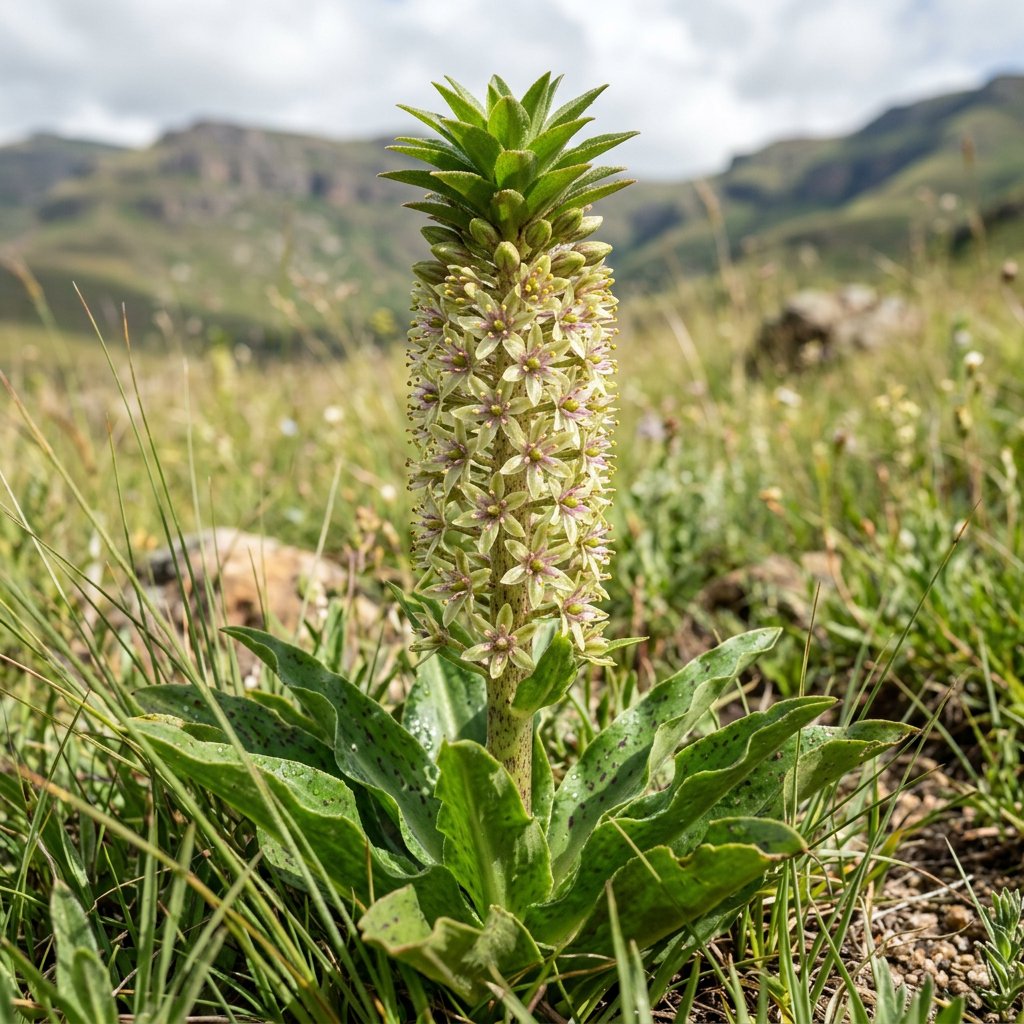
Known affectionately as the Pineapple Lily, this South African gem brings a tropical, quirky aesthetic to any garden. Its unique inflorescence—a dense column of starry blossoms topped with a crown of leafy bracts—perfectly mimics a miniature pineapple. In its native habitat, it is a rugged survivor, often found clinging to rocky grasslands and mountain slopes.
🔍 How to Identify
- 🍍 The Topknot: A cluster of small, leaf-like bracts (the "coma") sits at the very peak of the flower spike, creating the iconic pineapple appearance.
- ✨ Starry Blooms: The central stalk is packed with dozens of waxy, star-shaped flowers that usually range from pale lime-green to creamy white.
- 🌊 Wavy Foliage: The base forms a lush rosette of long, strap-shaped leaves that often feature distinctively crinkled or "undulate" edges.
🏡 In Your Garden
- 🏺 Bulb Stability: These plants grow from large, fleshy bulbs. They prefer to stay undisturbed once settled; frequently transplanting them can stress the root system and delay flowering for a season.
- ☀️ Summer Thirst: While they are surprisingly hardy, they require consistent moisture during their summer growing peak to produce those tall, heavy flower spikes.
- 💤 Winter Dormancy: As a deciduous bulb, the foliage will yellow and die back completely in the winter. Don't worry—the plant isn't dead; it is simply "hibernating" to store energy for the spring.
⚠️ Safety & Toxicity
- 🚫 Status: Toxic to ingest.
- 🐾 Details: The Pineapple Lily contains saponins and other compounds that are harmful to humans and pets. If chewed or swallowed by cats or dogs, it can cause significant stomach upset, vomiting, and lethargy. It is best placed in a spot away from curious nibblers.
✨ Fun Fact
The genus name Eucomis is derived from the Greek words eukomos, which literally translates to "beautifully haired," referring to the tuft of leaves at the top of the flower.

Detailed Care Instructions
To grow Eucomis Autumnalis, also known as the Pineapple Lily, follow these steps:
- Choose a planting location: Eucomis Autumnalis prefers full sun to partial shade. Select a spot in your garden that receives at least 4-6 hours of direct sunlight per day.
- Prepare the soil: Eucomis Autumnalis prefers well-draining soil. Amend heavy or clay soils by adding organic matter like compost or peat moss to improve drainage.
- Plant the bulbs: Plant Eucomis Autumnalis bulbs in spring, after the last frost date in your area. Dig a hole that is 6-8 inches deep and place the bulb with the pointed end facing up. Space the bulbs 6-8 inches apart. Cover the bulbs with soil, firming it gently around them.
- Watering: Water the newly planted bulbs thoroughly after planting and keep the soil consistently moist, but not waterlogged, during the growing season. Eucomis Autumnalis prefers evenly moist soil. Reduce watering in winter when the plant is dormant.
- Fertilizing: Apply a balanced, slow-release fertilizer or a high-phosphorus fertilizer (such as one with an NPK ratio of 10-20-10) in early spring, and repeat every 4-6 weeks during the growing season. Follow the package instructions for dosage.
- Mulching: Apply a layer of organic mulch, such as compost or wood chips, around the plant to help retain moisture and prevent weed growth. Leave a small gap around the base of the plant to avoid rotting.
- Support: As the plant grows, it may benefit from staking or support to prevent bending or breaking of the flower spikes. Use plant stakes or a trellis for support, if needed.
- Protect from frost: Eucomis Autumnalis is not frost-tolerant. If you live in an area with cold winters, consider lifting the bulbs before the first frost and storing them in a cool, dry place until spring.
- Division: Every few years, you can divide Eucomis Autumnalis bulbs to promote healthier growth and increased flowering. Dig up the bulbs in early spring before they start actively growing, separate them into smaller clumps, and replant them at the same depth as before.
With proper care, your Eucomis Autumnalis plant should thrive and produce stunning blooms throughout the growing season.

Place in a bright room that is sun drenched almost all day. Or directly in a south-facing window.

To properly water this specific plant, it is important to pay attention to the environment in which it is placed. The soil should be kept consistently moist, but not waterlogged, which can cause root rot. When watering, aim to saturate the soil, but be careful to avoid getting water on the leaves, which can cause damage and increase the risk of disease. The plant should be allowed to drain thoroughly after watering to prevent standing water. In general, it is best to water this plant deeply and less frequently rather than shallowly and often. It is also important to adjust watering frequency based on factors such as temperature, humidity, and rainfall, as these can all impact the plant's water needs.
To fertilize the plant, use a balanced fertilizer with equal amounts of nitrogen, phosphorous, and potassium. Apply the fertilizer once a month during the growing season, from spring to fall. Avoid over-fertilizing as it could damage the roots and cause the plant to produce weak growth. Water the plant regularly after fertilizing to help the nutrients reach the roots.
The ideal soil to use with this plant is a well-draining soil that is rich in organic matter. It should be moist but not waterlogged, as overly wet soil can cause root rot and other problems. A slightly acidic soil with a pH of around 6.0 is preferable. Adding compost or other organic matter can help to improve soil structure and fertility, while also promoting healthy root growth. It is also important to choose a soil that is free of weeds, pests, and other contaminants that could harm the plant. Regular fertilization with a balanced fertilizer can also help to promote healthy growth and flowering.
Eucomis Autumnalis is a plant species that can be propagated through the use of offsets. The offsets are small plantlets that form at the base of the parent plant. To propagate this plant, first, the offsets need to be carefully removed from the parent plant by gently pulling them away or by using a sharp, sterile knife.
The next step involves preparing a suitable potting mix and planting the offsets in it. The potting mix should be light and well-draining, containing a mix of soil, sand, and peat moss. The offsets should be planted at a depth of about half an inch and should be watered thoroughly.
Once planted, the pot should be placed in a warm, brightly lit location, but not in direct sunlight. It is important to keep the soil moist but not wet during the propagation process. Over time, the offsets will grow and develop their own root systems, at which point the plants can be transplanted to larger pots or planted directly in the garden.
Propagation of Eucomis Autumnalis through offsets is an easy and reliable way to produce new plants that are genetically identical to the parent plant. With proper care, the newly propagated plants will grow strong and healthy, producing beautiful foliage and flowers year after year.








