Plant Overview
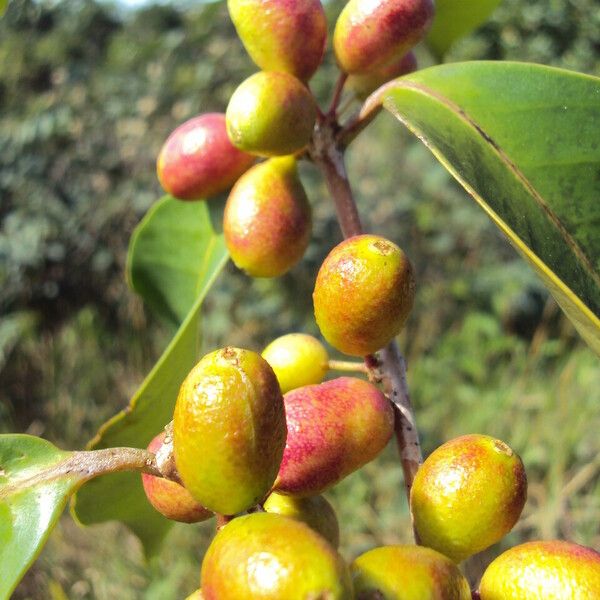
Known as the Cambucá-peixoto or Restinga Cherry, this Brazilian native is a hidden gem of the Atlantic Forest. A member of the Myrtle family, it is a close relative of the famous Jabuticaba and Pitanga. In its native habitat, it plays a vital role in coastal ecosystems, providing food for birds and bees while standing strong against salty ocean breezes.
🔍 How to Identify
- 🍃 Glossy Foliage: The leaves are opposite, elliptical, and have a distinct waxy sheen that helps the plant reflect intense sunlight.
- 🌸 Star-Burst Blooms: It produces small, delicate white flowers with a "puffball" appearance due to their numerous long, protruding stamens.
- 🍒 The Berries: The fruit is small and round, transitioning from green to a vibrant yellow, and finally to a deep purple-black when fully ripe.
🏡 In Your Garden
- 🏖️ Coastal Champion: This is a "Restinga" specialist, meaning it is highly tolerant of salt spray and sandy soils. It is an excellent choice for seaside landscaping where other fruit trees might struggle.
- 🐢 Slow & Steady: Don't expect a forest overnight. This species has a relatively slow growth rate and focuses on building a sturdy, woody structure. It prefers to stay put, as its root system can be sensitive to frequent transplanting.
- 💧 Humidity Lover: While it can tolerate some drought once established, it produces the best fruit and lushest leaves when kept in a humid environment with consistent soil moisture.
⚠️ Safety & Toxicity
- 🟢 Edible Fruit: The berries are safe for human consumption. As the name astringens suggests, the fruit is high in tannins and can be quite tart or "puckery" if eaten before it is fully soft and ripe.
- 🐾 Pet Safety: There are no known toxicities for cats or dogs regarding Eugenia astringens. However, like most tart fruits, eating large quantities of unripe berries might cause mild digestive upset in sensitive pets.
✨ Fun Fact
The specific epithet astringens comes from the Latin word for "binding." This refers to the tannins in the fruit that cause your mouth tissues to contract—the same dry, "furry" sensation you experience when drinking a very strong cup of black tea or a dry red wine!

Detailed Care Instructions








