Plant Overview
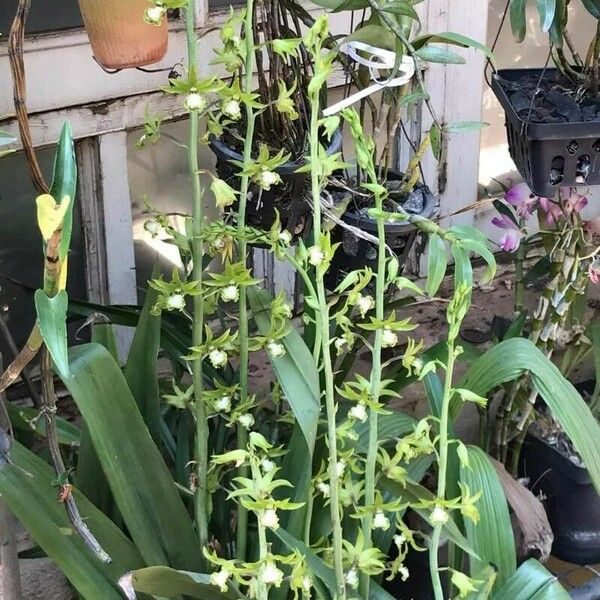
Often called the "Andaman Ground Orchid," this elegant species is a terrestrial treasure hailing from the tropical shores of the Andaman Islands and across Southeast Asia. Unlike many common store-bought orchids that cling to trees (epiphytes), this hardy traveler is a "geophyte," preferring to keep its feet firmly in the soil. It is celebrated by collectors for its tall, airy flower spikes that look like a swarm of tiny, exotic butterflies dancing in the breeze.
🔍 How to Identify
- 🍃 The Foliage: It features long, narrow, sword-shaped leaves that can reach up to 20 inches in length, giving the plant a lush, grass-like appearance even when not in bloom.
- 🧅 The Pseudobulbs: Look at the base; you will find greenish, cone-shaped "bulbs" that sit partially above the soil. these act as water reservoirs for the plant.
- 🌸 The Blooms: The flowers are pale lime-green or yellowish, but the showstopper is the "lip" (labellum), which is intricately veined with deep maroon or purple lines.
🏡 In Your Garden
- 🏝️ The Coastal Connection: Because it originates from sandy, coastal regions, it hates "wet feet." In a home setting, it requires a very porous mix of fine bark, perlite, and a little peat. If the soil stays soggy, the pseudobulbs will rot quickly.
- 💤 The Dormancy Cycle: This orchid has a "secret life." It is deciduous, meaning it may drop its leaves and go completely dormant after flowering. Many beginners mistakenly throw the plant away, thinking it has died, when it is actually just resting!
- ☀️ Light Needs: It craves bright, filtered light. Too much direct sun will scorch the grass-like leaves, but too little will prevent those tall flower spikes from forming.
⚠️ Safety & Toxicity
- ✅ Safe Status: Eulophia andamanensis is generally considered non-toxic to humans and common household pets like cats and dogs.
- 🪴 Choking Hazard: As with any ornamental plant, keep it out of reach of curious toddlers or puppies, as the fibrous leaves or firm pseudobulbs could pose a choking risk if chewed.
✨ Fun Fact
In some parts of its native range, this orchid is so resilient that it is found growing in the harsh, salty sands just a few meters away from the ocean—a feat that would kill almost any other orchid species!

Detailed Care Instructions







