Plant Overview
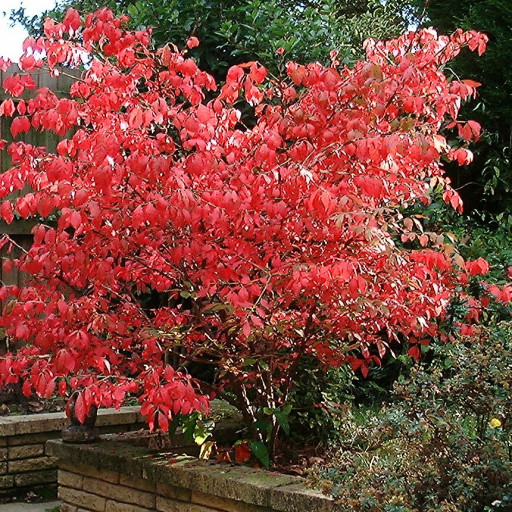
Known as the "Burning Bush," this shrub is the undisputed drama queen of the autumn landscape. Native to Northeast Asia, it is famous for its seasonal transformation from a modest green hedge into a vibrant, glowing pillar of scarlet as temperatures drop. Gardeners have long favored it for its architectural structure and its "tough-as-nails" attitude toward urban pollution and poor soil.
🔍 How to Identify
- 🪵 Winged Bark: The most distinct feature is the "wings"—prominent, flat, corky ridges that run along the length of the square-ish stems.
- 🍃 Elliptic Leaves: Simple, fine-toothed, oval leaves that sit opposite each other on the branch; they are dark green in summer and neon-red in fall.
- 🫐 Split Capsules: In late autumn, small purple seed pods split open to reveal fleshy, bright orange-red seeds that hang on the branches like tiny ornaments.
🏡 In Your Garden
- ☀️ Sun for Glow: While it is a versatile survivor that can handle shade, the iconic "burning" red color only reaches its full potential if the plant receives plenty of direct sunlight.
- ✂️ Structural Versatility: Because it responds exceptionally well to pruning, it is often used as a formal hedge, though it can grow into a large, multi-stemmed specimen if left to its own devices.
- 🚧 Environmental Note: Be aware that in many parts of North America, this plant is classified as invasive because birds spread the seeds into local forests, where it can crowd out native species.
⚠️ Safety & Toxicity
- 🚫 Toxic Status: All parts of the plant are considered toxic to humans, cats, dogs, and horses.
- 🤢 The Risk: Ingestion of the leaves or berries can lead to severe gastrointestinal distress, including vomiting and diarrhea. In large quantities, the alkaloids can cause more serious cardiac or neurological symptoms. Keep it out of reach of curious toddlers and pets.
✨ Fun Fact
The species name alatus is Latin for "winged." These strange, corky ridges on the bark aren't just for show; some botanists believe they help the plant shed heavy snow or deter insects from climbing the branches!

Detailed Care Instructions
| Color | Yellow-Green |
| Soil Ph | Slightly Acidic |
| Toxicity | Toxic |
| Soil Type | Average, Moderately Moist |
| Bloom Time | Spring |
| Plant Type | Deciduous Shrub |
| Mature Size | 15 To 20 Feet Tall And 8 To 12 Feet Wide |
| Native Area | China, Japan, Korea, Eastern Russia |
| Sun Exposure | Full Sun To Part Shade |
| Hardiness Zones | 4-8 |
To grow Euonymus Alatus, also known as Winged Euonymus or Burning Bush, follow these steps:
- Planting: Choose a location with well-draining soil and full sun to partial shade. Dig a hole that is about double the width and depth of the plant's root ball. Place the plant in the hole, ensure it is level with the surrounding ground, and backfill with soil.
- Watering: Water the plant regularly, especially during dry periods, to keep the soil evenly moist. Avoid overwatering, as it can lead to root rot. Mulching around the base of the plant can help retain moisture.
- Fertilizing: Apply a balanced slow-release fertilizer in early spring, following the package instructions. This will provide adequate nutrients for growth and flowering.
- Pruning: Prune the Euonymus Alatus in late winter or early spring before new growth begins. This shrub can be trimmed to maintain its desired shape and size. Remove any dead, damaged, or diseased branches regularly.
- Winter protection: In colder regions, where temperatures drop below freezing, the plant may benefit from winter protection. Apply a layer of mulch around the base of the plant to insulate the roots. You can also wrap the plant with burlap to prevent winter damage.
- Pests and diseases: Watch out for pests such as scale insects or aphids, which can be treated with insecticidal soap or horticultural oil. Additionally, euonymus plants are susceptible to fungal diseases like powdery mildew. Ensure proper air circulation and avoid overhead watering to prevent these issues.
- Propagation: Euonymus Alatus can be propagated through seeds or by taking semi-hardwood stem cuttings in late summer or early autumn. Root the cuttings in a well-draining medium and keep them in indirect light until they develop roots.
Remember to check with your local gardening center or extension office for specific care recommendations tailored to your region.

Place in a bright room that is sun drenched almost all day. Or directly in a south-facing window.

Euonymus Alatus should be watered at the base of the plant to avoid getting the leaves and stems wet. Overwatering should be avoided, as it can cause root rot. The soil should be allowed to dry out slightly before watering again. A good rule of thumb is to water when the top inch of soil is dry to the touch. It is also important to ensure good drainage to prevent water from pooling around the roots. The plant may need more frequent watering during hot, dry weather or if it is planted in a container.
To fertilize this plant, first ensure that it is planted in well-drained soil that is moist but not waterlogged. In the early spring, apply a slow-release fertilizer that is formulated for shrubs and trees. Follow the manufacturer's instructions for application rates, as over-fertilizing can harm the plant. Repeat the application in the mid-summer if desired. Alternatively, you can also use a liquid fertilizer diluted in water and applied directly to the soil around the plant. Avoid getting fertilizer on the leaves, as this can cause burning. Water the plant thoroughly after fertilizing to help the nutrients reach the roots.
The Euonymus Alatus plant prefers well-draining soil that is rich in organic matter. It is recommended to use a mixture of loam soil, peat moss, and sand or perlite to achieve a light, well-aerated mixture that will allow the roots to grow and expand easily. The soil pH should be slightly acidic, ranging between 5.5 and 6.5. It is important to avoid heavy clay soil or soil that retains water as this can cause root rot and damage to the plant. Regular watering and a layer of mulch can help maintain the moisture levels in the soil and support healthy growth.
Euonymus Alatus plant can be propagated through stem cuttings in the summer. First, choose a healthy stem and cut it at a 45-degree angle. Remove any lower leaves, leaving a few at the top. Dip the cut end in rooting hormone and plant in moist soil or a mix of sand and compost. Keep the cutting moist and in a bright but shaded location. After a few weeks, new growth should appear, indicating successful rooting. At this point, the new plant can be transplanted into a larger pot or directly into the garden.








