Plant Overview
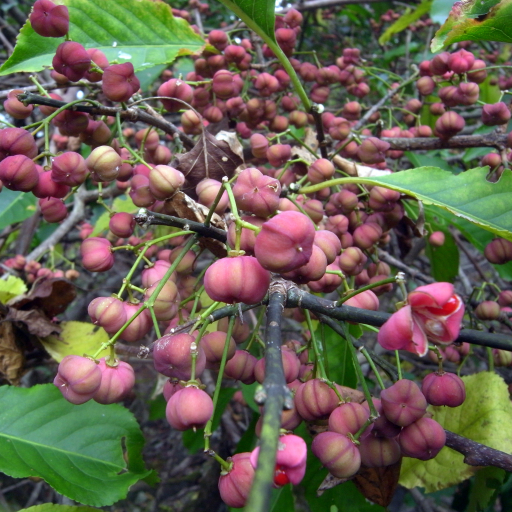
Often called Hamilton’s Spindle, this elegant shrub or small tree is a true showstopper in the autumn landscape. Native to East Asia and the Himalayas, it is prized for its architectural form and a dramatic fruit display that looks like something out of a fairy tale. It stays quietly green for most of the year, only to "explode" in a neon palette of pink and orange once the temperatures drop.
🔍 How to Identify
- 🍃 The Leaves: Large, lance-shaped, and slightly leathery leaves that transition from a deep summer green to breathtaking shades of buttery yellow or soft pinkish-red in the fall.
- 🎈 Fruit Capsules: The most striking feature—four-lobed, fleshy seed pods that range from pale shell-pink to deep rose-purple.
- 🟠 The "Pop" Seeds: When the pods ripen and burst open, they reveal bright, contrasting orange-coated seeds (arils) that dangle delicately on thin threads.
- 🎋 Bark & Form: A deciduous habit with smooth, greyish-green bark that becomes slightly fissured as the tree matures into its graceful, spreading shape.
🏡 In Your Garden
- 🌳 Well-Drained Focus: While quite hardy, Hamilton’s Spindle hates "wet feet." It thrives in moist but well-draining soil; sitting in waterlogged ground will quickly lead to root stress and leaf drop.
- 🎨 Light for Color: To get those legendary neon autumn colors, place it in a spot that receives full sun to partial shade. More sunlight generally translates to more intense fruit production and brighter leaf transitions.
- ✂️ Low Maintenance Pruning: This plant has a naturally airy and elegant habit. It doesn't require heavy pruning—just a light thinning of old wood in late winter to keep the center of the tree open and healthy.
⚠️ Safety & Toxicity
- 🚫 Toxicity Status: Toxic to humans and pets.
- 🐾 The Danger: All parts of the plant, especially the tempting, candy-colored berries and seeds, contain cardiac glycosides and alkaloids. Ingestion can cause vomiting, diarrhea, and in rare cases, heart rhythm issues. It is best planted away from areas where small children or curious dogs play.
✨ Fun Fact
The wood from the Euonymus genus is remarkably hard, dense, and fine-grained. In the past, it was the primary material used to carve "spindles" for spinning wool, which is exactly how the plant earned its common name, the Spindle Tree!

Detailed Care Instructions
To grow Euonymus Hamiltonianus plants, you can follow these steps:
- Choose a suitable location: Euonymus Hamiltonianus plants prefer partial to full shade, but they can also tolerate full sun. Ensure that the soil is well-draining and enriched with organic matter.
- Planting: Dig a hole that is slightly wider and deeper than the root ball of the plant. Place the plant in the hole, ensuring that the crown of the plant is level with the soil surface. Backfill the hole with soil and gently firm it around the plant.
- Watering: Keep the soil consistently moist but not waterlogged, especially during the first growing season. Water deeply once or twice a week, depending on the weather conditions. Reduce watering during the winter months.
- Mulching: Apply a layer of organic mulch around the base of the plant to help conserve moisture, suppress weed growth, and regulate soil temperature. Leave a small space around the trunk to prevent rot.
- Fertilizing: Feed the Euonymus Hamiltonianus plant with a slow-release balanced fertilizer in early spring or late winter. Follow the instructions on the fertilizer label for application rates.
- Pruning: Euonymus Hamiltonianus plants can benefit from regular pruning. Prune in late winter or early spring before new growth begins to shape or limit the size of the plant. Remove any dead, diseased, or damaged branches.
- Pests and diseases: Keep an eye out for common pests like aphids, scale insects, and spider mites. Treat any infestations promptly with insecticidal soap or horticultural oil. Euonymus Hamiltonianus plants are generally resistant to diseases.
- Winter care: In colder regions, Euonymus Hamiltonianus plants may require winter protection. Apply an extra layer of mulch around the base of the plant to insulate the roots and protect them from freezing temperatures.
Remember to regularly monitor the plant's health, provide adequate water and sunlight, and adjust care accordingly.

Place in a bright room that is sun drenched almost all day. Or directly in a south-facing window.

To water this plant, it is important to make sure that the soil is not completely dry. Before watering, make sure to check the soil moisture by poking your finger into the soil about an inch deep. If the soil feels dry, it is time to water.
When watering, slowly pour water onto the soil until it begins to drain out of the bottom of the pot. This will ensure that all of the soil is evenly moistened. Make sure to not overwater, as this can lead to root rot.
Additionally, it is important to make sure that the plant is in a well-draining pot with a drainage hole at the bottom. This will allow excess water to drain out and prevent water from accumulating around the roots.
During the growing season, which is typically spring and summer, the plant may require more frequent watering. In the winter months, the plant may require less water as it goes through a period of dormancy.
Overall, it is important to monitor the soil moisture and adjust watering as needed to keep the plant healthy and thriving.
To fertilize this plant, use a balanced slow-release fertilizer in early spring before new growth appears. Apply according to the recommended rate and mix into the topsoil around the base of the plant. Water thoroughly after fertilizing. Do not over-fertilize as this can lead to excessive growth and weakened plants. Additionally, avoid fertilizing in late summer or fall as it may stimulate new growth that will not have time to harden off before winter.
Euonymus Hamiltonianus prefers a well-draining, slightly acidic soil with a pH range of 5.5 to 6.5. It is recommended to use a soil mix that is rich in organic matter and contains a balanced ratio of sand, silt, and clay. The ideal soil should be moist and fertile, but not waterlogged or too dry. A mixture of pine bark, peat moss, and perlite or vermiculite is a popular choice for growing Euonymus Hamiltonianus. Additionally, incorporating slow-release fertilizers can provide necessary nutrients for the plant's growth and development. It is important to avoid using heavy soils or soils with high alkalinity, as they can negatively affect the plant's health.
To propagate this plant, you will need to take a stem cutting from a healthy plant. Use clean, sharp pruning shears to cut a 4-6 inch section of the stem just below a node (where leaves attach to the stem). Remove any leaves from the bottom half of the cutting.
Prepare a pot with well-draining soil and moisten the soil slightly. Dip the cut end of the stem into rooting hormone powder, if desired, and then insert it into the soil, burying the bottom half of the cutting. Water the soil until it is moist but not saturated, and place the pot in a warm, bright location, but out of direct sunlight.
Mist the cutting daily with a spray bottle to help maintain moisture levels and cover the pot with a plastic bag or dome to create a humid environment around the cutting. Keep the soil damp, but not waterlogged, and roots should begin to form within a few weeks.
Once the cutting has rooted and new growth appears, remove the plastic covering and gradually expose the plant to more light. After a few more weeks, the new plant can be transplanted into a larger pot or outdoors in a suitable location.








