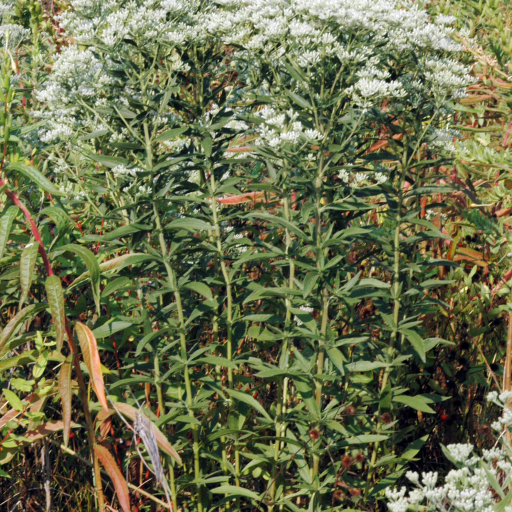
Plant Overview
Known affectionately as the Tall Boneset or Tall Thoroughwort, this statuesque wildflower is a staple of the North American prairie. Standing like a sentinel in late summer, it produces frothy, cloud-like clusters of white flowers that seem to glow during the "golden hour." While it might look like a common weed to the untrained eye, it is a vital architectural plant for naturalistic gardens and a lifeline for late-season pollinators.
🔍 How to Identify
- ☁️ The Flowers: Look for flat-topped clusters of fuzzy white blossoms. Each tiny flower head is made up of about five individual florets, giving the entire cluster a soft, fringed appearance.
- 🌿 The Foliage: The leaves are long, lance-shaped, and grow in opposite pairs along the stem. A key giveaway is the presence of three prominent parallel veins running from the base to the tip of each leaf.
- 🧤 The Texture: The entire plant—especially the stem—is covered in fine, grayish-white hairs, giving it a velvety or "dusty" look and feel.
🏡 In Your Garden
- 🦋 Pollinator Banquet: This plant is a high-traffic station for honeybees, native bees, and migrating butterflies. If you want to support local biodiversity, this is one of the best "bang-for-your-buck" species.
- 💪 Tough as Nails: Unlike its cousin, the Joe-Pye Weed, Tall Boneset is surprisingly drought-tolerant. It thrives in poor, rocky, or clay-heavy soils where more delicate perennials might wither.
- 📏 Space Management: Because it can reach heights of 3 to 6 feet, it is best placed at the back of a border. It has a sturdy "taproot" system, meaning it doesn't like being moved once established, so pick its home carefully!
⚠️ Safety & Toxicity
- 🐄 Livestock Warning: The plant contains tremetol, a toxin that is dangerous to cattle and horses if consumed in large quantities. It is generally avoided by livestock due to its bitter taste.
- 🐾 Pets and Humans: While not typically considered a high-risk garden plant for cats and dogs, it should not be ingested. The fuzzy stems can occasionally cause mild skin irritation for people with highly sensitive skin.
✨ Fun Fact
The name "Boneset" carries a gritty history. It wasn't named for healing broken bones, but rather for its use in treating "Breakbone Fever" (Dengue fever). The illness caused such intense muscle and joint pain that sufferers felt as though their bones were breaking; the plant was used in folk medicine to "set" the patient right again.

Detailed Care Instructions
To grow Eupatorium altissimum, also known as tall boneset or tall thoroughwort, follow these steps:
- Climate: Check if your region's climate is suitable for growing this plant. Eupatorium altissimum is native to North America and typically grows in meadows, prairies, or open woodlands. It thrives in USDA hardiness zones 4-8.
- Sunlight: Choose a location that receives full sun to partial shade, as Eupatorium altissimum prefers bright light but can tolerate some shade.
- Soil: The plant prefers moist, well-draining soil. It can tolerate a wide range of soil types, including loam, sand, or clay. Ensure the soil pH is neutral to slightly acidic (around 6.0-7.0).
- Planting: Sow the seeds directly into the ground after the risk of frost has passed, typically in spring or early summer. Alternatively, you can start seeds indoors 6-8 weeks before the last frost and transplant them outside when the weather is suitable.
- Seed treatment (optional): Soak the seeds in water for 24 hours before planting to facilitate germination, as the seeds have hard outer shells. This step can enhance the germination rate.
- Plant spacing: Space the seeds or seedlings about 12-18 inches (30-45 cm) apart to allow for their growth and proper airflow.
- Watering: Keep the soil consistently moist, but not waterlogged. Water the plants regularly, particularly during hot and dry periods.
- Fertilization: Eupatorium altissimum generally grows well without additional fertilization. However, if your soil lacks nutrients, you can apply a balanced slow-release fertilizer in spring or use organic compost to enrich the soil.
- Weed control: Regularly remove weeds around the plants as they can compete for nutrients.
- Pruning: Trim off any dead or damaged stems to promote new growth and maintain a neat appearance. After the flowering season, you may cut back the stems to encourage regrowth and prevent self-seeding.
- Pest and disease control: Eupatorium altissimum is generally resistant to most pests and diseases. However, some common pests like aphids or leafhoppers may occasionally feed on it. Monitor for any infestations and use appropriate organic pest control methods if necessary.
- Winter care: In colder climates, the plant may die back to the ground during winter. Mulching around the base of the plant can help protect it from frost damage. In spring, new shoots will emerge.
With proper care and attention, your Eupatorium altissimum should grow and thrive, providing attractive flowers for pollinators and a beautiful addition to your garden.

Place in a bright room that is sun drenched almost all day. Or directly in a south-facing window.

When watering this plant, it is important to ensure that the soil is evenly moist throughout the growing season. The best way to achieve this is to water deeply and slowly, allowing the water to penetrate deeply into the soil. It is important not to overwater the plant, as this can lead to root rot and other problems. When watering, it is best to avoid getting the leaves wet, as this can increase the risk of fungal disease. Additionally, it is important to ensure that the plant is not being watered too frequently, as this can also lead to waterlogging and other problems. It is recommended to check the soil moisture levels regularly and adjust watering accordingly based on the plant's needs.
To fertilize this plant, apply a balanced, slow-release fertilizer in the spring when new growth appears. Follow the recommended application rate on the fertilizer label and water deeply after applying. Avoid fertilizing in late summer or fall as this can encourage new growth that won't have time to harden before winter dormancy.
The ideal soil for Eupatorium Altissimum should be well-drained, fertile, and moist. It should have a pH level between 5.5 to 7.5 and should be rich in organic matter. The soil should be loamy, with equal parts of sand, silt, and clay. It is important to ensure that the soil is not too heavy or compact, as this can negatively impact the root system. Adding organic compost or aged manure to the soil can help improve its fertility and structure. The plant prefers soil that is consistently moist but not waterlogged, so proper drainage is essential. Soil that is too dry can also harm the plant and cause it to wilt, so regular watering may be necessary. Overall, the goal is to provide the plant with a nutrient-rich soil that promotes healthy growth and development.
Propagation of this plant can be done through both seeds and stem cuttings. To propagate through seeds, collect the dried seed heads and remove the seeds from the parent plant in autumn. Sow the seeds in a sterile seed-starting mix and keep damp until germination. It is recommended to provide a cold stratification period for the seeds during the winter months. Seedlings can be transplanted to individual pots once they have produced a few true leaves.
To propagate through stem cuttings, take cuttings of the plant in the spring or early summer. Cuttings should be about 4-6 inches long and should include at least two nodes. Remove the lower leaves from the stem and dip the cut end into rooting hormone. Place the cutting into moist potting soil and keep in a warm, bright area. Keep the soil moist but not waterlogged until roots have formed, which can take up to several weeks. Once rooted, the new plant can be transplanted into a larger pot or into the garden.
Common pests of the tall thoroughwort include Spider mites, aphids. Make a habit of checking your tall thoroughwort frequently for pests so that any infestations can be caught and managed early.








