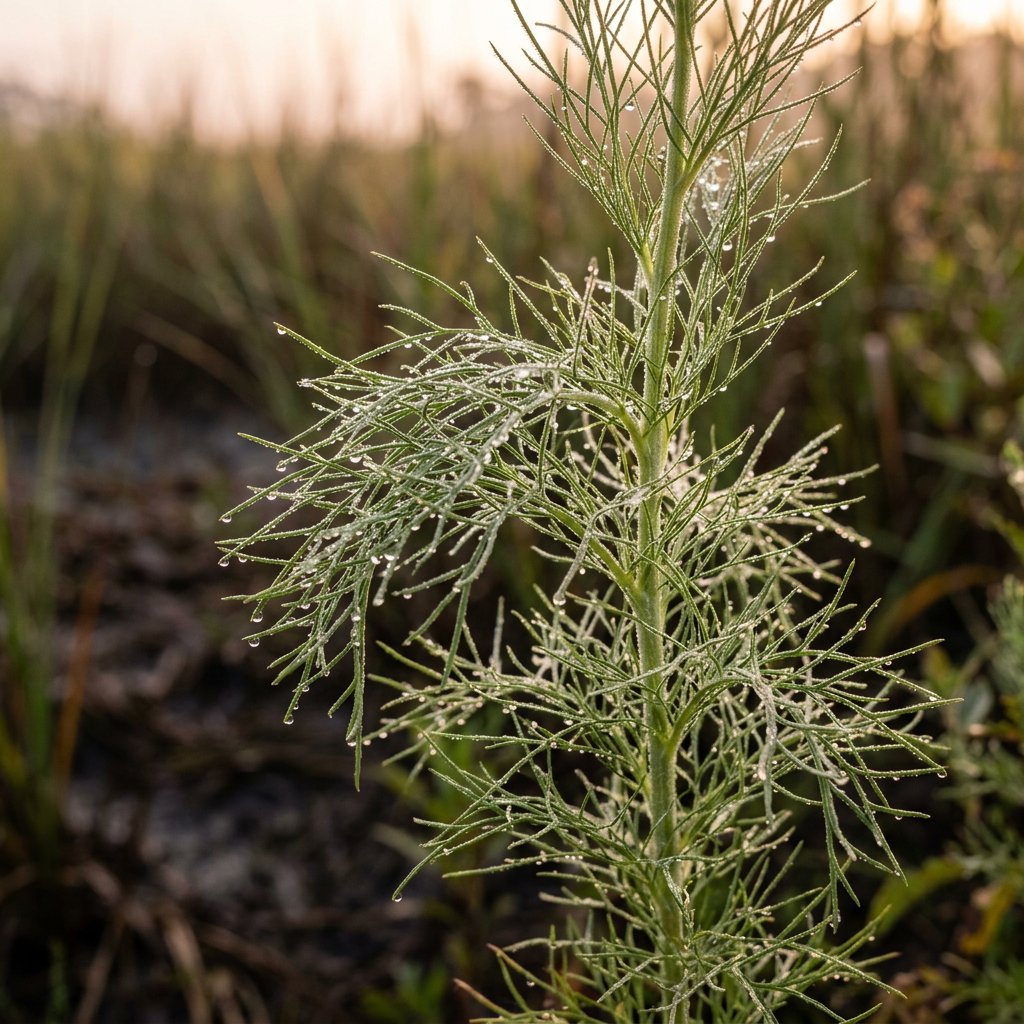
Plant Overview
Often mistaken for a giant patch of dill or a soft green cloud, Eupatorium capillifolium, better known as Dogfennel, is a North American native that adds a misty, ethereal texture to the landscape. While it looks soft enough to nap on, this plant is a rugged survivor often found colonizing open fields and roadsides. It belongs to the Aster family, though you wouldn’t know it until its tiny, inconspicuous white flowers emerge in late summer to create a "smoke-like" effect.
🔍 How to Identify
- 🌿 The Foliage: Exceptionally fine, thread-like leaves that are deeply dissected, giving the plant a feathery, "hairy" appearance (hence the name capillifolium, meaning "hair-like leaves").
- 📏 Stature: This is no small herb; it can reach impressive heights, often towering over 6 feet tall on sturdy, reddish, woody stems that branch out near the top.
- 👃 The Scent: When the leaves are crushed, they emit a very strong, pungent odor that some describe as a mix of dill and sour carrots—a key way to distinguish it from culinary fennel.
🏡 In Your Garden
- 🌱 Aggressive Growth: Dogfennel is a "space-taker." Because it spreads rapidly via wind-blown seeds and creeping underground rhizomes, it can become invasive in small garden beds. It’s best suited for wilder "meadow" style gardens or large back-of-the-border areas.
- ☀️ Resilience: This plant is nearly bulletproof. It thrives in full sun and is incredibly tolerant of poor, sandy soil and drought. It provides excellent movement in the wind, acting like a living textured screen.
⚠️ Safety & Toxicity
- 🚫 Toxic Status: Dogfennel contains pyrrolizidine alkaloids, which are highly toxic if ingested.
- 🐾 Risk Factor: It is particularly dangerous to livestock (especially cattle and horses) and should be kept away from curious pets and children. Ingestion can lead to cumulative, irreversible liver damage. Some gardeners also experience skin irritation (dermatitis) when handling the crushed foliage without gloves.
✨ Fun Fact
[🦟] Nature's Bug Spray: Historically, Dogfennel was used as a rustic insect repellent. People would often stuff it into mattresses or hang bundles in doorways to discourage fleas and mosquitoes from entering the home!

Detailed Care Instructions
| Lighting | Full Sun |
| Hardiness Zones | 5B - 10B |
To successfully grow Eupatorium capillifolium, also known as dog fennel or Cypress hemp, follow these steps:
- Choose the right location: Eupatorium capillifolium thrives in full sun to partial shade. Ensure the area has well-drained soil.
- Prepare the soil: Before planting, loosen the soil with a garden fork or tiller. Add organic matter like compost or aged manure to improve soil fertility.
- Planting: You can start Eupatorium capillifolium from seeds or transplants. If starting from seed, sow them directly into the prepared soil in early spring, lightly covering them with soil. Space the seeds 12-18 inches apart. If using transplants, place them at the same spacing.
- Watering: Keep the soil consistently moist after planting, especially during dry spells. However, Eupatorium capillifolium is relatively drought-tolerant once established.
- Mulching: Apply a layer of organic mulch around the plants to retain moisture, suppress weed growth, and regulate soil temperature.
- Pruning: Regular pruning is not necessary for Eupatorium capillifolium. However, you can remove dead or damaged foliage as needed.
- Fertilization: Eupatorium capillifolium generally does not require heavy fertilization. If the plants appear weak or pale, you can apply a balanced, slow-release fertilizer according to the package instructions.
- Controlling pests and diseases: Eupatorium capillifolium is relatively resistant to most pests and diseases. However, occasionally aphids, caterpillars, or powdery mildew might affect them. Monitor the plants regularly and address any issues promptly. You can use insecticidal soap or horticultural oil to control pests or remove heavily infested parts.
- Propagation: If desired, Eupatorium capillifolium can be propagated by dividing the root clumps in early spring or by collecting and planting the seeds.
By following these steps, you can successfully grow Eupatorium capillifolium and enjoy its feathery foliage and attractive flowers.

Place in a window with dappled sun or a spot in the middle of a room. Or directly in a window facing west or east.

To water this plant, you should first check the soil moisture level by sticking your finger about an inch into the soil. If it feels dry, it's time to water. Use a watering can or hose to water the plant slowly and evenly, being careful not to overwater or create puddles around the base of the plant. Allow the top inch or so of soil to dry out between waterings, and adjust the frequency of watering according to the plant's needs and the conditions in your growing area. It's important to avoid getting water on the leaves or flowers of the plant, as this can promote fungal growth and other diseases.
To fertilize this plant, apply a slow-release, balanced fertilizer in early spring before new growth appears. Follow the package instructions for application rates. Additionally, you can supplement with a liquid fertilizer every two weeks during the growing season. Avoid fertilizing in late summer or fall to help the plant prepare for winter dormancy.
Eupatorium Capillifolium plant requires well-drained soil that offers good aeration. The soil should be rich in nutrients and should be able to retain moisture for extended periods without becoming waterlogged. The ideal soil pH range for the plant is between 5.0 and 7.5. The plant is tolerant of a wide range of soil conditions, including sandy, loamy, or clay soil. However, it prefers moist soil that is not too dry. You can add compost or organic matter to the soil to make it more fertile and enhance its ability to retain moisture. Avoid using heavy soils as they can result in waterlogging, which can cause root rot. Fertilize the soil periodically with a balanced fertilizer to ensure that the plant receives the nutrients it requires to grow and thrive.
To propagate this plant, you will need to take stem cuttings from a healthy and mature plant. Choose a stem that is at least 4-6 inches long and has several sets of leaves. Using a sharp, clean pair of scissors or pruners, make a clean cut just below a set of leaves. Remove the lower leaves from the cutting, leaving only 2-3 sets of leaves at the top. Dip the cut end of the stem into rooting hormone powder and shake off any excess.
Next, prepare a planting container with well-draining soil. Insert the stem cutting into the soil, making sure that at least one set of leaves is above the soil line. Water the soil lightly and cover the container with a clear plastic bag to create a humid environment. Place the container in a bright, indirect light location.
Check the cutting every few days for signs of new growth. Once new leaves begin to sprout and the cutting has taken root, remove the plastic bag and continue to water the plant regularly. After a few weeks, the new plant should be large enough to transplant into a larger container or into the ground.
Common pests of the dog fennel include Spider mites, aphids. Make a habit of checking your dog fennel frequently for pests so that any infestations can be caught and managed early.








