Plant Overview
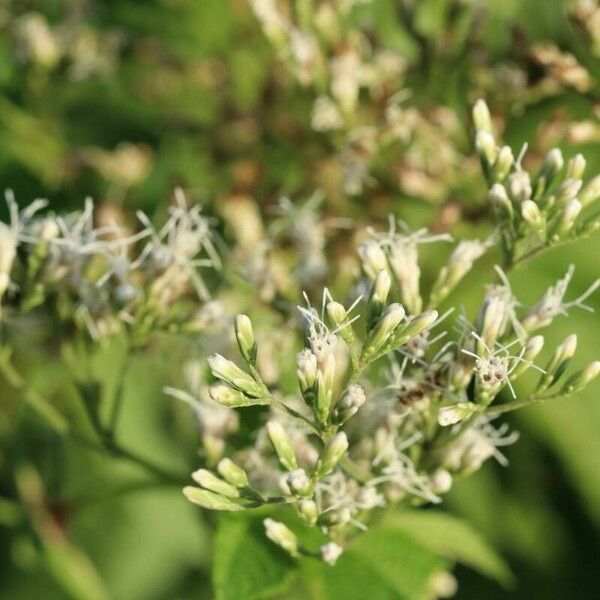
Known in Japan as Fujibakama, this elegant perennial is a cornerstone of classical East Asian gardens and one of the "Seven Flowers of Autumn." It has been celebrated for centuries in literature, most notably appearing in the Tale of Genji, where it was prized for the sweet, hay-like fragrance of its dried leaves. While it looks delicate, it is a hardy survivor that brings a touch of wild meadow beauty to any landscape.
🔍 How to Identify
- 🌸 The Blooms: Small, fuzzy clusters of tubular florets that look like tiny pinkish-white pom-poms. They lack true petals, giving them a distinct "thready" appearance.
- 🍃 The Leaves: Lance-shaped with serrated (saw-toothed) edges. They usually grow in opposite pairs or whorls of three along the stem.
- 📏 Growth Habit: A tall, upright plant that can reach heights of 3 to 5 feet. The stems are sturdy but can become slightly woody at the base as the season progresses.
🏡 In Your Garden
- 🦋 The Butterfly Magnet: This plant is a powerhouse for pollinators. It is particularly famous for attracting the Chestnut Tiger butterfly, which travels thousands of miles; they rely on the plant's nectar to synthesize mating pheromones.
- 💧 Moisture Lover: In the wild, it thrives along riverbanks and moist meadows. In a garden setting, it hates drying out completely. If the soil becomes too parched, the lower leaves will quickly yellow and drop to conserve energy.
- 🌬️ Scented Harvest: The living plant has little scent, but when the leaves are dried, they release a wonderful aroma similar to vanilla or fresh-mown hay. Historically, these dried leaves were used to scent hair or clothes.
⚠️ Safety & Toxicity
- 🚫 Toxic if Ingested: Like many members of the Eupatorium family, this plant contains pyrrolizidine alkaloids. These compounds can cause cumulative liver damage if eaten in large quantities.
- 🐾 Pet Warning: Keep it away from curious dogs or cats who like to chew on tall grasses or stems. While it isn't usually "instant-kill" toxic, it is not safe for consumption.
- 🧤 Skin Sensitivity: Some gardeners with sensitive skin may experience mild contact dermatitis when handling the sap or bruised leaves.
✨ Fun Fact
In ancient Japan, the Fujibakama was used as a natural barometer. It was believed that if the flowers bloomed earlier than usual, a harsh winter or an early frost was on its way.

Detailed Care Instructions

Place in a bright room that is sun drenched almost all day. Or directly in a south-facing window.

Some plants require more regular watering than others, which should be done every few days. It's critical to maintain the soil moist all of the time. The water requirements of the same plant placed in pots with varying sizes will differ. Because the water in the smaller pot evaporates faster than the water in the larger pot, it will require more watering. Regardless of pot size, the surface should constantly be maintained moist.







