Plant Overview
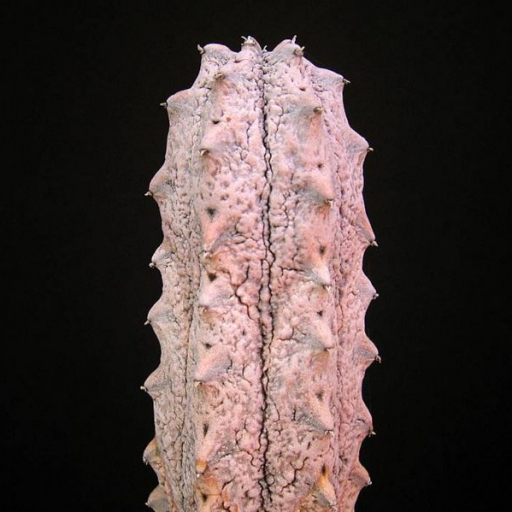
Known as the "Grey Ghost" or simply "Abdelkuri," this succulent is one of the most otherworldly members of the Spurge family. Originating from a single, tiny volcanic island near Yemen, its leafless, ash-colored columns look more like weathered stone or bleached bone than a living plant. It is a crown jewel for rare plant collectors due to its prehistoric appearance and extreme rarity in the wild.
🔍 How to Identify
- 🎨 Ghostly Coloration: The stems possess a unique grayish-pink to chalky-white hue, caused by a thick, waxy layer that protects the plant from intense island sun.
- 🌵 Columnar Form: It grows in cylindrical, leafless columns that can reach up to 3 feet tall, often branching from the base to create a candelabra effect.
- 🪵 Bumpy Texture: Unlike many smooth succulents, the surface is covered in "tubercles" or small raised bumps, giving it a rugged, topographical texture.
🏡 In Your Garden
- 🏜️ Mineral Dependency: In its natural habitat, it grows in limestone-rich, rocky soil. In a home setting, it requires a "gritty" mix—think more rocks and sand than peat—to prevent the delicate root system from suffocating.
- 💉 The Grafting Secret: Because Euphorbia abdelkuri is notoriously difficult to grow on its own roots in humid or cool climates, it is frequently "grafted" onto the top of a hardier Euphorbia species to ensure its survival.
⚠️ Safety & Toxicity
- 🧪 Corrosive Latex: Like all Euphorbias, this plant contains a milky white sap (latex) that is highly irritating.
- 🚫 Exposure Risks: If the plant is nicked or cut, the sap can cause skin blistering and severe eye irritation. It is toxic if ingested by pets or humans, so always wear gloves when handling and keep it out of reach of curious cats or dogs.
✨ Fun Fact
This plant is "narrowly endemic," meaning it is found in the wild in only one place on Earth: the island of Abd al Kuri in the Socotra Archipelago. Because its habitat is so small, it is considered a high-priority species for conservation.

Detailed Care Instructions
To grow Euphorbia Abdelkuri plant, you can follow these steps:
- Choose a suitable location: Euphorbia Abdelkuri requires full sun exposure and well-draining soil. Select a spot in your garden that receives at least 6 hours of direct sunlight per day, and ensure the soil is loose and drains well.
- Prepare the soil: Before planting, prepare the soil by loosening it with a garden fork or tiller. Remove any weeds or rocks that may hinder the plant's growth. If the soil is heavy or clayey, mix in some organic matter or sand to improve drainage.
- Planting: Dig a hole that is slightly larger than the size of the plant's root ball. Gently place the plant in the hole, making sure that the top of the root ball is level with the surrounding soil. Fill in the hole with soil, firm it down lightly, and water thoroughly.
- Watering: After planting, water the Euphorbia Abdelkuri plant deeply. Then, allow the soil to dry out between waterings. This plant is drought-tolerant and can withstand dry periods, so it is important not to overwater. However, during extremely hot and dry periods, water the plant when the soil feels dry to the touch.
- Fertilizing: Euphorbia Abdelkuri does not require regular fertilization, but you can feed it with a balanced slow-release fertilizer in the spring to promote healthy growth. Follow the package instructions for application rates.
- Pruning: Pruning is not generally necessary for Euphorbia Abdelkuri, but you can trim away any dead or damaged stems to maintain its appearance. Wear gloves and protective clothing when handling this plant, as its sap can cause skin irritation.
- Protection: Protect the plant from frost or extreme temperatures by covering it with a blanket or placing it in a sheltered location during colder months. Euphorbia Abdelkuri is native to a desert environment and can be sensitive to cold weather.
- Propagation: Euphorbia Abdelkuri can be propagated from stem cuttings. Take a 4-6 inch cutting from a healthy plant, allow it to dry for a few days to develop calluses, and then plant it in well-draining soil. Keep the cutting in a warm, bright location and lightly mist the soil until roots form.
Remember to always research specific care guidelines for Euphorbia Abdelkuri as different cultivars may have slightly different requirements.

Place in a bright room that is sun drenched almost all day. Or directly in a south-facing window.

To water the Euphorbia Abdelkuri plant, it is important to follow specific guidelines to ensure its health and proper growth. Here's how you can do it:
1. Observe the soil: Before watering, check the soil moisture level. Insert your finger about an inch into the soil near the base of the plant. If it feels dry, it is time to water.
2. Use a watering can or a narrow-spouted container: Euphorbia Abdelkuri plant prefers a more controlled watering method. Therefore, avoid using a hose or large watering cans as they may result in excessive water distribution.
3. Water slowly and evenly: Pour water gently and evenly around the base of the plant, aiming to moisten the soil rather than drenching it. This technique allows water to penetrate deeply, ensuring the roots receive adequate moisture.
4. Avoid overwatering: Euphorbia Abdelkuri plants are drought-tolerant succulents and do not require frequent watering. It is crucial to prevent waterlogging and excess moisture accumulation in the soil, as this can lead to root rot and other issues. Always allow the soil to dry out before watering again.
5. Adjust watering frequency according to seasons: During the active growing period, typically in spring and summer, you may need to water more frequently as the plant requires more hydration. However, reduce watering during colder months or when the plant is in its dormant phase.
6. Consider the environmental conditions: Factors such as temperature, humidity, and sunlight can influence the water requirements of the Euphorbia Abdelkuri plant. In hotter and drier climates, you may need to water more often, while in cooler or more humid conditions, watering intervals can be extended.
7. Monitor the plant's response: Pay attention to signs of underwatering, such as shriveled leaves and dry soil. Similarly, watch for indicators of overwatering, such as yellowing leaves, wilting, or soft, mushy stems. Adjust your watering routine accordingly to maintain a healthy balance.
Remember, these guidelines are general and may not be suitable for every individual Euphorbia Abdelkuri plant. It is always recommended to observe your specific plant's needs and adjust watering practices accordingly.
To fertilize the Euphorbia Abdelkuri plant, you'll need to follow these instructions:
- Use a balanced water-soluble fertilizer with equal parts nitrogen (N), phosphorus (P), and potassium (K). Look for a formula like 10-10-10 or 20-20-20.
- Dilute the fertilizer according to the package instructions. Generally, a ratio of 1 tablespoon of fertilizer per gallon of water is suitable.
- Apply the fertilizer during the active growing season, which is typically in spring and summer.
- Moisten the soil before applying the fertilizer to avoid any potential root burn.
- Pour the diluted fertilizer solution around the base of the plant, ensuring that it reaches the root zone.
- Avoid splashing the fertilizer onto the leaves or stem, as it may cause damage.
- After applying the fertilizer, water the plant thoroughly to help distribute the nutrients evenly and prevent salt buildup in the soil.
- Repeat the fertilization every 4-6 weeks during the growing season, adjusting the frequency based on the plant's response and the specific fertilizer instructions.
- Monitor the plant closely for any signs of over-fertilization, such as yellowing leaves, wilting, or stunted growth. If these symptoms occur, reduce the frequency or strength of the fertilizer.
- During the plant's dormant period in fall and winter, refrain from fertilizing as it requires less nutrients during this time.
Remember to always follow the instructions on the fertilizer package and consider the specific needs of your Euphorbia Abdelkuri plant to ensure optimal growth and health.
When it comes to selecting the soil for the Euphorbia abdelkuri plant, it is essential to choose a well-draining mix that replicates its natural habitat. A suitable soil option would consist of a combination of gritty or sandy elements, such as coarse sand or perlite, blended with a general-purpose potting mix or cactus soil. These additions will ensure proper drainage and prevent the plant's roots from sitting in water, which can lead to root rot.
The soil pH level should be slightly acidic to neutral, ideally ranging between 6.0 and 7.0. This range will provide the plant with the necessary nutrients and promote healthy growth.
Furthermore, the soil needs to have excellent aeration properties to prevent compaction. This can be achieved by incorporating organic matter, such as peat moss or well-rotted compost, into the mix. These will help retain moisture without causing waterlogging, ensuring the roots have access to oxygen.
It is important to note that Euphorbia abdelkuri is native to arid regions, so the soil should not hold excessive moisture. To enhance drainage further, you can consider adding pumice or coarse gravel to the mix. This aids in creating air pockets within the soil, promoting airflow to the roots.
Overall, ensuring a well-draining soil blend with a slightly acidic to neutral pH will provide an optimal growing environment for the Euphorbia abdelkuri plant, supporting its health and overall development.
Propagating Euphorbia Abdelkuri plant can be done through various methods, such as stem cuttings and seed germination. Here are the detailed steps to propagate this plant:
- Obtain a healthy and mature Euphorbia Abdelkuri plant from which you want to take cuttings or collect seeds. Make sure the plant is free from any diseases or pests.
- For stem cuttings, select a sturdy and disease-free stem measuring 3-5 inches in length. Use a clean, sharp pair of pruning shears or a sharp knife to cut the stem just below a node (the area where leaves emerge).
- After taking the cutting, set it aside in a shaded area for a few days to allow the cutting to callous over. This is an essential step to prevent rot and promote successful root formation.
- Prepare a well-draining potting mix by combining equal parts of perlite, coarse sand, and a standard potting mix. Fill a small pot with this mixture and moisten it slightly.
- Make a small hole in the potting mix with your finger or a pencil, and gently insert the bottom end of the calloused cutting into the hole. Ensure that at least one node is buried in the soil.
- Firmly press the potting mix around the stem to provide stability and good soil-to-stem contact. Place the potted cutting in a warm and bright location, away from direct sunlight.
- Water the cutting sparingly, keeping the soil slightly moist but not saturated. Overwatering can lead to rotting. Ensure proper drainage by using a pot with drainage holes.
- Mist the cutting occasionally to promote humidity around the plant. Covering the pot with a plastic bag or a clear plastic dome can also help in maintaining moisture levels.
- After a few weeks, the cutting should start developing roots. You can gently tug on the stem to check for resistance, which indicates root development.
- Once the roots have established, after approximately 4-6 weeks, the plant can be carefully transplanted into a larger pot filled with well-draining soil. Treat it as a mature Euphorbia Abdelkuri plant from then on.
Note: Seed propagation of Euphorbia Abdelkuri is also possible but can be more challenging due to the plant's specific growth requirements. It involves collecting ripe seeds, preparing a suitable seeding mix, providing optimal temperature and humidity conditions, and allowing time for germination to occur.
Common pests of the firhadh include Scale insect, mealybugs, spider mites. Make a habit of checking your firhadh frequently for pests so that any infestations can be caught and managed early.








