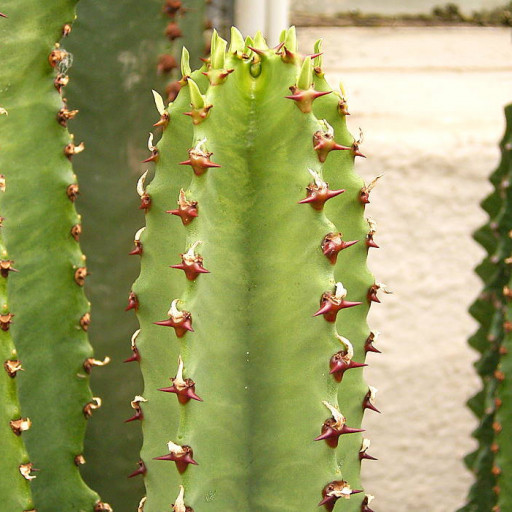
Plant Overview
Often called the African Candelabra or Candelabra Spurge, the Euphorbia ammak is a stunning, architectural masterpiece from the deserts of Yemen and Saudi Arabia. While it looks remarkably like a desert cactus, it is actually a succulent member of the Spurge family, known for its dramatic height and tree-like silhouette. In modern interior design, the variegated variety is a "statement plant" favorite, prized for its creamy, marbled appearance that looks like a living sculpture.
🔍 How to Identify
- 🌵 Growth Habit: It grows in a distinct candelabra shape, with upright branches that reach toward the sky from a central trunk.
- 📐 Ribbed Stems: The thick, fleshy branches typically have four to five deep ribs, giving the plant a sharp, geometric profile.
- 🎨 Color Palette: The wild form is dark green, but the popular 'Variegata' cultivar features a mesmerizing blend of creamy yellow, lime green, and pale mint marbling.
- 🛡️ Spines: Along the edges of the ribs, you will find short, dark brown or black spines spaced evenly apart.
🏡 In Your Garden & Home
- ☀️ Light Requirements: This giant loves the spotlight. It thrives in full sun or very bright indirect light; without enough light, the "arms" can become thin and weak, losing their iconic structural integrity.
- 💧 The "Drought" Mindset: Because it stores massive amounts of water in its fleshy ribs, it is incredibly sensitive to overwatering. It prefers to dry out completely—think of it as a desert dweller that hates "wet feet."
- 🪴 Space Considerations: If kept indoors, place it in a heavy, stable pot. As the plant grows taller and heavier, it can become top-heavy and prone to tipping.
⚠️ Safety & Toxicity
- 🚫 Toxic Status: High Toxicity. Like all Euphorbias, this plant contains a thick, milky white latex sap.
- 👀 Skin & Eye Irritant: The sap is a known irritant. If it touches your skin, it can cause redness or blisters; if it gets into your eyes, it can cause severe pain and temporary blindness. Always wear gloves when pruning.
- 🐾 Pets & Children: Keep this plant out of reach of curious pets and toddlers. Ingestion of the sap can cause severe stomach upset and mouth irritation.
✨ Fun Fact
The Euphorbia ammak is a perfect example of convergent evolution. Even though it looks almost exactly like the cacti found in the Americas, it evolved entirely separately in the deserts of the Middle East and Africa, developing the same "succulent" traits to survive in the exact same harsh, arid conditions.

Detailed Care Instructions
| Soil Ph | Acidic, Neutral |
| Humidity | Normal |
| Lighting | Full Sun |
| Toxicity | Toxic |
| Soil Type | Sandy, Well-Drained |
| Difficulty | Medium |
| Plant Type | Cactus |
| Hibernation | Cold Period |
| Native Area | Africa, Asia, North America, South America |
| Sun Exposure | Full Sun |
| Hardiness Zones | Max 8B |
To successfully grow a Euphorbia ammak plant, also known as the African Milk Tree, follow these steps:
- Light and temperature: Euphorbia ammak requires bright, indirect light for at least 6 hours a day. Place the plant near a south or west-facing window but provide some shading during the hottest parts of the day. Maintain a temperature between 60-85°F (15-29°C), ensuring it doesn't drop below 50°F (10°C).
- Potting mix: Choose a well-draining cactus or succulent potting mix. You can also create your own by mixing equal parts of potting soil, sand, and perlite.
- Container: Use a pot with drainage holes to prevent waterlogging. Euphorbia ammak can reach significant sizes, so choose a container that allows for root growth over time.
- Watering: Allow the soil to dry out completely before watering. Euphorbia ammak is drought-tolerant and prefers infrequent watering rather than constant moisture. Water deeply until water drains from the bottom of the pot and then allow the soil to dry out again before the next watering.
- Humidity: Euphorbia ammak prefers low humidity, so there's no need for additional misting or humidity control.
- Fertilizer: Apply a balanced, diluted cactus fertilizer once or twice a year during the growing season (spring and summer). Follow the instructions on the fertilizer packaging for proper dosage.
- Pruning: Pruning is not usually necessary for Euphorbia ammak. However, if you notice any dead or damaged stems, you can prune them back to healthy tissue.
- Propagation: Euphorbia ammak can be propagated through stem cuttings. Make sure to allow the cuttings to callus over for a few days before planting them in a well-draining soil mixture.
- Careful handling: Handle Euphorbia ammak with caution as it contains a milky sap that can be irritating to the skin and eyes. Wash your hands thoroughly after touching the plant.
By following these steps, you should be able to successfully grow and care for your Euphorbia ammak plant.

Place in a bright room that is sun drenched almost all day. Or directly in a south-facing window.

To water this plant, you should wait until the top inch of soil is dry before watering. When watering, you should thoroughly moisten the soil until water drains out of the bottom of the pot. It is important to avoid getting the leaves or stem wet while watering, as this can cause damage or disease. During the winter months, you should reduce watering frequency to prevent overwatering and promote healthier growth.
To fertilize this plant, use a balanced liquid fertilizer once every 4-6 weeks during the growing season (spring and summer). Dilute the fertilizer to half strength before applying, and avoid getting any on the leaves or stem. Water the plant thoroughly before and after fertilizing. Do not fertilize in the fall or winter when the plant is dormant.
The ideal type of soil for Euphorbia Ammak is well-draining and fertile. It should have a low pH level and be rich in nutrients. A mixture of sand, perlite, and peat moss is recommended for this plant. The soil should not be too dense or compacted and should allow for good air circulation. Additionally, it is important to avoid overwatering and to allow the soil to dry out completely between watering sessions.
To propagate this plant, you will need to start by selecting a healthy mother plant. From the mother plant, locate an actively growing stem that is at least 4 inches long. Cut the stem using a sharp, clean knife or pruning shears, making sure to make a clean cut.
Next, remove the leaves from the bottom ⅔ of the stem, leaving only a few at the top. This will expose the nodes where new roots will form.
Prepare a small pot with well-draining soil and place the stem into the soil so that the bottom ⅓ is buried. Water the soil well, making sure it is moist but not overly wet.
Place the pot in a warm, brightly-lit area, but avoid direct sunlight. It is important to keep the soil moist, but not waterlogged, and to ensure adequate humidity around the cutting. You can do this by placing a plastic bag over the pot to create a mini greenhouse.
After a few weeks, you should start to see new growth on the cutting. This is a sign that it has rooted successfully. Once the roots have grown strong, you can remove the plastic bag and continue to care for it as you would a mature plant.
Congratulations, you have successfully propagated your Euphorbia Ammak plant!
Common pests of the african candelabra include Scale insect, mealybugs, spider mites. Make a habit of checking your african candelabra frequently for pests so that any infestations can be caught and managed early.








