Plant Overview
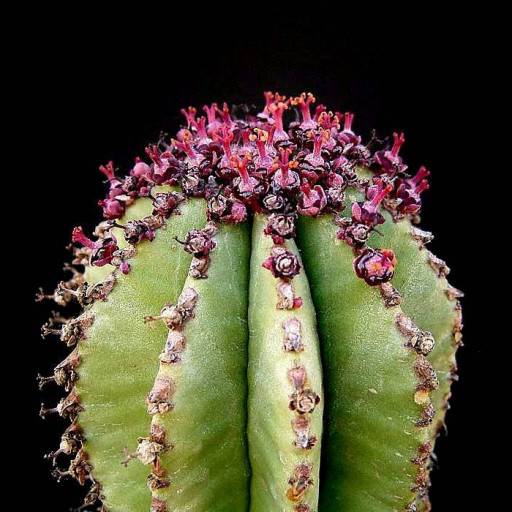
Known affectionately as the "Tanzanian Zipper Plant," this architectural wonder looks more like a modern art sculpture than a living organism. Despite its prickly appearance, it is actually a spineless succulent, making it a "friendly" alternative to the sharp cacti it mimics. It is a master of minimalism, perfectly suited for a sunny windowsill where its geometric patterns can truly shine.
🔍 How to Identify
- 📏 The "Zipper" Ribs: The plant consists of upright, cylindrical stems divided into 7 to 9 deep vertical ribs. The notched edges of these ribs look exactly like the teeth of a zipper.
- 🎨 Milky Green Color: The stems are a soft, matte green, often featuring a silvery or glaucous tint that helps the plant reflect intense sunlight.
- 🌸 Button Blooms: In the spring and summer, tiny, dark purple or burgundy flowers (called cyathia) appear in rows along the ridges, looking like small decorative buttons.
🏡 In Your Garden
- ☀️ Light & Stretching: This succulent craves bright, indirect light. If it doesn't get enough sun, it will lose its tight, compact "zipper" shape and begin to stretch out (etiolate), looking thin and weak.
- 🏜️ The "Dry Feet" Rule: Because it stores so much moisture in its fleshy stems, it is extremely prone to root rot. It thrives in gritty, cactus-mix soil and prefers to be ignored rather than over-tended. Always let the soil dry out completely before even thinking about the watering can.
⚠️ Safety & Toxicity
- 🚫 Toxic Latex: Like all members of the Euphorbia family, this plant contains a milky white sap (latex). This sap is caustic and can cause painful skin rashes or severe eye irritation.
- 🐾 Keep Away from Pets: It is toxic if ingested. Keep it on a high shelf away from curious cats, dogs, or toddlers, as the sap can cause swelling of the mouth and digestive distress. Always wear gloves when repotting or taking cuttings.
✨ Fun Fact
Even though it looks almost identical to some types of cacti, the Zipper Plant isn't a cactus at all! This is a famous example of convergent evolution, where two unrelated plant families in different parts of the world evolved the same physical traits to survive in harsh, arid climates.

Detailed Care Instructions
To grow Euphorbia anoplia, also known as the Tanzanian Zipper Plant, you can follow these steps:
- Finding suitable growing conditions: Euphorbia anoplia thrives in bright, indirect sunlight. Choose a location in your house or garden where the plant can receive several hours of bright, indirect light each day.
- Providing well-draining soil: Euphorbia anoplia prefers a well-draining soil mixture. You can use a cactus or succulent soil mix combined with perlite or pumice to improve drainage.
- Choosing the right container: Select a pot or container with drainage holes to prevent waterlogging. Make sure the pot is slightly larger than the rootball of your Euphorbia anoplia plant to allow room for growth.
- Watering appropriately: Water your Euphorbia anoplia sparingly. Allow the soil to dry out completely between waterings, then water thoroughly, ensuring excess water drains out. Avoid overwatering as it can lead to root rot.
- Fertilizing: Fertilize your Euphorbia anoplia during the active growing season, which is generally spring and summer. Use a balanced, diluted fertilizer specifically formulated for succulents or cacti, following the instructions on the label.
- Pruning and maintenance: Euphorbia anoplia typically does not require much pruning. However, if you notice any dead or damaged stems, you can remove them with clean, sharp pruning shears. Take care to protect your skin from the milky sap, as it can be irritating.
- Handling with caution: Euphorbia anoplia, like other euphorbias, contains a milky sap that can be toxic and irritating to the skin and eyes. When handling the plant, wear gloves and avoid contact with the sap.
- Protecting from extreme temperatures: Protect your Euphorbia anoplia from frost and extreme temperatures. If you live in a colder climate, it's best to grow this plant indoors or provide it with frost protection during the winter months.
Following these steps should help you successfully grow Euphorbia anoplia. Remember to research and understand the specific needs of your plant, as individual variations may occur.
The Euphorbia Anoplia plant should be watered thoroughly but infrequently. It is important to allow the soil to become completely dry before watering again. When it is time to water, pour water slowly at the base of the plant, taking care to avoid getting water on the leaves or stem. This plant is sensitive to overwatering and can easily develop root rot if left in standing water. It is recommended to use a well-draining soil mixture and to ensure that the pot has drainage holes to prevent water from accumulating in the bottom. Additionally, it is important to avoid watering during the winter months when the plant's growth slows down.
To fertilize the Euphorbia Anoplia plant, follow these instructions:
- Choose a balanced, slow-release fertilizer specifically formulated for succulent plants.
- Dilute the fertilizer according to the manufacturer's instructions, usually at a rate of 1/4 strength.
- Apply the fertilizer during the plant's active growing seasons, which are typically spring and summer.
- Ensure the soil is moist before fertilizing.
- Slowly pour the diluted fertilizer into the soil around the base of the plant, avoiding direct contact with the leaves or stem.
- Be cautious not to over-fertilize, as it may lead to nutrient burn or other issues. It's better to under-fertilize than to over-fertilize.
- After applying the fertilizer, water the plant lightly to wash away any excess fertilizer from the foliage.
- Monitor the plant's response to the fertilizer and adjust the frequency and strength of fertilization accordingly.
- If using organic fertilizers, follow the package instructions for the specific product as each organic fertilizer may have different application rates.
- Finally, remember to follow all safety precautions mentioned on the fertilizer packaging, such as wearing gloves or protective clothing.
Note: It is important to research and be aware of the specific needs and requirements of the Euphorbia Anoplia plant to ensure proper fertilization.
The ideal soil type for the plant in question should be well-draining, with good water retention capacity. The pH level should be slightly acidic to neutral, ranging from 6.0 to 7.0. The soil should also be enriched with organic matter, such as compost or leaf mulch, to provide essential nutrients for the plant's growth and development. Additionally, the soil should not be too heavy or compacted, as this can affect root development and lead to soil saturation. Overall, a loose, well-aerated soil mixture that is rich in organic matter and maintains a proper moisture balance is best suited for this particular plant.
Propagation of Euphorbia anoplia can be done through various methods such as stem cuttings, grafting, or from seeds. Here is a detailed guide on how to propagate this plant:
- Stem cuttings: Start by selecting a healthy, mature stem from the parent plant. Make sure the stem is about 4-6 inches long with a few sets of leaves.
- Use a clean, sharp knife or scissors to cut the stem just below a leaf node (the point where leaves emerge from the stem).
- Allow the cutting to dry for a few days, which helps prevent it from rotting when planted. Place it in a warm, dry location away from direct sunlight.
- While the cutting is drying, prepare a well-draining potting mix using a mixture of cactus potting soil and perlite.
- Once the cutting has dried, dip the cut end into a rooting hormone powder to aid in root development.
- Plant the cutting about an inch deep into the potting mix, making sure the node is covered.
- Water the cutting thoroughly and place it in a warm, bright location with indirect sunlight.
- Over the next few weeks, ensure the potting mix remains lightly moist, but avoid over-watering as it can cause rot.
- In about 4-6 weeks, roots should start to develop. To check, give the cutting a gentle tug, and if you feel resistance, it means roots are forming.
- Once a strong root system has developed, you can carefully transfer the cutting into a larger pot or container with well-draining soil.
- Provide regular care such as watering when the soil is completely dry, placing the plant in bright indirect light, and protecting it from frost or extreme temperatures.
Remember, when handling Euphorbia anoplia or any Euphorbia plant, consider wearing gloves and eye protection as they produce a milky sap that can irritate the skin and eyes.








