Plant Overview
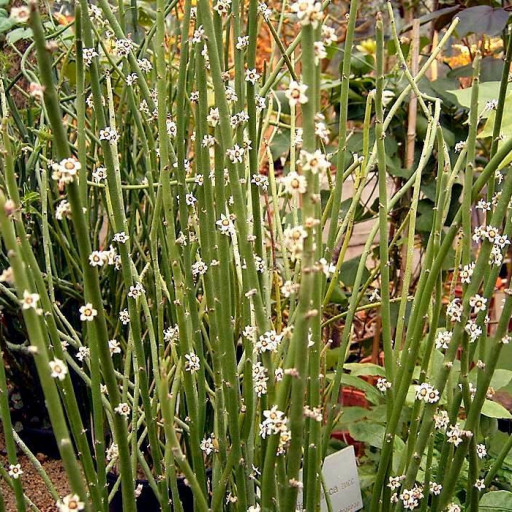
Known as the "Candelilla" or "Little Candle" plant, this striking succulent looks like a cluster of slender, upright pencils reaching toward the sky. Native to the harsh Chihuahuan Desert, it has earned its name from the thick, high-quality wax that coats its stems to prevent evaporation. In the wild, it forms ghostly, architectural clumps that add a desert-chic aesthetic to any water-wise garden.
🔍 How to Identify
- 🌵 The Stems: Smooth, cylindrical, and leafless stems that grow in dense, vertical tufts. They are typically a pale grey-green or "glaucous" color.
- 🌸 The "Flowers": In spring and summer, tiny cream-to-pink "cyathia" (specialized flower structures) appear along the upper stems. They look like miniature stars or eyes looking back at you.
- 🕯️ The Wax: If you scratch a stem, you will notice a distinct waxy coating. This "Candelilla wax" is still used today in lip balms and polishes.
🏡 In Your Garden
- ☀️ Sun & Drought: This plant thrives on neglect and intense sunlight. It has evolved to survive months without rain, so the biggest threat to its health is "wet feet" or overwatering, which leads to rapid root rot.
- 🪴 Potting & Soil: Because it grows via underground rhizomes, it prefers wide, shallow pots rather than deep ones. Always use a gritty, fast-draining cactus mix to mimic its rocky desert home.
⚠️ Safety & Toxicity
- 🚫 Irritant Sap: Like all members of the Euphorbia family, this plant contains a milky white latex (sap). This sap can cause skin irritation, redness, and severe pain if it gets into the eyes.
- 🐾 Pet Warning: The sap is toxic if ingested. Keep it out of reach of curious cats or dogs, as it can cause mouth irritation and digestive distress. Always wear gloves when pruning or propagating.
✨ Fun Fact
The botanical name antisyphilitica comes from an old folk-medicine belief that the plant's sap could cure syphilis. While modern medicine has debunked this, the plant remains incredibly valuable for its wax, which is a popular vegan alternative to beeswax in the cosmetic industry!

Detailed Care Instructions
| Humidity | Normal |
| Lighting | Part Sun |
| Toxicity | Poisonous |
| Difficulty | Medium |
| Hibernation | Cold Period |
| Hardiness Zones | 7 - 10 |
To grow an Euphorbia Antisyphilitica plant, also known as the Candelilla cactus, you can follow these steps:
- Obtain a healthy plant: You can either purchase a young Euphorbia Antisyphilitica plant from a nursery or, if it's legal in your area, collect seeds or cuttings from mature plants.
- Choose the right pot: Select a pot with good drainage holes to prevent waterlogging. Make sure the pot is of appropriate size to accommodate the plant's roots.
- Prepare the soil: Use well-draining soil, such as a cactus or succulent mix, to ensure the plant receives proper drainage.
- Plant the cutting or seeds: If using a cutting, allow it to dry for a few days to form a callus before planting. Insert the cutting around 1-2 inches deep into the soil. If using seeds, sow them on the soil surface and lightly cover with a thin layer of soil.
- Place the pot in a sunny location: Euphorbia Antisyphilitica plants require plenty of sunlight, so place them in a spot that receives at least 6-8 hours of direct sunlight per day.
- Water the plant sparingly: Candelilla plants are drought-tolerant, so it's important to avoid overwatering. Allow the soil to dry partially between each watering, usually every 1-2 weeks, depending on the climate and time of year. Water the plant deeply, ensuring the water drains out of the pot's bottom.
- Provide adequate humidity: Euphorbia Antisyphilitica plants thrive in dry conditions, so high humidity is not necessary. However, if the air is very dry, you can occasionally mist the plant with water to increase humidity slightly.
- Avoid extreme temperatures: Protect the plant from extremely low temperatures to prevent damage. If the temperature drops below 50°F (10°C), it's advisable to bring the plant indoors or provide it with extra protection.
- Prune with care: Pruning is not often required for Euphorbia Antisyphilitica plants. However, if you want to shape the plant or remove any dead or diseased parts, use clean, sharp pruning shears and wear gloves to protect your skin from the plant's sap, which can irritate.
- Fertilize sparingly: Euphorbias generally don't require much fertilizer. If desired, you can use a balanced, diluted cactus fertilizer during the growing season, following the package instructions.
With proper care and attention to its specific requirements, your Euphorbia Antisyphilitica plant should grow well and thrive in your home or garden.

Place in a bright room that is sun drenched almost all day. Or directly in a south-facing window.

To water this particular plant, you should wait until the top layer of soil feels dry to the touch before watering. When watering, be sure to water the soil around the base of the plant directly, being careful to avoid getting water on the leaves or stem. Once the soil has absorbed the water, allow any excess to drain out of the bottom of the pot before returning the plant to its normal location. It is important not to over-water this plant, as it is susceptible to root rot.
- Use a balanced fertilizer with equal amounts of nitrogen, phosphorus, and potassium.
- Apply the fertilizer once per month during the growing season (spring through fall).
- Dilute the fertilizer to half strength before applying to avoid over-fertilization.
- Water the plant thoroughly before and after applying the fertilizer.
- Avoid fertilizing during the winter months when the plant is dormant.
The ideal soil for growing this plant should have good drainage and should be well-aerated. A mixture of sand, perlite, and a well-draining potting mix is recommended. Avoid using heavy or compacted soils that can hold moisture for extended periods of time as this can lead to root rot and other soil-borne diseases. Additionally, it is important to maintain a proper watering regimen to ensure the soil doesn't become too wet or too dry. Adequate drainage holes in the container will also help prevent water retention in the soil.
Propagation of this plant involves taking cuttings from mature stems during the active growing season. Care must be taken to use sharp, sterile tools to avoid damaging the plant or introducing pathogens. The cutting should be at least 4 inches long and should be taken from a stem with healthy leaves. After removing the lower leaves, the cutting should be allowed to dry for several days before planting in well-draining soil. The newly planted cutting should be kept in a warm, bright location and watered sparingly until new growth appears. Overwatering can cause the cutting to rot, so it is important to monitor moisture levels carefully. With proper care, the cutting should develop roots and become a healthy new plant within several months.
Common pests of the candelilla include Scale insect, mealybugs, spider mites. Make a habit of checking your candelilla frequently for pests so that any infestations can be caught and managed early.








