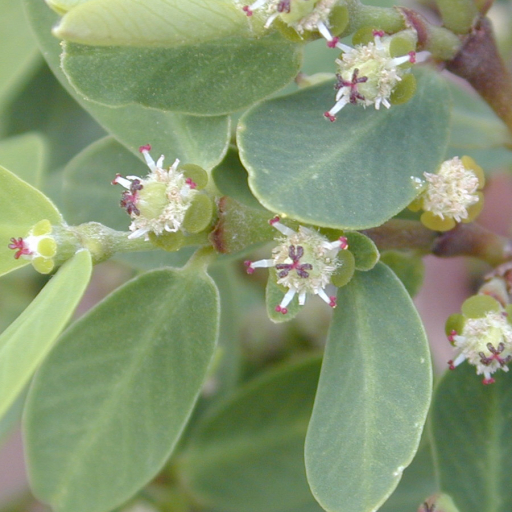
Plant Overview
Known as 'Akoko in its native Hawaii, Euphorbia celastroides is a master of adaptation. From salt-sprayed coastal cliffs to dry upland forests, this resilient shrub has evolved into several unique varieties, each perfectly tuned to its specific island microclimate. It is a prized choice for those looking to bring a touch of ancient, rugged Polynesian beauty into a sustainable, water-wise garden.
🔍 How to Identify
- 🍃 Fleshy Foliage: The leaves are typically oval or oblong and have a slightly succulent, waxy texture that helps the plant retain moisture in harsh conditions.
- 🎋 Woody Architecture: While it may start as a soft green sprout, it quickly develops a rugged, greyish woody stem that gives it the appearance of a miniature, weather-beaten tree.
- 🌼 Gem-like Cyathia: It doesn't have traditional petals; instead, it produces "cyathia," which are tiny, cup-like structures that hold the reproductive parts, often appearing in subtle shades of maroon, yellow, or green.
🏡 In Your Garden
- 🏝️ Coastal Warrior: This is one of the few plants that genuinely enjoys salt spray and high winds. It is an excellent "front-line" plant for seaside homes where other vegetation might be scorched by the brine.
- 🏜️ Xeric Instincts: Because it evolved in volcanic soils, it hates "wet feet." In a garden setting, it requires exceptionally well-draining soil—think cactus mix or added perlite—and prefers to be ignored rather than overwatered.
⚠️ Safety & Toxicity
- 🚫 Irritating Latex: Like almost all Euphorbias, 'Akoko contains a milky white sap (latex) that flows the moment a leaf or stem is broken. This sap is a strong skin and eye irritant.
- 🐾 Pet & Child Safety: Always wear gloves when pruning, and keep the plant away from pets or toddlers. If the sap is ingested, it can cause burning in the mouth and throat, and skin contact often leads to a persistent, itchy rash.
✨ Fun Fact
The name 'Akoko means "blood-colored" in the Hawaiian language. This refers to the striking transformation some varieties undergo, where the leaves and seed pods turn a deep, vivid red as they mature or when they are stressed by the intense tropical sun.

Detailed Care Instructions
To grow Euphorbia celastroides (also known as Devil's Backbone or Cretan Spurge), you can follow these steps:
- Choose the right location: Euphorbia celastroides prefers a sunny location with well-draining soil. It can tolerate partial shade but grows best in full sun.
- Prepare the soil: Ensure the soil is well-draining by adding organic matter such as compost or sand if necessary. This will help prevent waterlogging and root rot.
- Propagation: There are two methods of propagation: from seeds or stem cuttings.
- Seeds: Start by sowing the seeds in a seed tray or pot filled with well-draining soil. Cover them lightly with soil and mist the surface with water. Place the tray in a warm and bright location. Germination may take a few weeks, and once the seedlings are large enough, they can be transplanted into individual pots or directly into the ground.
- Stem cuttings: Take a stem cutting of around 4-6 inches in length from a mature plant. Let the cutting sit for a few days to allow the cut end to callous over. Fill a pot with well-draining soil and stick the cutting into the soil, ensuring the bottom nodes are buried. Water the cutting lightly and place it in a warm, bright location. After a few weeks, roots should start to develop, indicating successful propagation.
- Seeds: Start by sowing the seeds in a seed tray or pot filled with well-draining soil. Cover them lightly with soil and mist the surface with water. Place the tray in a warm and bright location. Germination may take a few weeks, and once the seedlings are large enough, they can be transplanted into individual pots or directly into the ground.
- Watering: Euphorbia celastroides plants prefer a moderate amount of water. Allow the top inch of soil to dry between waterings, then give it a thorough watering without leaving the plant sitting in water.
- Fertilization: Apply a balanced liquid fertilizer once every few weeks during the growing season (spring to fall) to promote healthy growth.
- Pruning: If the plant becomes too leggy or slightly unruly, you can prune it to maintain its shape. However, be cautious as all parts of Euphorbia celastroides contain a white sap that can be irritating to the skin and eyes. Wear gloves and eye protection when pruning.
- Pests and Diseases: Euphorbia celastroides is generally resistant to pests and diseases. However, it can occasionally attract aphids or mealybugs. Treat the infestation with an insecticidal soap or a mixture of water and mild dish soap.
Remember to always wear gloves and take necessary precautions when handling Euphorbia celastroides plants due to the toxic sap.

Place in a bright room that is sun drenched almost all day. Or directly in a south-facing window.

To water this plant, you should first check the soil moisture level by sticking your finger about an inch deep into the soil. If the soil feels dry, it's time to water. When watering, pour water slowly and evenly around the base of the plant, making sure not to let the water splash on the leaves or stem. Allow the soil to soak up the water and drain away excess water. Repeat watering when the soil feels dry again. Avoid overwatering as this can lead to root rot and other issues.
To fertilize this plant, mix a balanced, water-soluble fertilizer with water according to the package instructions. Apply the fertilizer solution around the base of the plant, being careful not to get any on the leaves or stems. Water the plant thoroughly after fertilizing to help distribute the nutrients. Fertilize every 2-4 weeks during the growing season and reduce to once a month during the dormant season.
Euphorbia Celastroides requires well-draining soil with good aeration. It is important to use a mixture that consists of equal parts of sand, perlite, and peat moss to ensure optimal growth. The soil should be slightly acidic, with a pH between 5.5 and 6.5. Avoid using heavy or clay soils, as they do not allow for adequate drainage and may lead to waterlogging. Additionally, Euphorbia Celastroides prefers a fertile soil that is rich in organic matter. Adding compost or aged manure as an amendment can improve soil fertility and promote healthy growth. When potting, ensure that the soil is firmly packed around the plant's roots to prevent it from falling over.
To propagate this plant, you will need to start with a healthy specimen that has several stems. Choose a stem that is at least 6 inches long and has at least two sets of leaves. Remove the lower leaves, leaving only the top two sets. Allow the cut to dry for a few days so that it can callus over.
Fill a pot with a well-draining soil mix, such as a cactus or succulent mix, and make a hole in the center. Dip the end of the cut stem in rooting hormone powder and insert it into the hole. Water the soil until it is moist but not waterlogged.
Place the pot in a bright, indirect light and keep the soil moist. You can cover the pot with a plastic bag to create a humid environment that will encourage root growth. After a few weeks, check to see if roots have formed by gently tugging on the stem. If the stem resists, your cutting has successfully rooted.
Once the cutting has rooted, you can remove the plastic bag and move the pot to a brighter location. Allow the plant to continue growing in this pot until it outgrows it, and then transplant it into a larger pot or into your garden.








