Plant Overview
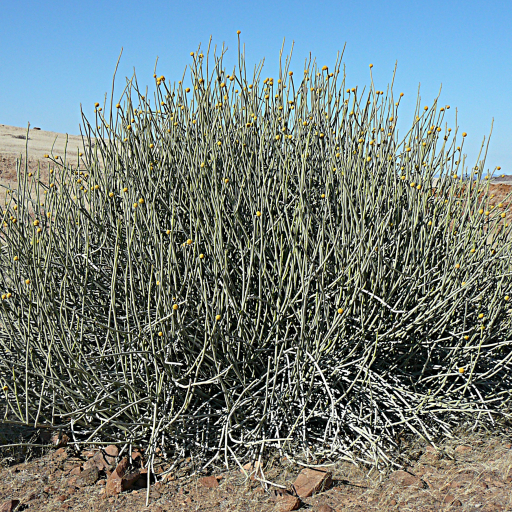
Known as the Damara Milk-bush, Euphorbia damarana is a true survivor of the desolate Namib Desert. Resembling a cluster of upright, leafless wands, this succulent shrub is a master of water storage in some of the harshest environments on Earth. In its native landscape, it forms hauntingly beautiful, yellowish-green clumps that stand out like desert skeletons against red sands and rocky plains.
🔍 How to Identify
- 🌵 Stem Structure: It grows as a multi-stemmed shrub, featuring dense, upright, cylindrical branches that emerge from a central base, creating a rounded, mop-like silhouette.
- 🎨 Color Palette: The stems range from a pale, ghostly grey-green to a vibrant yellowish-hue, often appearing "waxy" or dusty to help the plant reflect intense sunlight.
- 💧 The Latex: Like most in its family, if a stem is nicked or broken, the plant immediately "bleeds" a thick, white, milky sap that is famously potent and sticky.
🏡 In Your Garden
- 🏜️ Desert Specialist: This plant is adapted to extreme aridity; in a home or garden setting, it requires exceptionally gritty, mineral-heavy soil. It will rot almost instantly if kept in standard peat-based potting mixes.
- ☀️ Light & Air: It thrives on neglect but demands the brightest light possible. It is best suited for rock gardens in frost-free zones or as a "statement" container plant on a sun-drenched patio where it won't be bumped into.
⚠️ Safety & Toxicity
- 🚫 Hazardous Sap: The milky latex is highly caustic and considered one of the most toxic in the Euphorbia genus. It can cause severe skin blistering and agonizing pain.
- 👁️ Blindness Warning: Extreme caution must be taken when pruning. If the sap touches the eyes, it can cause intense inflammation and even temporary or permanent blindness.
- 🐾 Pets & Kids: This is not a family-friendly plant. It should be kept strictly out of reach of pets and children, as even small amounts of ingestion or skin contact can lead to a medical emergency.
✨ Fun Fact
The sap of Euphorbia damarana is so potent that it was historically used by indigenous hunters in Namibia to poison watering holes. The poison was strong enough to take down large game, though the hunters had to be incredibly careful about which parts of the animal they consumed afterward!

Detailed Care Instructions

Place in a bright room that is sun drenched almost all day. Or directly in a south-facing window.

When the top few inches of soil dry out, water your plants. If the top few inches of soil are still moist, do not water your plant. Wait a few days, then poke your finger into the soil to see if anything has changed. Overwatering poses a disease risk, such as the development of fungal diseases in the roots. These plants have adaptations in there leaves that allow them to survive in low water supply.








