Plant Overview
Often called "Wolf's Milk" for its thick, burning sap, the Leafy Spurge is a hardy perennial known for its incredible resilience. While its vibrant lime-green appearance can be quite striking in a field, it is a notorious wanderer that has claimed vast stretches of grassland across North America since arriving from Eurasia. In historical folklore, spurges were sometimes linked to protection against evil spirits, though modern gardeners know them better for their stubborn persistence.
🔍 How to Identify
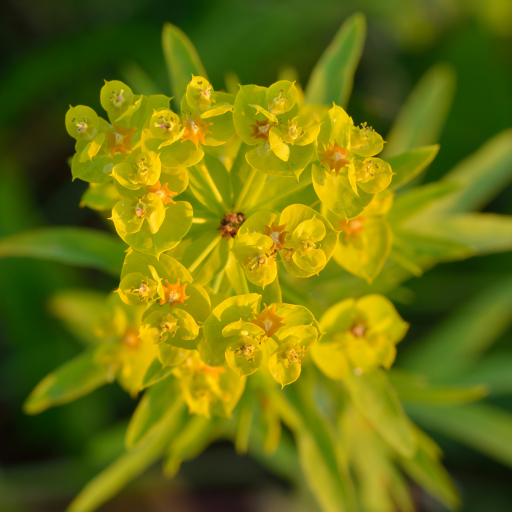
- 💛 The "Flowers": What look like petals are actually heart-shaped, yellowish-green leaf structures called bracts. The true flowers are tiny and tucked inside these showy cups.
- 🌿 The Foliage: The plant features narrow, lance-shaped leaves that are a distinct bluish-green. They grow thickly along the stem, giving it a somewhat "bottlebrush" appearance.
- 🥛 The Milky Sap: If you break a stem or leaf, the plant immediately leaks a thick, white, sticky latex. This is a primary identifying feature of the Euphorbia family.
🏡 In Your Garden & Environment
- 🌱 Root Resilience: This plant is famous for its massive root system, which can reach depths of nearly 30 feet! This makes it nearly impossible to pull out by hand, as any tiny fragment left behind will regenerate into a new plant.
- 🚀 Explosive Spread: Leafy Spurge doesn't just wait for the wind; its seed pods are pressurized. When ripe, they "explode," launching seeds up to 15 feet away from the parent plant to ensure a wide territory.
⚠️ Safety & Toxicity
- 🚫 Hazardous Sap: All parts of the plant contain a toxic white latex. This sap contains diterpenes that can cause severe skin blistering, redness, and swelling upon contact.
- 🐾 Pet & Livestock Warning: It is toxic to most livestock, particularly horses and cattle, which will avoid grazing near it. Keep curious dogs and children away, as ingestion causes severe gastrointestinal distress and the sap can cause temporary blindness if it gets into the eyes.
✨ Fun Fact
Leafy Spurge is so difficult to control that scientists have enlisted the help of "Leafy Spurge Flea Beetles." These specialized insects are released as a form of biocontrol to eat the plant from the inside out, helping restore balance to local ecosystems!

Detailed Care Instructions
To grow Euphorbia esula (also known as leafy spurge), you can follow these steps:
- Choose the right location: Euphorbia esula prefers full sun to partial shade and well-draining soil. Ensure that the area you select receives at least 6 hours of direct sunlight daily.
- Prepare the soil: Euphorbia esula can adapt to various soil types, but it grows best in fertile, loamy soil. Remove any rocks or weeds from the planting area, and amend the soil with organic matter, such as compost, to improve drainage and nutrient content.
- Planting: Dig a hole twice as wide and deep as the plant's root ball. Place the Euphorbia esula plant in the hole, ensuring that the top of the root ball sits level or slightly above the soil surface. Backfill the hole with soil, gently firming it around the plant's base.
- Watering: Initially, water the newly planted Euphorbia esula thoroughly to help establish its root system. After that, water the plant deeply but infrequently, allowing the soil to dry out between waterings. Avoid overwatering, as Euphorbia esula prefers slightly drier conditions.
- Mulching: Apply a layer of organic mulch, such as wood chips or straw, around the base of the plant. Mulching helps retain soil moisture, reduce weed growth, and regulate soil temperature.
- Maintenance: Regularly remove any weeds that may compete with the Euphorbia esula plant for nutrients and water. Additionally, prune back any dead or damaged stems during the plant's dormant season in late fall or early spring.
- Pests and diseases: Euphorbia esula is relatively resistant to pests and diseases. However, occasionally aphids or flea beetles may infest the plant. Monitor for any signs of pest damage and treat if necessary, using appropriate organic or chemical controls.
- Propagation: Euphorbia esula can be propagated from seeds or stem cuttings. Collect the seeds or take stem cuttings during the plant's active growth period and follow specific propagation instructions for optimal results.
Remember that Euphorbia esula can be invasive in some regions, so it's important to check if it's suitable for your location and adhere to any local regulations regarding its cultivation.

Place in a bright room that is sun drenched almost all day. Or directly in a south-facing window.

Euphorbia Esula is a type of plant that requires proper watering techniques in order to thrive. In order to water this plant, one should begin by ensuring that the soil is slightly moist. This can be accomplished by watering the plant once every week, or by checking the soil moisture level with a moisture meter. Once the soil has been checked, the plant should be watered thoroughly, ensuring that the entire root system is covered. However, it is important to avoid over-watering the plant, as this can lead to root rot and other issues. Additionally, the water used for watering should be free from any harmful chemicals or pollutants, as these can harm the plant and affect its growth. Overall, proper watering techniques are essential for the health and growth of Euphorbia Esula.
To fertilize this plant, begin by selecting a balanced fertilizer with equal proportions of nitrogen, phosphorus, and potassium. Dilute the fertilizer to half strength and apply it to the soil around the base of the plant once a month during the growing season. Be sure to water the plant well before and after fertilizing to prevent burning the roots. During the dormant season, reduce fertilizing to once every three months.
The ideal soil for the plant in question should be well-draining and fertile. It should have a slightly acidic to neutral pH level. It is best to avoid soils that are too heavy and retain too much moisture, as this can cause root rot. Adding perlite or sand to the soil can improve drainage. It is important to note that this plant is sensitive to high levels of salt, so using a soil mix that contains high levels of fertilizer is not recommended. In general, a soil mix made up of equal parts of peat moss, perlite, and sand will provide a good balance of drainage, water retention, and fertility for this plant.
To propagate this particular plant, you will need to start by selecting a healthy specimen with strong roots and firm stems. Cut a section of stem that is approximately 2-3 inches long, making sure to use a clean and sharp pair of garden shears.
Remove any leaves from the lower two-thirds of the stem, taking care not to damage the remaining foliage. Dip the cut end of the stem into rooting hormone powder, and then plant it firmly into a pot of well-draining soil.
Water the plant thoroughly, taking care not to saturate the soil, and then place the pot in a warm and well-lit area. Over the following weeks, keep the soil moist but not soggy, and watch for new growth to appear.
Once the new plant has established a healthy root system and is showing signs of vigorous growth, you can transplant it into a larger container or into your garden bed. Remember to keep the soil well-draining and avoid overwatering, as this can cause root rot and other issues.








