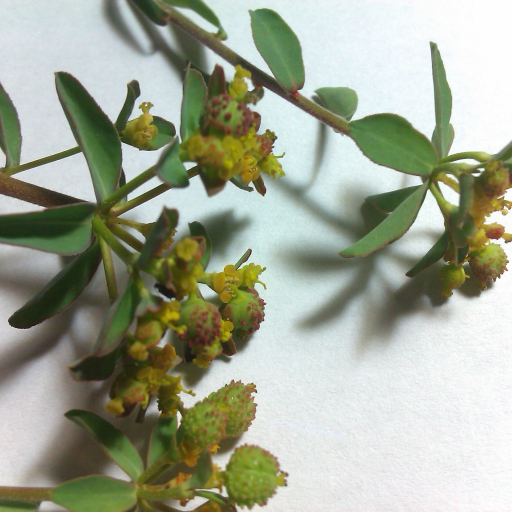
Plant Overview
Known affectionately as the "Hairy Spurge," Euphorbia hirsuta is a Mediterranean native that brings a soft, textured look to wilder garden patches. Unlike its more sculptural, cactus-like cousins, this plant feels more like a soft meadow herb, though it hides the classic "spurge" secret: a potent, milky sap. It is frequently found near marshes or damp ditches, making it a unique, water-loving member of the diverse Euphorbia family.
🔍 How to Identify
- 🌿 Velvety Texture: True to its name (hirsuta means "hairy"), both the stems and the leaves are covered in fine, soft hairs, giving the plant a slightly silvery or muted green appearance.
- 🌼 Golden Blooms: It features "cyathia"—small, cup-like flower structures—that are a bright chartreuse or yellow-green, appearing in clusters at the tips of the stems during late spring.
- 🍃 Leaf Shape: The leaves are generally oblong to lance-shaped with very finely serrated edges, arranged alternately along the upright stems.
🏡 In Your Garden
- 💧 Moisture Preferences: Unlike many of its desert-dwelling relatives, this spurge thrives in damp soil. It is a fantastic choice for the margins of a pond or those "trouble spots" in the garden that stay naturally moist.
- ☀️ Light and Space: It enjoys full sun to partial shade. In the garden, it acts as a "filler" plant, softening the edges of more rigid perennials with its fuzzy, cloud-like growth habit.
⚠️ Safety & Toxicity
- 🚫 Irritating Latex: The plant contains a thick, milky white sap (latex) that is highly caustic. It can cause redness, itching, and even blisters upon skin contact.
- 👁️ Eye and Pet Warning: Never touch your eyes after handling this plant. It is toxic to cats, dogs, and horses if ingested, causing severe mouth irritation and digestive distress. Always wear gloves when weeding or pruning.
✨ Fun Fact
- 📜 The "Purge" Connection: The common name "Spurge" is derived from the Old French word espurge, meaning "to purge." Historically, the potent and dangerous sap of various Euphorbia species was used as a violent laxative in medieval folk medicine—a practice definitely not recommended today!

Detailed Care Instructions
To grow Euphorbia hirsuta, also known as hairy spurge, you can follow these steps:
- Planting Location: Choose a well-draining location with full sun or partial shade. Euphorbia hirsuta can tolerate some drought conditions but prefers regular watering.
- Soil Preparation: Prepare the soil by removing any weeds or existing plants. Euphorbia hirsuta can thrive in various soil types but prefers a sandy or loamy soil that is slightly acidic to neutral pH.
- Planting Method: If you have seeds, sow them in the prepared soil, making sure to cover them lightly with a thin layer of soil. Water gently after planting to maintain moisture.
- Watering: Water regularly, ensuring the soil remains consistently moist but not waterlogged. Avoid overwatering, as this can cause root rot.
- Fertilization: Euphorbia hirsuta doesn't require much fertilization. However, you can feed it with a balanced, slow-release fertilizer once a year, preferably in the spring.
- Pruning: Once the plant has grown, you can prune it lightly to maintain its shape and encourage bushy growth. Wear gloves during pruning, as the sap of Euphorbia hirsuta can cause skin irritation.
- Pests and Diseases: Euphorbia hirsuta is generally resistant to pests and diseases. However, keep an eye out for common garden pests like aphids or mealybugs. If spotted, control them using insecticidal soap or neem oil.
- Propagation: Euphorbia hirsuta can be propagated through seeds or stem cuttings. To propagate through cuttings, take a stem from a mature plant and let it air dry for a few days. Plant the cutting in a well-draining medium and water lightly until roots develop.
Remember, Euphorbia hirsuta is a relatively low-maintenance plant but can be toxic if ingested. Take necessary precautions if you have pets or children around.

Place in a bright room that is sun drenched almost all day. Or directly in a south-facing window.

To water this plant, you should first examine the soil to ensure it is dry before watering. When watering, you should aim to water the soil directly surrounding the plant's roots until it is thoroughly moistened. Be sure to avoid getting water directly on the leaves or stems of the plant. It is also important to make sure that the soil is able to drain excess water, as this plant does not tolerate soggy conditions. Watering should be done on a regular basis, but be careful not to overwater, as this can lead to root rot and other issues.
To fertilize this plant, use a balanced fertilizer with equal parts nitrogen, phosphorus, and potassium. Apply the fertilizer in the spring when new growth appears and again in mid-summer. Use a slow-release fertilizer for best results. Avoid fertilizing in the fall or winter as the plant is dormant during these seasons. Always follow the instructions on the fertilizer package and do not over-fertilize, as this can harm the plant.
The ideal soil for Euphorbia Hirsuta should be well-draining and well-aerated. The best soil composition should be a mixture of loam, sand, and perlite. This will provide the right proportion of nutrients, water retention, and air circulation required for healthy growth of the plant. The soil acidity level should be neutral to slightly alkaline, with a pH range between 6 to 7.5. It should not be too rich in organic matter, as this can cause the plant to grow excessively and develop weak stems. A soil blend that is too dense can also retain too much moisture, leading to root rot. It is important to avoid using heavy clay soils or those that are prone to compaction, which can restrict root growth and lead to stunted or unhealthy plants.
To propagate this plant, you will need a pair of clean and sharp pruning shears, a container of well-draining soil mix, and rooting hormone powder (optional). Begin by selecting a healthy stem cutting from the parent plant, making sure it's at least 3 inches long and has several leaves attached. Take the pruning shears and make a clean cut just below a node (where the leaf attaches to the stem). Remove any leaves on the lower half of the stem and dust the cut end with rooting hormone powder (if desired). Make a small hole in the soil mix with your finger and gently place the cutting inside, firming the soil around it. Water the soil lightly and place the container in a bright, indirect light location. Keep the soil moderately moist and avoid letting it dry out completely or become waterlogged. Within a few weeks, the cutting should begin to root and produce new growth. Once the roots have established, it can be transplanted into a larger container or directly into the garden.








