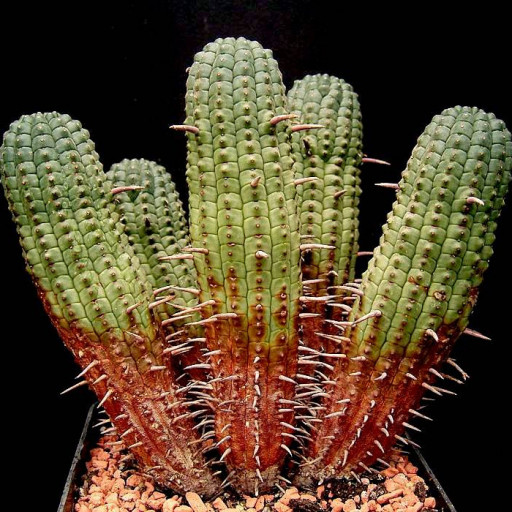
Plant Overview
Often called the "Indian Corn Cob," this charming succulent is a master of disguise. Native to the rocky terrains of South Africa, it has evolved to look more like a vegetable than a typical desert plant. Its unique, geometric structure and architectural presence make it a favorite for "living rock" collectors and minimalist indoor decorators alike.
🔍 How to Identify
- 🌽 The "Cob" Stems: Thick, cylindrical green stems that grow upright, featuring distinct rows of bumps (tubercles) that mimic the look of corn kernels.
- 🌵 Faux Thorns: It features "peduncles" (dried flower stalks) that look like blunt, woody spines. They aren't as sharp as cactus needles but still provide a prickly defense.
- 🎨 Color Palette: While the standard form is a rich club-green, the popular "Variegata" version looks like it has been dusted with powdered sugar, showing off creamy white and pale pink hues.
🏡 In Your Garden
- ☀️ Sun Seeker: This plant thrives in bright, indirect light. While it loves the sun, its "kernels" can actually get a sunburn (turning brown or calloused) if moved too quickly from a dark corner to a scorching patio.
- 💧 Drought Specialist: Because it stores so much moisture in its fat stems, it hates "wet feet." It requires extremely well-draining soil—think gritty cactus mix—and should only be watered when the soil is bone-dry to the touch to prevent root rot.
⚠️ Safety & Toxicity
- 🚫 Toxic Sap: Like all members of the Euphorbia family, this plant contains a thick, milky white latex sap.
- 👀 Irritant Alert: This sap is a significant irritant. It can cause skin rashes upon contact and is extremely dangerous if it gets into the eyes. Always wear gloves when pruning or propagating, and keep it on a high shelf away from curious pets and children.
✨ Fun Fact
Despite its prickly appearance, Euphorbia mammillaris is not a cactus! You can always tell the difference by the sap: if you nick a cactus, it usually bleeds clear "water," but a Euphorbia will always bleed its signature white "milk."

Detailed Care Instructions
To grow Euphorbia Mammillaris, also known as "Indian Corn Cob," you can follow these steps:
- Choose the right container: Select a pot or container that provides adequate drainage and is slightly larger than the plant's root system. Ensure it has drainage holes to prevent waterlogging.
- Soil requirements: Euphorbia Mammillaris prefers well-draining soil. Use a cactus or succulent potting mix, or make your own by mixing equal parts of regular potting soil, perlite, and coarse sand.
- Planting: Fill the container with the prepared soil mix and create a small hole for the plant. Gently place the Euphorbia Mammillaris in the hole, ensuring that the roots are covered with soil. Press the soil gently around the base of the plant to stabilize it.
- Light: Place the plant in a location where it can receive bright, indirect sunlight. Euphorbia Mammillaris thrives in a sunny environment but should be protected from intense, direct sunlight, as it may cause sunburn.
- Watering: Allow the soil to dry out completely between waterings. Euphorbia Mammillaris is a succulent plant and is adapted to dry conditions. Overwatering can lead to root rot and other issues. Water sparingly, and when you do, make sure the water drains out from the bottom of the pot.
- Temperature and humidity: Euphorbia Mammillaris prefers moderate to warm temperatures between 60-85°F (15-30°C). It can handle various humidity levels, but it thrives best in dry conditions.
- Fertilization: During the growing season (spring and summer), you can apply a diluted cactus fertilizer once every 4-6 weeks. Follow the instructions on the fertilizer packaging for the correct dilution ratio.
- Pruning and propagation: If needed, you can prune the plant to maintain its shape and size. Wear gloves and use caution as the milky sap of Euphorbias can be irritating to the skin and toxic if ingested. Propagation is usually done through stem cuttings. Allow the cut end to dry out for a few days before planting it in well-draining soil.
- Pests and diseases: Euphorbia Mammillaris is generally resistant to pests and diseases. However, occasionally, mealybugs and spider mites can infest them. Inspect the plant regularly and treat any infestation promptly with organic or chemical pest control methods.
Remember, it's always essential to research and understand the specific care requirements of any plant species you intend to grow.

Place in a bright room that is sun drenched almost all day. Or directly in a south-facing window.

To water this specific plant, it is important to make sure that the soil has dried out completely before watering again. The best way to determine if it needs water is to stick your finger into the soil about an inch deep and check for moisture. When watering, it is important to avoid getting water on the leaves or stem as this can cause fungal issues. Water at the base of the plant and make sure the water drains out completely. During the winter months when the plant is not actively growing, water sparingly.
The Euphorbia Mammillaris plant should be fertilized during the growing season, which typically occurs from early spring to late summer. Use a balanced, water-soluble fertilizer with an equal ratio of nitrogen, phosphorus, and potassium. Dilute the fertilizer to half-strength and apply it every two to three weeks. Avoid over-fertilizing the plant as it can lead to root burn and other issues. Always follow the fertilizer manufacturer's instructions for best results.
Euphorbia Mammillaris prefers sandy or well-draining soil, preferably with a slightly acidic to neutral pH level. It is important that the soil does not retain excess moisture, as this may cause root rot and harm to the plant. A good mix for this plant can include a combination of sand, perlite, and regular potting soil. The soil should be allowed to dry out slightly between waterings, as overwatering can also lead to issues. It is also important to fertilize the plant occasionally with a balanced fertilizer during the growing season to encourage healthy growth.
To propagate this plant, take a cutting from a healthy stem. Cut just below a node, and remove any leaves from the bottom of the stem. Allow the cut to callus over for a few days to prevent rotting, and then plant the cutting in a well-draining soil mix. Keep the soil moist but not waterlogged and place the pot in a bright, indirect light. It should take a few weeks for the cutting to root, and then you can treat it as a mature plant.
Common pests of the corncob-cactus include Scale insect, mealybugs, spider mites. Make a habit of checking your corncob-cactus frequently for pests so that any infestations can be caught and managed early.








