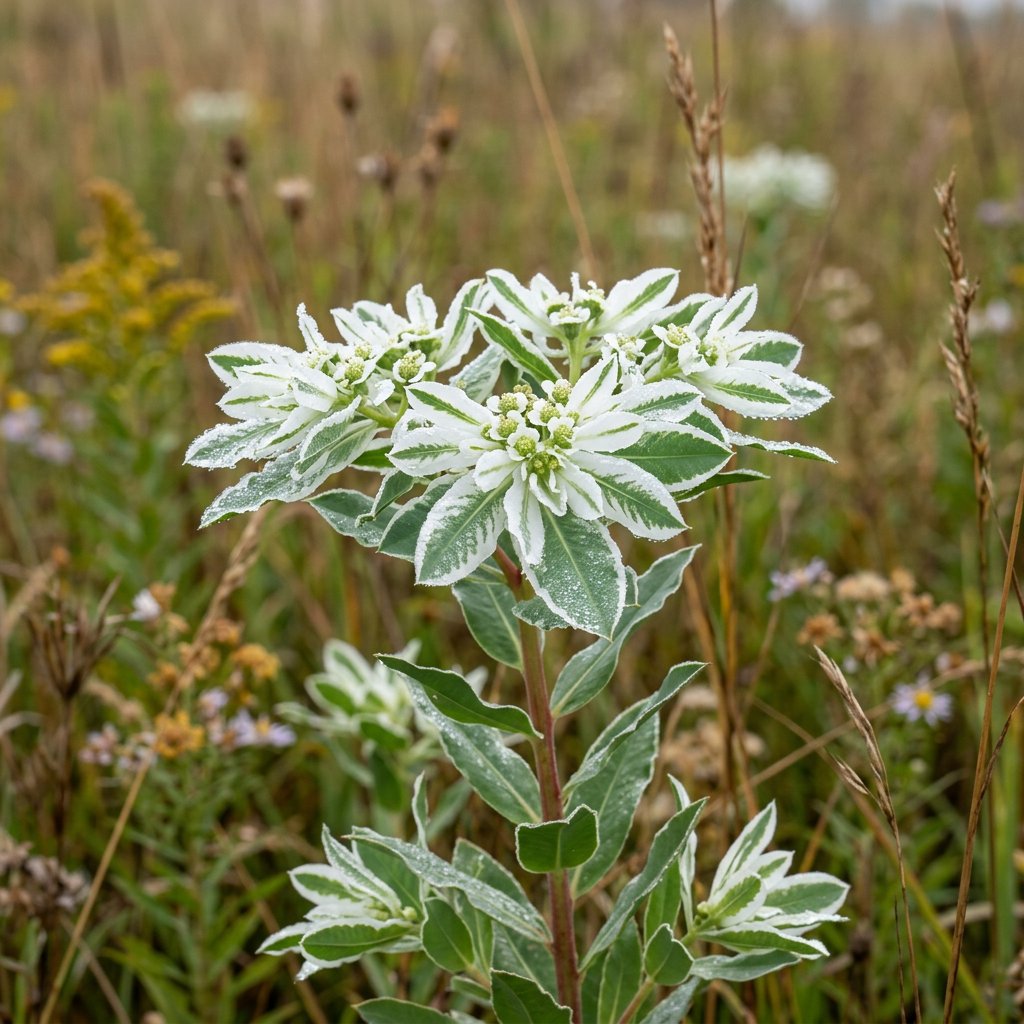
Plant Overview
Known widely as Snow-on-the-Mountain, this striking annual is a master of visual deception. While it looks like it has been dusted by a sudden mid-summer blizzard, those "white petals" are actually modified leaves called bracts. Native to the North American prairies, it has long been a favorite in "moonlight gardens" because its bright white margins seem to glow in the twilight.
🔍 How to Identify
- ❄️ The Foliage: The lower leaves are a soft, ovate green, but as the plant matures toward the top, the leaves develop broad, icy-white margins that eventually turn almost entirely white.
- 🌼 The "Flowers": The true flowers are tiny, inconspicuous green cups in the center of the white bracts, appearing in late summer.
- 🥛 The Sap: Like most members of the spurge family, snapping a stem reveals a thick, sticky, milky white latex sap.
🏡 In Your Garden
- 🌱 Root Sensitivity: This plant develops a deep taproot early on, which makes it incredibly drought-tolerant but also means it absolutely hates being transplanted. It is best to sow seeds directly where you want them to stay.
- ☀️ Heat Lover: While many plants wilt in the August heat, Euphorbia marginata thrives. It uses its light-colored foliage to reflect intense sunlight, making it a rugged choice for exposed, sunny borders where other flowers might scorched.
⚠️ Safety & Toxicity
- 🚫 Irritant Warning: The milky sap is caustic. If it gets on your skin, it can cause redness, itching, or even blisters similar to poison ivy. Always wear gloves when pruning or thinning.
- 🐾 Pet & Child Safety: All parts of the plant are toxic if ingested. It can cause severe stomach upset and oral irritation in cats, dogs, and humans. Keep it away from high-traffic play areas.
✨ Fun Fact
In the past, the caustic sap of Snow-on-the-Mountain was sometimes used by ranchers as a chemical brand for cattle when heat-branding wasn't an option, as the sap is potent enough to scar the skin.

Detailed Care Instructions
Here are some steps to help you grow Euphorbia Marginata plant:
- Choose the right location: Euphorbia Marginata prefers full sun or partial shade. Pick a spot in your garden that receives at least 6 hours of direct sunlight.
- Prepare the soil: The plant prefers well-draining soil. Amend the soil with organic matter to improve drainage and fertility.
- Planting: Sow the seeds directly in the garden after the last frost date. Make small holes about 1/4-inch deep and place 2-3 seeds in each hole. Space the holes about 12-18 inches apart to allow for proper growth.
- Watering: Water the seeds gently after planting. Keep the soil consistently moist but not saturated. Avoid overwatering, as it may cause root rot. Once the plant is established, it is tolerant of drought conditions.
- Fertilizing: Apply a balanced, slow-release fertilizer in early spring to promote healthy growth. Follow the packaging instructions for application rates.
- Pruning: Trim back any dead or damaged branches to maintain a tidy appearance. It's important to wear gloves when pruning Euphorbia Marginata as the sap may cause skin irritations.
- Pests and diseases: Monitor for common pests like aphids or spider mites. Treat any infestations promptly with organic insecticides or use neem oil. Regarding diseases, ensure good air circulation around the plants to prevent issues related to excess moisture.
- Winter care: Euphorbia Marginata is an annual plant, which means it completes its life cycle in one growing season. At the end of the season, allow some of the flowers to go to seed. You can collect the seeds and store them for future planting.
By following these steps, you should be able to successfully grow Euphorbia Marginata plant. Good luck!

Place in a window with dappled sun or a spot in the middle of a room. Or directly in a window facing west or east.

When watering this plant, it is important to keep in mind its watering needs. It is recommended to water the plant deeply, but infrequently, allowing the soil to dry out slightly between watering. It is important not to overwater the plant, as this can lead to root rot. It is also important to avoid getting water on the leaves or stem of the plant, as this can cause damage. When watering, aim for the soil around the base of the plant. It is recommended to use a watering can or hose with a soft spray attachment to avoid disturbing the soil. You can also check the soil moisture level by sticking your finger about an inch into the soil. If it feels dry, it’s time to water.
For best results, fertilize this plant once every two weeks during the growing season using a balanced liquid fertilizer. Be sure to dilute the fertilizer according to package instructions and water the plant thoroughly before and after applying the fertilizer. Avoid fertilizing during the winter months when the plant is dormant.
Euphorbia Marginata plant prefers well-draining soil that is slightly acidic and fertile. The soil should be lightweight and airy, allowing for water to drain well and avoid waterlogging. A mixture of coarse sand, perlite, and peat moss can create a well-draining soil mix perfect for this plant. It can also benefit from adding organic matter such as compost or aged manure to the soil to improve its nutrient content. It is important to avoid using heavy soils, such as clay or loam, that retain moisture for too long, as this can lead to root rot and other soil-related diseases.
Propagation of this plant can be done through stem cuttings. First, select a healthy, mature stem with at least three nodes. Use a sharp, sterile knife or scissors to cut the stem just below a node. Remove the lower leaves from the cutting, leaving only 2-3 leaves at the top.
Optional: Dip the cut end of the stem in rooting hormone powder to encourage root growth.
Fill a small pot or container with a well-draining soil mixture. Make a small hole in the soil and place the cutting inside, gently pressing the soil around it to hold it in place. Water the cutting lightly, being careful not to waterlog the soil.
Place the pot in a bright, warm location, but avoid direct sunlight. Keep the soil moist but not waterlogged, and wait for new growth to appear. After a few weeks, the cutting should start to root and new leaves should appear - a sign that it has successfully propagated.








