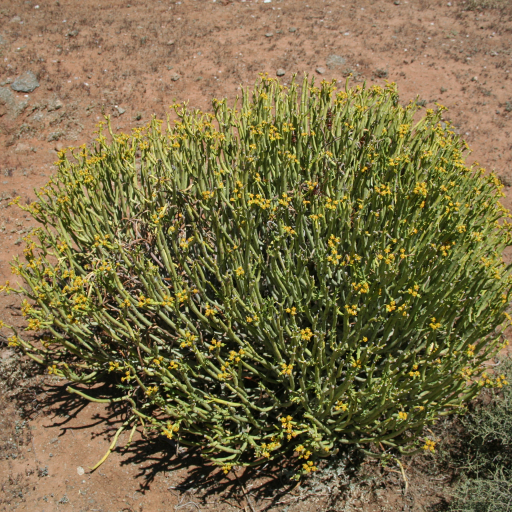
Plant Overview
Often called the Honey Spurge or Yellow Milkbush, this South African succulent is a master of desert minimalism. Looking like a collection of bright green pencils crowned with golden jewelry, it brings a structural, architectural vibe to any garden. In its native Karoo habitat, it is a hardy survivor that provides a splash of "neon" color against the dusty earth.
🔍 How to Identify
- 🌿 The Stems: Smooth, cylindrical, and succulent stems that grow in dense, upright clumps. They lack traditional leaves for most of the year to conserve water in harsh heat.
- 🌼 The "Flowers": Tiny, vibrant yellow-green structures called cyathia cluster at the very tips of the branches, creating a "glowing" effect during the blooming season.
- 📏 Growth Habit: It naturally forms a rounded, symmetrical shrub that can reach up to 3 feet in height, looking almost like a green sea anemone on land.
🏡 In Your Garden
- ☀️ Sun Worshipper: This plant thrives in intense light. If grown indoors, it needs your brightest south-facing window; otherwise, the stems will stretch and lose their tight, architectural shape.
- 🏜️ Drainage is Non-Negotiable: Because it evolved in rocky, arid soils, its roots will rot quickly in standard potting mix. Use a gritty cactus blend and terracotta pots to allow the roots to "breathe" between drinks.
- 💤 Summer Dormancy: Unlike many common houseplants, it may drop its tiny, temporary leaves and stop growing during the peak of summer heat to protect itself. Don't mistake this for a cry for more water—it's just taking a seasonal nap.
⚠️ Safety & Toxicity
- 🚫 Toxic Sap: Like all members of the Euphorbia family, it contains a thick, white milky latex that is highly irritating to the skin and mucous membranes.
- 🧤 Handle with Care: The sap can cause severe skin rashes and is particularly dangerous if it gets into the eyes. Always wear gloves and eye protection when pruning, and keep the plant out of reach of curious pets and children.
✨ Fun Fact
- 🍯 The Honey Scent: Despite its toxic nature, its flowers produce a surprisingly sweet, heavy honey-like fragrance. This scent is specifically designed to attract a wide variety of specialist pollinators, including flies and wasps, who are immune to the plant's chemical defenses!

Detailed Care Instructions
To grow Euphorbia mauritanica (also known as Cushion Spurge or Moroccan Spurge), follow these steps:
- Choose a suitable location: Euphorbia mauritanica prefers full sun or partial shade conditions. It can be grown both in the ground and in containers. Ensure the soil is well-drained.
- Prepare the soil: Before planting, amend the soil with organic matter like compost or well-rotted manure to improve its fertility and drainage.
- Start from seeds: If you have access to seeds, sow them indoors in early spring, as they require a bit of warmth to germinate successfully. Lightly cover the seeds with soil and keep them moist. Transplant the seedlings outdoors when the weather warms up.
- Transplant nursery-bought plants: If you purchase plants from a nursery, dig a hole in the prepared soil and carefully place the plant in it. Gently firm the soil around the roots and water thoroughly.
- Watering: Euphorbia mauritanica prefers dry to medium moisture levels, so avoid overwatering. Water deeply but infrequently, allowing the soil to dry out between waterings.
- Mulch: Apply a layer of organic mulch around the base of the plant to help retain moisture in the soil and inhibit weed growth.
- Pruning: Trim off any dead, damaged, or diseased branches or stems as needed throughout the growing season. It's important to wear gloves and long sleeves when pruning, as the sap can irritate the skin.
- Fertilization: Generally, Euphorbia mauritanica doesn't require much fertilization. However, you can apply a balanced, slow-release fertilizer in spring to encourage healthy growth.
- Winter care: Euphorbia mauritanica is typically hardy in USDA zones 6-9, but may require winter protection in colder climates. Cover the plant with a layer of mulch or move potted plants indoors to protect them from frost.
- Watch for pests and diseases: Monitor your plants regularly for signs of pests like aphids or mealybugs. If infestation occurs, treat with an appropriate insecticide. Euphorbia mauritanica is generally disease-resistant but can be affected by root rot if overwatered.
By following these care steps, you can successfully grow Euphorbia mauritanica, providing a vibrant addition to your garden or container display.

Place in a bright room that is sun drenched almost all day. Or directly in a south-facing window.

Euphorbia mauritanica, also known as its common names, requires proper watering to ensure its healthy growth. Here's how to water this plant effectively:
1. Observe the soil moisture: Before watering, check the moisture level of the soil. Insert your finger about an inch into the soil to assess its dryness. If it feels dry, it's time to water the plant.
2. Use well-draining soil: Euphorbia mauritanica prefers well-draining soil to prevent waterlogging, which can lead to root rot. Ensure the soil has good drainage properties to avoid excessive moisture retention.
3. Watering technique: When watering this plant, use a gentle stream of water to moisten the soil evenly. Avoid using a strong stream as it can damage or dislodge the plant's shallow roots. Ideally, use a watering can or a hose attachment with a gentle spray nozzle.
4. Water frequency: Euphorbia mauritanica generally requires watering every 7-10 days during the growing season. However, the frequency may vary depending on environmental conditions. Always assess the soil moisture before watering to prevent overwatering, which can be detrimental to the plant's health.
5. Water deeply: When watering, make sure to provide a deep soak rather than shallow watering. This helps encourage the plant's roots to grow deeper, promoting a stronger plant structure.
6. Avoid water stagnation: After watering, ensure any excess water drains freely from the pot or container. Water stagnation can lead to root rot and other fungal diseases. If the plant is situated in a tray or saucer, remove any excess water that collects there.
7. Adjust watering in winter: During the dormant season or winter months, Euphorbia mauritanica requires less frequent watering, as the plant's growth slows down. Reduce the watering frequency to avoid overmoistening the soil.
Remember that these watering guidelines may change depending on various factors such as climate, temperature, humidity, and the specific conditions of your plant's environment. Always monitor the soil moisture and adapt the watering routine accordingly to ensure optimal health for your Euphorbia mauritanica.
To fertilize the Euphorbia Mauritanica plant, follow these instructions:
- Choose a balanced, water-soluble fertilizer specifically formulated for succulent or cactus plants. Alternatively, you can use a low-nitrogen, high-phosphorus fertilizer.
- Dilute the fertilizer according to the package instructions. Generally, it is recommended to use half or quarter strength to avoid over-fertilizing the plant.
- Water the plant thoroughly before applying fertilizer. This ensures that the soil is moist and will help prevent fertilizer burn.
- Apply the diluted fertilizer evenly around the base of the plant. Avoid getting the fertilizer on the leaves or stems, as it may cause damage.
- After applying the fertilizer, water the plant again to help distribute the nutrients into the soil.
- Fertilize the Euphorbia Mauritanica plant once every four to six weeks during the growing season, which typically occurs from spring to early fall. Reduce or stop fertilization during winter or dormant periods.
- Monitor the plant closely for any signs of nutrient deficiencies or over-fertilization. Adjust the fertilizer dosage or frequency accordingly.
Note: Always read and follow the instructions provided on the fertilizer packaging for the most accurate and specific guidance.
When selecting soil for the Euphorbia Mauritanica plant, it is important to consider its specific requirements for optimal growth. This plant thrives in well-draining soil that is rich in organic matter. A loose, sandy loam soil mixture is typically recommended, as it allows for excellent drainage and root aeration.
To achieve this soil composition, you can blend equal parts of sandy soil, loam, and perlite or coarse sand. Such a mixture will retain a sufficient amount of moisture for the plant without becoming overly compacted or retaining excess water that could lead to root rot.
Furthermore, the Euphorbia Mauritanica plant appreciates the addition of organic matter to the soil. This can be achieved by incorporating well-rotted compost or leaf mold into the planting mix. Organic matter increases the soil's fertility, enhances moisture retention, and improves the overall structure.
It is essential to avoid using heavy clay-based soils or those that tend to become waterlogged, as these can lead to root issues and negatively impact the plant's health. Similarly, soils with high nutritional value, such as those used for vegetable gardens, should be avoided, as they may encourage overly lush growth and reduce the plant's tolerance to outdoor conditions.
Regularly monitoring moisture levels and ensuring the soil does not remain constantly wet is crucial. Overwatering can be detrimental to the Euphorbia Mauritanica, so it is important to allow the soil to dry out slightly between waterings, replicating the natural arid conditions that this plant is accustomed to.
Overall, providing well-draining, sandy loam soil enriched with organic matter is the ideal choice for cultivating the Euphorbia Mauritanica plant successfully, promoting healthy growth and longevity.
To propagate Euphorbia mauritanica, you can follow these steps:
- Preparation: Start by gathering the necessary materials, which include a sharp and sterile knife or shears, a clean and well-draining potting mix, and small pots or containers.
- Cutting: Choose a healthy and mature branch of the Euphorbia mauritanica plant from which to take a cutting. Using the sharp and sterile knife or shears, cut a 4-6 inch (10-15 cm) long section from the branch. Make sure the cutting has several nodes, as these are essential for root development.
- Drying: Place the cutting in a cool, dry, and shaded area to allow it to dry out. This process is crucial to prevent rotting during the propagation process. It typically takes around 1-2 weeks for the cutting to dry fully.
- Potting mix: While the cutting is drying, prepare the potting mix. Euphorbia mauritanica prefers a well-draining mix. You can create a suitable mix by combining equal parts of peat moss, perlite, and coarse sand. Sterilize the mix if desired to ensure a clean propagation environment.
- Potting: Once the cutting has dried, dip the cut end (the bottom) of the cutting into a rooting hormone powder or gel. This step is optional but can improve the chances of successful rooting. Then, insert the cutting into the prepared potting mix, burying around half of its length. Gently press the mix around the cutting to provide stability.
- Watering: After planting, water the cutting thoroughly, ensuring the potting mix is evenly moist but not waterlogged. Maintain a consistently moist environment during the rooting process, but avoid overwatering, as it can lead to rotting.
- Humidity and light: To create a humid environment, you can cover the cutting and pot with a clear plastic bag or place them in a propagator. This helps retain moisture and promotes root formation. Place the cutting in a bright, indirect light location, as Euphorbia mauritanica prefers partial shade.
- Rooting: Check the cutting regularly for signs of rooting by gently tugging on it. If you feel resistance, roots have likely developed. This typically occurs within 4-8 weeks, but it can vary. Once roots have formed, gradually expose the cutting to normal airflow and light conditions over a few days.
- Transplanting: Once the cutting has developed a healthy root system, usually consisting of several visible roots, you can transplant it into its own individual pot. Use a well-draining potting mix similar to the one used during propagation. Gently lift the cutting from its original pot and place it into the new pot. Fill any gaps with additional potting mix and lightly press it down to secure the plant.
- Care: Provide the newly transplanted Euphorbia mauritanica with appropriate care. Place it in a well-lit area with indirect sunlight exposure. Water it when the top inch of soil feels dry, being careful not to overwater. Additionally, make sure to protect the plant from extreme temperatures and frost.
By following these steps, you can successfully propagate Euphorbia mauritanica and expand your collection of this unique plant.
Common pests of the jackal's-food include Scale insect, mealybugs, spider mites. Make a habit of checking your jackal's-food frequently for pests so that any infestations can be caught and managed early.








