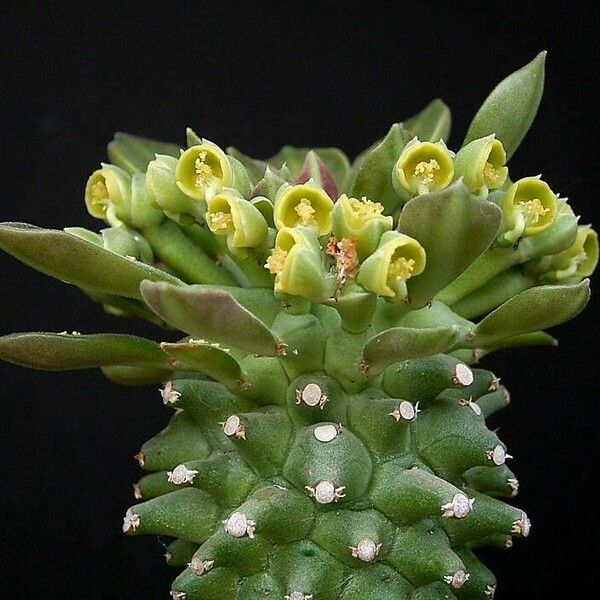
Plant Overview
Meet Euphorbia neoreflexa, a resilient and architecturally striking succulent that belongs to the vast and diverse Spurge family. Often favored by collectors for its unique "crawling" growth habit and fleshy, geometric stems, this plant is a master of water conservation. While it may look like a simple desert dweller, it carries a complex chemical defense system within its stems—a milky latex that has protected its lineage for millions of years.
🔍 How to Identify
- 🌵 Fleshy Stems: The plant features cylindrical, pale-to-mid-green stems that tend to sprawl or "reflex" (bend backward) gracefully as they grow, creating a tangled, sculptural look.
- 🍃 Small Leaves: It produces tiny, teardrop-shaped leaves near the growing tips. These are often ephemeral, meaning the plant may drop them during dry periods to save energy.
- 💧 Milky Latex: Like its cousins, the Poinsettia and the African Milk Tree, this plant will bleed a thick, white sap immediately if the "skin" of the stem is punctured or broken.
🏡 In Your Garden
- ☀️ Light Seeker: This species craves bright, filtered sunlight. If kept in a spot that is too dark, the stems will become thin and weak (etiolated) as they stretch desperately toward the nearest light source.
- 🪨 Drainage is King: Euphorbia neoreflexa hates "wet feet." Because it stores water in its fleshy tissues, sitting in damp soil will cause the roots to turn to mush almost overnight. Always use a gritty, cactus-leaning potting mix.
- 🌡️ Frost Sensitivity: This is a warm-weather native. It lacks the cellular structure to survive freezing temperatures, so it should be treated as a protected indoor specimen in any climate that dips below 50°F (10°C).
⚠️ Safety & Toxicity
- 🚫 Toxic Status: Highly Irritant. All parts of the plant are considered toxic if ingested.
- 🧴 Skin & Eye Warning: The milky sap is a potent skin irritant and can cause painful inflammation or temporary blindness if it touches the eyes. Always wear gloves when pruning or repotting, and keep the plant well out of reach of curious cats, dogs, and toddlers.
✨ Fun Fact
The "flowers" of the Euphorbia are not actually flowers! They are called cyathia. What look like petals are actually modified leaves called bracts, which surround a simplified cluster of male and female reproductive parts to trick pollinators into visiting.

Detailed Care Instructions








