Plant Overview
Commonly known as the "Pink-Flowered Monadenium," this East African gem is a favorite among succulent collectors for its sculptural beauty. It is a "caudiciform" plant, meaning it develops a thick, woody base that looks like a miniature gnarled mountain. Its dainty, marbled leaves and architectural silhouette make it look more like a piece of living art than a typical desert dweller.
🔍 How to Identify
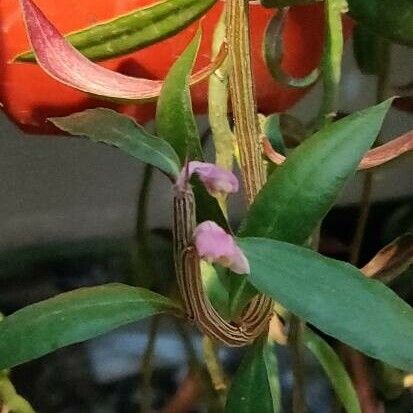
- 🍃 Foliage: The leaves are fleshy and lance-shaped, often sporting a beautiful marbled pattern of olive green and silver on top, with deep burgundy or purple on the undersides.
- 🌸 Bloom Structure: It produces small, hooded flowers (technically cyathia) that are a soft pink to reddish-purple, appearing elegantly at the tips of the stems.
- 🥔 The Caudex: Below the soil (though often raised by growers for display) is a thick, tuberous root system that stores water, giving the plant a distinctive "fat-bottomed" bonsai look.
🏡 In Your Garden
- 🏺 The "Wet Feet" Rule: Because of its large tuberous root, this plant is highly susceptible to rot. It requires a very gritty, fast-draining mineral mix. It is better to underwater than to overwater, especially in humid environments.
- 💤 Seasonal Sleep: This species often goes through a winter dormancy where it may drop all its leaves. If this happens, stop watering almost entirely; the plant is simply resting and will "wake up" with new leaves in the spring.
⚠️ Safety & Toxicity
- 🚫 Toxic Sap: Like all members of the Euphorbia family, this plant contains a milky white latex sap that is a strong irritant.
- 🐾 Pets & Kids: Keep this plant out of reach of curious nibblers. The sap can cause blistering on the skin, severe eye irritation, and intense stomach upset if ingested. Always wear gloves when pruning or repotting.
✨ Fun Fact
In its native habitat in Kenya, the Euphorbia neorubella often grows tucked deep between rock crevices or under the shade of larger shrubs to protect its sensitive tuber from being scorched by the intense equatorial sun!

Detailed Care Instructions
To grow Euphorbia Neorubella (also known as "Red Crown of Thorn"), follow these steps:
- Find the right location: Euphorbia Neorubella thrives in bright, indirect sunlight. Choose a location with plenty of natural light, but avoid direct sunlight, as it can scorch the leaves.
- Provide the right temperature: Euphorbia Neorubella prefers temperatures between 60-85°F (15-29°C). Avoid extreme temperature fluctuations, as it can stress the plant.
- Water correctly: Allow the soil to dry slightly between watering. Overwatering can cause root rot, so make sure the plant is in well-draining soil and that the pot has drainage holes. Water thoroughly, but avoid leaving the plant sitting in standing water.
- Fertilize occasionally: Feed the plant with a balanced, water-soluble fertilizer every two to three weeks during the growing season (spring and summer). Follow the package instructions for dosage and application.
- Prune if needed: Euphorbia Neorubella can grow quite tall and develop multiple branches. If you want to maintain a compact shape, prune back leggy stems in spring. Wear gloves and protective clothing while pruning because Euphorbia sap can be irritating to the skin and toxic if ingested.
- Propagation: Euphorbia Neorubella can be propagated through stem cuttings. Take a 4-6 inch (10-15 cm) cutting from a healthy plant, let it callus over for a few days, and then plant it in well-draining soil. Keep the soil lightly moist until roots are established.
- Monitor for pests and diseases: Keep an eye out for common houseplant pests like mealybugs and spider mites. If an infestation occurs, treat the plant with an appropriate organic or chemical pesticide, following the instructions carefully.
Remember, Euphorbia Neorubella is a succulent plant that stores water in its stems. It is drought-tolerant but doesn't like to be constantly wet. With proper care, this plant can thrive and bring beauty to your indoor or outdoor space.

Place in a bright room that is sun drenched almost all day. Or directly in a south-facing window.

Euphorbia Neorubella is a succulent plant that requires watering only when the soil is completely dry. Before watering, it is important to check the moisture level of the soil by using a soil moisture meter or by feeling the top layer of soil.
To water the plant, use a watering can or a spray bottle to gently moisten the soil around the plant. Avoid overwatering or allowing the plant to sit in standing water, as this can lead to root rot and other issues.
During the warmer months, when the plant is actively growing, it may require more frequent watering, while in the cooler months it may require less. It is important to adjust the watering schedule based on the plant's needs and environmental conditions.
Additionally, it is important to water the plant at the base of the plant and avoid getting water on the leaves or stems, as this can cause damage or rot. It is also a good idea to avoid watering the plant during the hottest part of the day, as this can cause the water to evaporate before it reaches the roots.
Overall, watering Euphorbia Neorubella requires careful attention to the plant's moisture needs and environmental conditions to ensure optimal growth and health.
To fertilize the Euphorbia Neorubella plant, you should use a balanced fertilizer with equal parts nitrogen, phosphorus, and potassium. It is best to apply the fertilizer during the growing season every two weeks. Be careful not to over-fertilize as this can cause fertilizer burn and damage the plant. Always follow the instructions on the label of the fertilizer and avoid using a high-nitrogen fertilizer as it can promote leaf growth at the expense of flowering. Finally, water the plant thoroughly after fertilizing to help the nutrients soak into the soil.
The best type of soil to use with this plant is a well-draining, sandy or loamy soil that is slightly acidic in pH. It should be rich in nutrients and have good moisture retention capacity, but not be too heavy or compacted. A mixture of peat moss, perlite, and sand or vermiculite can be used to create a suitable soil mix for planting this particular species. Organic matter such as compost or leaf litter can also be added to increase soil fertility and improve soil structure. It is important to avoid using heavy clay soils or those that are prone to waterlogging, as this can lead to root rot and other issues. Additionally, it is recommended to avoid using fertilizers that contain high levels of nitrogen, as this can cause excessive growth and weaken the plant's structure.
To propagate this plant, take a stem cutting that is several inches long from a healthy, mature plant. Use a sharp, sterilized knife or scissors to make the cut just below a node, which is where the leaves attach to the stem. Remove any lower leaves and allow the cutting to dry out for several days, until a callus forms over the cut end.
Prepare a pot with well-draining soil mix, and create a hole with a pencil or similar object. Dip the callused end of the cutting in rooting hormone, if desired, and place it in the hole. Gently pack soil around the stem to hold it in place.
Water the cutting sparingly, enough to moisten the soil without making it soggy, and place it in a bright, indirect light location. Monitor the soil moisture and adjust watering as needed to avoid over or under-watering. In a few weeks to a few months, the cutting should start to produce new growth, indicating that roots have formed. At that point, it can be gradually acclimated to brighter light and more regular watering, and eventually transplanted to a larger container or outdoor location.
Common pests of the red monadenium include Scale insect, mealybugs, spider mites. Make a habit of checking your red monadenium frequently for pests so that any infestations can be caught and managed early.








