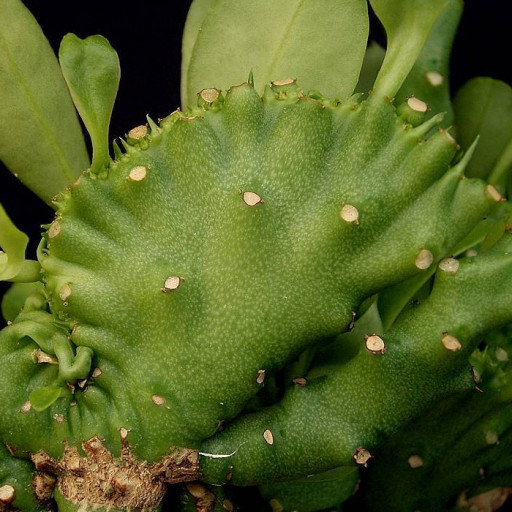
Plant Overview
Commonly known as the Oleander Spurge or Indian Spurge Tree, this architectural succulent looks like a curious hybrid between a leafy shrub and a cactus. Native to the rocky regions of India, it is a staple in dry-climate landscaping and is often used as a "living fence" due to its prickly nature. In ancient folklore, it was frequently planted near homes as a protective charm to ward off unwanted spirits and even lightning.
🔍 How to Identify
- 🌵 The Stems: Features five-angled, fleshy green stems that grow in a spiraling pattern, giving the plant a twisted, sculptural appearance.
- 🍃 The Leaves: Unlike true cacti, it produces thick, succulent, teardrop-shaped leaves near the tips of the branches, though it may drop them if the environment becomes too dry.
- 🪝 The Spines: Small, dark-colored pairs of thorns sit along the ridges of the stems, acting as a reminder of its desert-dwelling heritage.
🏡 In Your Garden
- ☀️ Sun-Loving Succulent: This plant is incredibly drought-tolerant and thrives on neglect. It prefers "sharp" drainage—meaning the water should run through the soil almost instantly. It hates having "wet feet," which can cause the roots to turn to mush within days.
- ✂️ Growth and Pruning: It can eventually reach the size of a small tree. If it outgrows your space, you can prune it back easily, but be prepared for the "bleeding" of white sap that occurs whenever the plant is cut.
⚠️ Safety & Toxicity
- 🚫 Danger Assessment: High. Like most Euphorbias, the plant contains a milky white latex (sap) that is highly caustic and toxic.
- 🐾 Pets and Kids: If ingested, the sap causes severe vomiting and oral irritation. More dangerously, if the sap touches your skin, it can cause a burning rash, and contact with the eyes can lead to temporary blindness or severe inflammation. Always wear gloves and eye protection when handling this plant.
✨ Fun Fact
⚡ The Lightning Rod: In traditional Indian culture, Euphorbia neriifolia is sometimes called the "Sij" plant. It is historically associated with the goddess Manasa and was often planted in courtyards because it was believed to provide protection against snake bites and natural disasters.

Detailed Care Instructions
| Soil Ph | Acidic, Neutral |
| Toxicity | Toxic |
| Soil Type | Sandy, Well-Drained |
| Plant Type | Herbaceous, Succulent |
| Native Area | Africa, Asia, North America, South America |
| Sun Exposure | Full Sun |
| Hardiness Zones | 5-11 |
To grow Euphorbia Neriifolia, also known as the Indian Spurge Tree or Oleander Spurge, follow these steps:
- Choose the right location: Euphorbia Neriifolia thrives in full sunlight, so select a spot in your garden that receives at least 6 hours of direct sunlight every day.
- Provide well-draining soil: This plant prefers a well-draining soil mix. If your soil tends to retain water, consider mixing it with sand or adding organic matter like compost to improve drainage.
- Watering: Euphorbia Neriifolia is drought-tolerant, so avoid overwatering. Water deeply when the soil is dry, but allow it to dry out between watering to prevent root rot.
- Fertilizer: This plant doesn't require much fertilizer. Use a balanced fertilizer once or twice a year during the growing season.
- Pruning: Euphorbia Neriifolia naturally grows in a bushy manner. You can prune it lightly to maintain shape or remove dead or damaged branches.
- Pests and diseases: Euphorbia Neriifolia is generally resistant to pests and diseases. However, be cautious as the sap of this plant can cause skin irritation and is toxic if ingested. Wear gloves and avoid contact with eyes or mouth while working with it.
- Propagation: Euphorbia Neriifolia can be propagated through stem cuttings. Take cuttings during the active growing season, dip them in a rooting hormone, and plant them in a well-draining soil mix. Water sparingly until new growth appears.
Remember to always do thorough research on a plant's specific care requirements, as there may be variations for your specific region or climate.

Place in a bright room that is sun drenched almost all day. Or directly in a south-facing window.

To properly water this plant, you should first take note of the potting soil and ensure it is well-draining. This plant prefers to be kept on the drier side so you should not let the soil get too waterlogged as this can lead to root rot. When watering, provide a good, thorough soak until water starts to come out of the drainage holes in the bottom of the container. You should then wait until the top inch of soil is dry before watering again, which may take a week or more depending on the size of the pot and the environment it is in. It is important not to overwater this plant as it is susceptible to root rot.
To fertilize this plant, use a balanced fertilizer with equal parts nitrogen, phosphorus, and potassium. Apply the fertilizer once every 4-6 weeks during the growing season, which is typically spring and summer. Be careful not to over-fertilize, as this can harm the plant. Instead, use a slow-release fertilizer or dilute the fertilizer before application. Water the plant well after fertilization to help the nutrients absorb.
When selecting soil for this particular plant, it is recommended to choose a well-draining soil mix that allows excess water to quickly drain away. A soil mix that is rich in organic matter and contains a balanced NPK (nitrogen, phosphorus, potassium) ratio is also suitable for this plant. It is important to avoid using heavy clay soils or soils that retain too much moisture, as this can lead to root rot and other fungal diseases. When planting, it is also recommended to mix in some sand or perlite to further improve drainage and prevent waterlogging. Overall, a well-draining and nutrient-rich soil mix is essential for the healthy growth and development of this plant.
Propagation of this plant can be done through stem cuttings. First, choose a healthy stem from the plant and make a clean cut about 4-6 inches long. Remove any leaves from the bottom 2 inches of the stem.
Next, prepare a pot with well-draining soil and make a hole in the center. Dip the bottom tip of the stem cutting into rooting hormone powder and plant it in the hole. Gently press the soil around the stem to ensure it is firmly planted.
Water the soil thoroughly and place the pot in a warm and bright location, but out of direct sunlight. Keep the soil moist but not waterlogged.
After a few weeks, new growth should appear and roots will begin to form. Once the cutting has established new leaves and roots, it can be transplanted into a larger pot or outside in a suitable location.
Common pests of the indian spurgetree include Scale insect, mealybugs, spider mites. Make a habit of checking your indian spurgetree frequently for pests so that any infestations can be caught and managed early.








