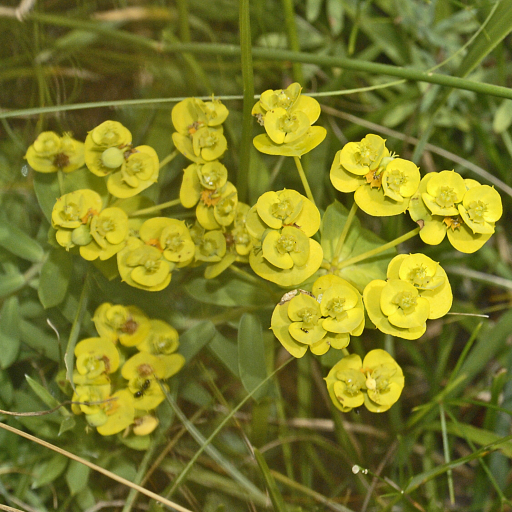
Plant Overview
Often called the French Spurge, Euphorbia nicaeensis is a Mediterranean beauty that brings a touch of the Côte d'Azur to the garden. Known for its striking contrast between silvery, glaucous foliage and neon yellow-green blooms, it acts as a structural anchor in rock gardens. In the wild, it is a true survivor, often found clinging to sun-drenched limestone cliffs and rocky outcrops.
🔍 How to Identify
- 🍃 The Foliage: Densely packed, lance-shaped leaves with a distinctive blue-gray or "glaucous" waxy coating. This powdery finish isn't just for looks; it helps the plant reflect intense sunlight and conserve moisture.
- 🌼 The "Flowers": Like all spurges, the true flowers are tiny and inconspicuous. What you see are bright chartreuse bracts (specialized leaves) that form flat-topped clusters, providing a vivid neon pop against the muted leaves.
- 🏗️ Growth Habit: It grows in a tidy, rounded, shrub-like mound. As the plant ages, the stems at the center become thick and woody, giving it a permanent structural presence.
🏡 In Your Garden
- 🏜️ Drainage is Key: This plant is a "drainage extremist." It thrives in rocky, sandy, or poor soils where most plants would struggle, but it will quickly rot if left in heavy, waterlogged clay. It’s the perfect candidate for a "neglected" corner of a xeriscape garden.
- 📍 Pick a Permanent Spot: Euphorbia nicaeensis develops a deep, sturdy taproot to find water deep underground. While this makes it incredibly drought-resistant, it also means the plant "hates" being moved once it is established.
- ✂️ Pruning Nuance: After the bright bracts fade to a tan color, you can cut the flowering stems back to the base to encourage fresh, blue-green growth and keep the mound looking tight.
⚠️ Safety & Toxicity
- 🧪 The Milky Latex: Every part of the plant contains a thick, white sap that is a strong irritant. If it gets on your skin, it can cause redness or a burning rash, and it is extremely dangerous if it touches the eyes.
- 🐾 Pets & Kids: Highly toxic if ingested. It causes mouth irritation, drooling, and stomach upset in cats, dogs, and horses. Always wear gloves and eye protection when pruning or handling this plant.
✨ Fun Fact
🏛️ Ancient Medicine: The genus Euphorbia was named by King Juba II of Numidia after his Greek physician, Euphorbus. The King used these plants for medicinal purposes, though today we mostly appreciate them from a safe, gloved distance!

Detailed Care Instructions
To successfully grow Euphorbia nicaeensis, also known as the Nicaean spurge, follow these steps:
- Location: Choose a location that provides full sun to partial shade. This plant prefers warm temperatures, so make sure it is protected from frost.
- Soil: The Nicaean spurge thrives in well-draining soil. It can tolerate various soil types, but a sandy or loamy soil with a slightly acidic to neutral pH (around 6.0-7.0) is ideal.
- Watering: Water regularly but make sure the soil is allowed to dry out between waterings. Overwatering can cause root rot, so it's important to maintain a good balance.
- Fertilizer: Euphorbia nicaeensis does not require heavy feeding. A balanced, slow-release fertilizer can be applied once or twice a year during the growing season.
- Pruning: Prune lightly to maintain the desired shape of the plant. Remove any dead or damaged branches to promote new growth.
- Propagation: Euphorbia nicaeensis can be propagated through stem or root cuttings. Take cuttings in spring or summer, allow them to dry for a few days, and then plant them in well-draining soil.
- Pests and diseases: The Nicaean spurge is generally resistant to pests and diseases. However, if any issues arise, treat them accordingly with appropriate insecticides or fungicides.
- Winter protection: In colder regions, protect the plant from frost by providing a layer of mulch around the base and covering it with a frost cloth or burlap during freezing temperatures.
Always remember to wear gloves and protective clothing when handling Euphorbia nicaeensis, as its sap can cause skin irritation.

Place in a bright room that is sun drenched almost all day. Or directly in a south-facing window.

To water this plant, it is important to take into consideration the type of soil in which it is planted and the climate in which it is growing. The soil should be well-draining, as the plant does not tolerate standing water. It is recommended to water deeply when the soil is dry to the touch, but avoid overwatering. During periods of hot weather or extended drought, it may be necessary to water more frequently. It is important to avoid getting water on the leaves or stems, as this can lead to fungal diseases. If possible, water at the base of the plant, using a watering can or drip irrigation system.
- Wait until the plant has fully matured before fertilizing.
- Choose a balanced fertilizer with equal amounts of nitrogen, phosphorus, and potassium.
- Mix the fertilizer with water according to the manufacturer's instructions.
- Apply the fertilizer to the soil around the base of the plant.
- Water the plant immediately after fertilizing to help distribute the nutrients.
- Repeat the fertilizing process once a month during the growing season.
- Avoid fertilizing during the winter months when the plant is dormant.
- Be careful not to over-fertilize, as this can damage the plant.
The ideal soil for Euphorbia Nicaeensis plant is well-draining and low in organic matter. It should be a mixture of sand, perlite, and gravel to ensure proper drainage and prevent waterlogging. The soil pH should be slightly acidic to neutral, around 6.0-7.0. The plant prefers a sunny location with good air circulation, but it can tolerate partial shade. It is important to avoid overwatering and let the soil dry out between waterings to prevent root rot. Furthermore, the soil should not be compacted and should have good aeration to allow proper root development.
To propagate this plant, take a cutting from a mature and healthy stem of the plant. Ensure that the cutting is at least four inches long and has a few leaves at the top. Remove the lower leaves from the stem and dip the cut end into a rooting hormone powder. Plant the stem into a pot filled with a well-draining soil mix and water it thoroughly. Place the pot in a location with bright, indirect light and maintain the soil moisture level by misting it regularly. Within a few weeks, new roots should start to develop, and the cutting should begin to grow new leaves. Once the plant has grown enough, it can be transplanted into a larger pot or directly into the ground.








