Plant Overview
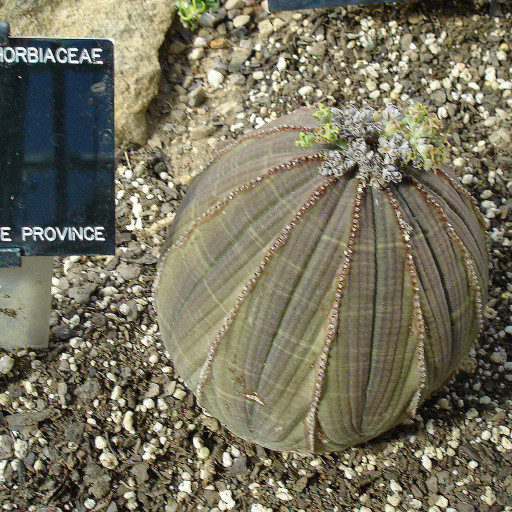
Known affectionately as the Baseball Plant, this South African succulent is a masterpiece of geometric precision. Emerging from the stony soil of the Great Karoo region, it mimics a rounded pebble to hide from thirsty animals. While it looks like a spineless cactus, it is actually a highly specialized succulent that has perfected the art of water storage in its perfectly spherical body.
🔍 How to Identify
- ⚾ The "Baseball" Shape: In its youth, the plant is a perfect globe. As it matures, it slowly transitions into a slightly taller, cylindrical shape, but rarely exceeds 8 inches in height.
- 🧶 Decorative Stitching: The plant features eight distinct ribs decorated with small, brown, tooth-like bumps along the edges, giving it the appearance of hand-stitched leather.
- 🎨 Subtle Patterns: Its skin is typically a grey-green or iron-grey color, often marked with delicate purple or reddish-brown horizontal stripes that act as a natural camouflage.
- 🌼 Tiny Crowns: Instead of large petals, it produces "cyathia" (tiny, cup-shaped flowers) at the very top. Interestingly, each plant is either male or female, meaning you need a "couple" to produce seeds.
🏡 In Your Garden
- 🏜️ Drainage is Non-Negotiable: Because it evolved in rocky, arid terrain, it possesses a deep taproot that hates "wet feet." Use a heavy grit or cactus mix; a ceramic pot that holds moisture for too long can cause the plant to split or rot overnight.
- ☀️ Sun-Induced Color: To keep those iconic purple stripes vivid, it needs bright, direct light. In low-light conditions, the plant will lose its round shape and stretch toward the window (a process called etiolation), losing its "baseball" charm.
- 💧 The "Fat" Indicator: You can tell a lot about its health by its girth. If the ribs look sunken or the plant feels slightly soft, it’s using its internal water reserves. However, always lean toward underwatering—this plant can survive months of drought but won't survive a single week in soggy soil.
⚠️ Safety & Toxicity
- 🧪 Toxic Milky Sap: Like all members of the Euphorbia family, this plant contains a white, milky latex. This sap is a natural deterrent against herbivores and is highly irritating to the skin and eyes.
- 🐾 Keep Away from Pets: If a curious cat or dog bites into it, the sap can cause significant mouth irritation, swelling, and digestive distress. Always wear gloves when repotting.
✨ Fun Fact
The Baseball Plant was so popular with 20th-century collectors that it became nearly extinct in its native South Africa due to over-harvesting. Today, it is protected by international law (CITES), meaning every Baseball Plant you see in a shop must be nursery-grown rather than taken from the wild!

Detailed Care Instructions
| Color | Greyish-Green |
| Soil Ph | 6.0 |
| Humidity | Dry |
| Lighting | Full Sun |
| Soil Type | Well-Draining, Cactus Soil |
| Bloom Time | Summer |
| Difficulty | Medium |
| Plant Type | Succulent |
| Mature Size | 7 To 8 Inches Tall |
| Native Area | South Africa |
| Sun Exposure | Bright, Direct Light |
| Hardiness Zones | 10A - 11B |
To grow Euphorbia Obesa, also known as the baseball plant or the basketball plant, consider the following steps:
- Climate: Euphorbia Obesa thrives in warm climates but can also be grown indoors in colder regions. It prefers temperatures between 65-80°F (18-27°C) during the growing season and cooler temperatures around 50-55°F (10-13°C) during winter.
- Light: Provide your plant with bright, indirect sunlight. It can tolerate full sun, but excessive heat may cause scorching. Indoors, place it near a sunny window or provide supplementary artificial light.
- Soil: Use well-draining soil such as a cactus or succulent mix. Adding perlite or coarse sand helps improve drainage. Avoid overwatering, as Euphorbia Obesa is prone to root rot if the soil stays consistently moist.
- Watering: Allow the soil to dry completely between waterings. During summer, water moderately every two weeks, reducing the frequency during winter. Ensure water does not accumulate in the plant's crown or within its crevices, as this can cause rot.
- Fertilizer: Euphorbia Obesa is not a heavy feeder. Apply a balanced, diluted liquid fertilizer once every three to four months during the growing season. Avoid fertilizing during winter when the plant goes into dormancy.
- Repotting: Repot the plant only when necessary, typically every 2-3 years. Use a slightly larger pot and fresh well-draining soil. Handle the plant with care as it is sensitive to root disturbance.
- Pruning and grooming: Euphorbia Obesa generally requires minimal pruning. However, you can remove any dead or diseased parts using sterilized pruning tools. Gently wipe the plant's surface with a damp cloth to remove dust and maintain its attractive appearance.
- Propagation: Euphorbia Obesa propagates through seeds. Collect mature seeds and plant them in a well-draining soil mix. Keep the soil moist until germination occurs, which might take a few weeks.
Remember, Euphorbia Obesa is a succulent, and it stores water in its stem. It has unique and specialized care needs compared to other plants, so ensure you understand and comply with its requirements for optimal growth.

Place in a bright room that is sun drenched almost all day. Or directly in a south-facing window.

This plant should be watered sparingly during its growing season, which is typically in the spring and summer months. It is important to allow the soil to dry out almost completely between waterings, as overwatering can lead to root rot and other issues. When it is time to water, gradually soak the soil around the plant until water begins to drain out of the drainage holes in the bottom of the container. Avoid getting water on the leaves or stem, as this can lead to damage or disease. During the plant's dormant period in the fall and winter, it may not require any watering at all.
To fertilize this plant, mix a balanced fertilizer with equal parts nitrogen, phosphorus, and potassium. Apply the fertilizer sparingly every two weeks during the growing season (spring and summer). Be careful not to over-fertilize as this can cause damage to the plant. If it shows any signs of stress, stop fertilizing until it recovers.
The ideal soil for the Euphorbia Obesa plant is a well-draining, porous soil mix that is specifically designed for cactus and succulents. It should be a mixture of coarse sand, perlite, and gravel, with a balanced pH of 6.0 to 7.5. The soil should be nutrient-poor and dry, as the roots of the plant are adapted to survive in harsh environments with minimal water and nutrients. It is important to ensure that the soil is not too compact, as this can lead to poor drainage and root rot. Furthermore, the soil should be replaced every two to three years to ensure that the plant is healthy and growing in a nutrient-rich environment.
Euphorbia Obesa plant can be propagated through seed or stem cuttings.
To propagate through seed, collect mature seeds from the plant and sow them in a well-draining soil mix. Keep the soil moist and place the pots in a bright and warm location, but avoid direct sunlight. The seeds will germinate in about 7-14 days.
To propagate through stem cuttings, take a stem cutting from a healthy plant with a sharp and clean knife or scissors. Allow the cutting to dry for a few days until the cut end has formed a callus. Then, plant the cutting in a well-draining soil mix and keep the soil moist. Place the pot in a bright and warm location, but avoid direct sunlight. The cutting will develop roots and start growing in about a month.
It is important to wear gloves and handle Euphorbia Obesa plant with care, as it contains toxic sap that can cause skin irritation and eye damage.
Common pests of the baseball plant include Scale insect, mealybugs, spider mites. Make a habit of checking your baseball plant frequently for pests so that any infestations can be caught and managed early.








