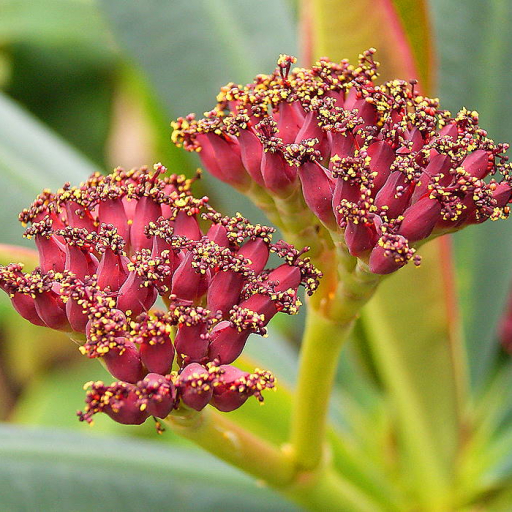
Plant Overview
Known as the "Pachypodium-mimic Euphorbia," this rare Madagascan treasure is a master of disguise. It sports a thick, spiny trunk that makes it look like a miniature desert palm or its namesake, the Pachypodium, but it is actually a true succulent spurge. Collectors prize it for its rugged, prehistoric silhouette and the surprisingly delicate, ruby-red flowers that crown its head during the growing season.
🔍 How to Identify
- 🌵 The Stem: A thick, cylindrical trunk covered in silvery-grey bark and armored with sharp, dark spines arranged in a geometric pattern.
- 🍃 The Leaves: Long, narrow, blue-green to silvery leaves that form a lush rosette only at the very top of the plant, similar to a palm tree.
- 🌺 The Cyathia: Small, cup-shaped "false flowers" that are usually a deep burgundy or purplish-red, appearing on short stalks from the center of the leaf crown.
🏡 In Your Garden
- ☀️ Light & Form: This plant craves bright, indirect light to maintain its compact, architectural shape. In low light, the trunk may stretch and lose its iconic "baobab" look.
- 💧 Drought Strategy: Because it possesses a thick, water-storing caudex, it is incredibly drought-tolerant. It prefers a "soak and dry" method and must be kept in a very gritty, porous potting mix to prevent root rot.
- 🌡️ Warmth Lover: Hailing from the tropical dry forests of Madagascar, it has zero tolerance for frost. It should be brought indoors or kept in a heated greenhouse once temperatures dip below 50°F (10°C).
⚠️ Safety & Toxicity
- 🚫 Status: Highly Toxic / Irritant.
- 🧪 Details: Like all members of the Euphorbia family, this plant contains a milky white sap (latex). This sap is caustic and can cause severe skin irritation, rashes, or even temporary blindness if it contacts the eyes. Keep it far out of reach of curious pets and children, and always wear gloves when pruning or repotting.
✨ Fun Fact
The name pachypodioides literally means "looking like a Pachypodium." This is a classic example of convergent evolution, where two unrelated plant families evolve similar physical traits to survive the same harsh, arid environments.

Detailed Care Instructions

Place in a bright room that is sun drenched almost all day. Or directly in a south-facing window.

The presence of a dry surface layer of soil does not indicate that the plant requires water. Instead, stick your finger 1-2" (3-5 cm) deep in the soil to feel dampness or moisture content. If the soil seems dry, it's time to water your greens. If the soil is still moist, however, it is better not to water your plant and instead wait a day or two. Overwatering or waterlogging raises the risk of root rot. So if the soil takes longer than a week to dry, check the light conditions because it's likely that the plant isn't getting enough light. It's fine if the upper layer of soil is dry between waterings, but the deeper soil layer should always have some moisture.
These plant needs regular fertilizing during growing seasons. Fertilizing your plants in dormant state during the winter, might result in scorching or browning of the leaf tips. If mature plants display signs of nutrient insufficiency, fertilizer administration is necessary to restore the plant to its previous state.
You may use All Purpose Plant Food or Green Plant Food or Cactus Fertilizer for your Euphorbia Pachypodioides
Common pests of the euphorbia pachypodioides include Mealybugs, spider mites, whiteflies. Make a habit of checking your euphorbia pachypodioides frequently for pests so that any infestations can be caught and managed early.








