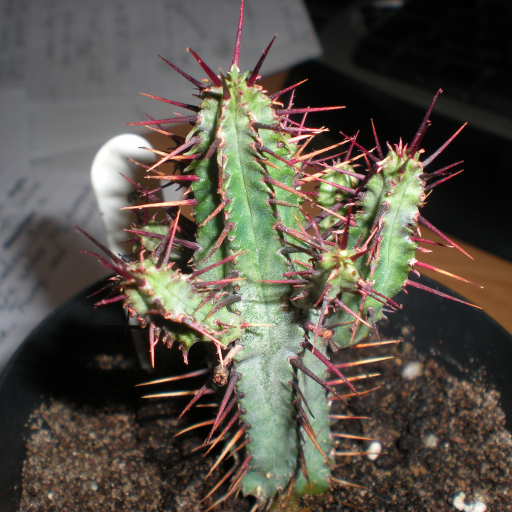
Plant Overview
Known as a striking member of the "African Milk Barrel" family, Euphorbia pentagona is a sculptural masterpiece of the succulent world. Its deeply ribbed columns and vibrant, needle-like peduncles make it a favorite for desert-themed windowsills and rock gardens. Originating from the Eastern Cape of South Africa, this plant is a slow-growing architectural gem that brings a touch of the arid wilderness into the home.
🔍 How to Identify
- 📐 Geometric Ribs: The stems are typically divided into five distinct, deep ridges (hence the name pentagona), giving the plant a sharp, star-shaped cross-section.
- 📌 "False" Thorns: It is covered in persistent "peduncles"—these are actually dried flower stalks that remain on the plant, hardening into reddish-brown or grey spines.
- 🌿 Candelabra Shape: As the plant matures, it branches out aggressively from the base and the sides, eventually forming a dense, multi-stemmed shrub.
🏡 In Your Garden
- ☀️ Light Architect: This plant craves bright, direct sunlight. If kept in the shade, it will "stretch" toward the light, losing its tight pentagonal shape and turning a pale, sickly green.
- 🏜️ Thirst Management: Because it stores a massive amount of moisture in its fleshy stems, it hates "wet feet." Use a gritty, mineral-heavy soil and only water when the pot feels light and the soil is bone-dry.
- 🌬️ Airflow Needs: It thrives in breezy environments. Good air circulation is vital to prevent "corking" or fungal spots from developing on its beautiful green skin during humid months.
⚠️ Safety & Toxicity
- 🚫 Toxic Latex: This plant contains a thick, milky white sap (latex) that is highly caustic. It is the plant's primary defense mechanism against being eaten.
- 👁️ Severe Irritant: If you get the sap on your skin, it can cause redness and blisters. Never touch your eyes after handling a broken stem, as the sap can cause intense pain and temporary blindness. Always wear gloves when pruning and keep it out of reach of curious pets and toddlers.
✨ Fun Fact
Despite its prickly appearance, Euphorbia pentagona is not a cactus! It is a classic example of "convergent evolution," where plants in Africa evolved to look almost exactly like American cacti because they faced the same harsh, dry environmental pressures.

Detailed Care Instructions
To successfully grow Euphorbia Pentagona, also known as the zigzag cactus or zigzag euphorbia, you should follow these steps:
- Choose the Right Growing Conditions:
- Light: Euphorbia Pentagona thrives in bright, indirect light but can tolerate some direct sunlight. Place it near a sunny window or provide supplemental grow lights.
- Temperature: This plant prefers temperatures between 60-85°F (15-29°C). Protect it from drafts and extreme temperature fluctuations.
- Humidity: It can adapt to normal indoor humidity levels, but higher humidity is beneficial. Consider using a humidifier or placing the plant on a humidity tray filled with water and pebbles.
- Soil: Euphorbia Pentagona prefers well-draining soil, such as succulent or cactus soil mixes.
- Light: Euphorbia Pentagona thrives in bright, indirect light but can tolerate some direct sunlight. Place it near a sunny window or provide supplemental grow lights.
- Potting:
- Select a pot with drainage holes to prevent waterlogging. It should be slightly larger than the plant's current root ball.
- Fill the pot with the well-draining soil mix mentioned earlier.
- Gently remove the plant from its current container, being cautious not to damage the roots.
- Place the plant in the new pot and fill the remaining space with soil, pressing it down gently.
- Select a pot with drainage holes to prevent waterlogging. It should be slightly larger than the plant's current root ball.
- Watering:
- The zigzag euphorbia is drought-tolerant and prefers infrequent watering. Allow the soil to dry out completely between waterings.
- Water thoroughly but avoid overwatering, as this can lead to root rot.
- Reduce watering during the winter months as the plant enters dormancy.
- The zigzag euphorbia is drought-tolerant and prefers infrequent watering. Allow the soil to dry out completely between waterings.
- Fertilization:
- Euphorbia Pentagona does not require frequent fertilization. Feed it with a balanced, water-soluble fertilizer diluted to half strength during the growing season (spring and summer). Avoid fertilizing during winter dormancy.
- Euphorbia Pentagona does not require frequent fertilization. Feed it with a balanced, water-soluble fertilizer diluted to half strength during the growing season (spring and summer). Avoid fertilizing during winter dormancy.
- Pruning and Maintenance:
- Trim off any dead or unhealthy growth using sterilized pruning shears.
- To encourage more branching and a compact shape, you can also prune the stems. Cut them back just above a node or joint.
- Trim off any dead or unhealthy growth using sterilized pruning shears.
- Repotting:
- Euphorbia Pentagona can be repotted every 2-3 years, preferably in the spring. Follow the same potting steps as mentioned earlier.
- Euphorbia Pentagona can be repotted every 2-3 years, preferably in the spring. Follow the same potting steps as mentioned earlier.
- Pest and Disease Control:
- These plants are generally resistant to pests and diseases. However, keep an eye out for signs of mealybugs or spider mites. If detected, treat the infestation promptly with appropriate organic or chemical treatments.
Remember to always wear gardening gloves when handling Euphorbia Pentagona, as its milky sap can be toxic and cause skin irritation and eye problems.
- These plants are generally resistant to pests and diseases. However, keep an eye out for signs of mealybugs or spider mites. If detected, treat the infestation promptly with appropriate organic or chemical treatments.

Place in a bright room that is sun drenched almost all day. Or directly in a south-facing window.

To properly water the Euphorbia Pentagona plant, it is important to follow these guidelines:
1. Use a well-draining potting mix: Select a well-draining soil specifically designed for succulent plants. This type of soil allows excess water to drain easily, preventing the roots from rotting.
2. Allow the soil to dry out: Before watering the Euphorbia Pentagona plant, make sure the top 1-2 inches (2.5-5 cm) of the soil has completely dried out. This plant is drought-tolerant and overwatering can be harmful.
3. Water deeply but infrequently: When watering, make sure to thoroughly moisten the soil. Pour water evenly across the surface until it starts draining through the bottom of the pot. Avoid shallow watering, as it may promote shallow root growth.
4. Water from the base: Instead of watering the plant directly overhead, it is recommended to water the Euphorbia Pentagona from the base. Fill a saucer or tray underneath the pot with water and let the plant soak it up through the drainage holes. Allow any excess water to drain away after about 15-20 minutes.
5. Use room temperature water: Provide water at room temperature or slightly lukewarm. Avoid using cold water directly from the tap, as it can shock the plant's roots.
6. Observe signs of underwatering or overwatering: Pay attention to the plant's appearance and behavior. If the leaves begin to wrinkle or wilt, it is a sign that the Euphorbia Pentagona needs water. On the other hand, if the stems start to become mushy, turn black, or show signs of rot, it is likely being overwatered.
7. Adjust watering based on environmental conditions: Factors such as temperature, humidity, and light exposure can influence the watering needs of the Euphorbia Pentagona. During hot, dry weather or when placed in a sunny location, the plant may require more frequent watering.
Remember, these guidelines are general recommendations, and it is essential to assess the watering needs of each individual Euphorbia Pentagona plant based on its unique environment and condition.
To properly fertilize the Euphorbia Pentagona plant, you will need a balanced, water-soluble fertilizer that is specifically formulated for indoor houseplants. Follow these instructions:
- Dilute the fertilizer according to the instructions on the packaging. Use half the recommended dosage to prevent over-fertilization, as this plant is sensitive to excessive fertilizer.
- Water the plant thoroughly using plain water before applying the fertilizer. This helps prevent root burn and aids in the proper absorption of nutrients.
- Slowly pour the diluted fertilizer mixture onto the soil around the base of the plant. Avoid applying the fertilizer directly onto the leaves or stem, as it may lead to leaf burn or other negative effects.
- After fertilizing, allow the excess water to drain out from the drainage holes of the pot. Empty the saucer or tray underneath to prevent standing water, which can cause root rot.
- Repeat the fertilization process every 4-6 weeks during the active growing season, which usually occurs from early spring to late summer. Reduce or entirely stop fertilizing during the plant's dormant period in autumn and winter.
- Monitor the plant for any signs of nutrient deficiencies or excesses, such as yellowing leaves or stunted growth. Adjust the fertilization schedule or concentration accordingly if needed.
Remember to always follow the instructions provided with the fertilizer and observe proper plant care practices to ensure the health and vitality of your Euphorbia Pentagona plant.
Euphorbia Pentagona plant is a species that belongs to the Euphorbiaceae family. When selecting soil for this plant, it is important to consider its natural habitat and growing requirements.
The ideal soil for Euphorbia Pentagona is well-draining and slightly acidic to neutral in pH. It should be loose and loamy, allowing water to penetrate easily while also allowing excess to drain away, preventing waterlogging.
To create suitable soil for this plant, you can consider using a mixture of sandy soil, perlite, and peat moss. Sandy soil helps with drainage and prevents the soil from becoming compacted. Perlite is a lightweight additive that enhances drainage and aeration in the soil. Peat moss adds organic matter and helps retain moisture without causing waterlogging.
It is also advisable to mix in some organic compost or balanced slow-release fertilizer to provide the plant with essential nutrients. However, it is important to avoid over-fertilization, as excessive nutrients can harm the Euphorbia Pentagona.
Additionally, since this plant is susceptible to root rot, using a well-draining soil mix is crucial to prevent waterlogged conditions that can lead to this issue. Regularly check the moisture levels in the soil to ensure it remains slightly moist but not overly wet.
Overall, providing a well-draining, slightly acidic to neutral, and nutrient-rich soil mixture will help support the growth and health of the Euphorbia Pentagona plant.
To propagate Euphorbia Pentagona plant, you can follow these steps:
- Start by selecting a healthy and mature Euphorbia Pentagona plant for propagation. Ensure that the parent plant is not weak or diseased.
- Prepare a clean and sharp pair of pruning shears or gardening scissors. Sterilize the tools by wiping them down with rubbing alcohol or dipping them in a diluted bleach solution. This helps prevent the transmission of any diseases or pathogens.
- Identify a suitable stem or shoot from the parent plant for propagation. Look for a stem that is about 3-4 inches long and has several healthy leaves. Make sure it is not a flowering stem, as it may not root successfully.
- Using the sterilized pruning shears, make a clean diagonal cut just below a leaf node on the selected stem. The cut should be made at around a 45-degree angle. This ensures an increased surface area for rooting.
- Remove the lower leaves from the stem, leaving only a few leaves at the top intact. This minimizes moisture loss and directs the plant's energy towards root formation.
- Optional: To further enhance the chances of successful rooting, you can apply a rooting hormone powder or gel to the cut area. This promotes faster and more consistent root development. However, it is not essential for all plant species.
- Prepare a suitable planting medium for the cutting. Euphorbia Pentagona prefers well-draining soil, so a mix of potting soil and perlite or sand works well. Fill a small nursery pot or tray with this mixture.
- Create a planting hole in the soil using a pencil or similar tool. Insert the prepared cutting into the hole, ensuring that the cut end is inserted about an inch deep into the soil.
- Gently firm the soil around the cutting, providing stability and optimal contact for root development. Water lightly to settle the soil and ensure good moisture.
- Place the potted cutting in a warm and brightly lit location, away from direct sunlight. Avoid exposing it to extreme temperatures or drafts.
- Keep the soil slightly moist but not overly wet during the rooting process. It is important to strike a balance to prevent rot or excessive drying out. Mist the cutting occasionally to maintain humidity around the leaves.
- After a few weeks, usually 4-6 weeks, check for root development by gently tugging on the cutting. If you feel resistance, it indicates that roots have formed and it is ready to be potted into separate containers.
- Transplant the rooted cutting into a slightly larger pot with well-draining soil. Gradually expose it to longer periods of direct sunlight to acclimate the plant to its new environment.
With proper care and patience, your propagated Euphorbia Pentagona plant should thrive and grow into a healthy specimen.
Common pests of the pincushion euphorbia include Scale insect, mealybugs, spider mites. Make a habit of checking your pincushion euphorbia frequently for pests so that any infestations can be caught and managed early.








