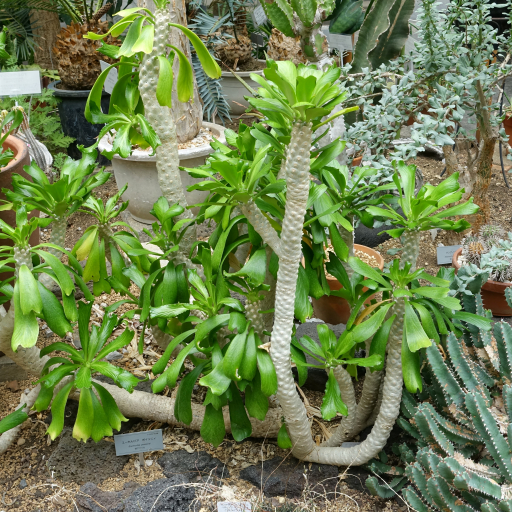
Plant Overview
Often referred to as "Poisson's Spurge," this striking succulent is a minimalist masterpiece of the botanical world. Native to the rocky terrains of West Africa, it looks less like a typical plant and more like a modern sculpture with its smooth, candle-like stems. While it is a prized collector’s item for its architectural beauty, it carries a "don't touch" reputation that commands respect from every gardener.
🔍 How to Identify
- 🌵 The Stem: A thick, cylindrical, greyish-white succulent trunk that grows upright. Unlike many of its cousins, it is generally smooth and lacks the sharp spines found on most Euphorbias.
- 🍃 The Foliage: Large, paddle-shaped, bright green leaves sprout in a cluster at the very top of the stems during the growing season. These leaves often drop in the winter when the plant goes dormant.
- 💧 The Sap: If the skin of the plant is nicked, it immediately oozes a thick, milky white latex that is notoriously potent.
🏡 In Your Garden
- ☀️ Sun Seeker: This plant is adapted to the harsh West African sun. It thrives in high-light environments and will become "leggy" or weak if kept in a dark corner.
- 🪨 Drainage is Vital: Because it stores so much water in its fleshy trunk, it is highly susceptible to root rot. It prefers a very gritty, mineral-heavy soil mix rather than standard potting compost.
- 💤 Seasonal Sleep: Don’t be alarmed if it loses its leaves in late autumn. This is its way of conserving energy for the dry season; during this time, you should drastically reduce watering to almost zero.
⚠️ Safety & Toxicity
- 🚫 EXTREME DANGER: This is one of the most toxic members of the Euphorbia genus. The milky sap contains Resiniferatoxin, which is incredibly irritating to the skin and mucous membranes.
- 🐾 Pets & Kids: Keep this plant strictly out of reach. Ingestion is dangerous, and even a small amount of sap in the eyes can cause temporary blindness or severe chemical burns.
- 🧤 Handling Tip: Always wear gloves and eye protection when pruning or repotting. If sap touches your skin, wash it immediately with cool water and soap—avoid warm water as it can open your pores and increase irritation.
✨ Fun Fact
The chemical compound found in this plant's sap, Resiniferatoxin, is actually used by scientists to study pain! It is so "hot" that it is thousands of times more pungent than pure capsaicin (the heat in chili peppers), leading researchers to use it in developing new types of long-lasting painkillers for chronic diseases.

Detailed Care Instructions
Growing Euphorbia poissonii, often called "Poison Spurge," requires careful attention due to its unique needs and its toxic nature. Here's a guide to help you cultivate this plant successfully:
Growing Conditions
- Location and Light:
- Outdoor: This plant thrives in areas that replicate its native environment, which is typically rocky hillsides and savannas in West Africa. Plant it in a sunny spot with some shade during the hottest part of the day.
- Indoor: If grown indoors, place it in a spot where it can receive at least 6 hours of bright, indirect sunlight.
- Outdoor: This plant thrives in areas that replicate its native environment, which is typically rocky hillsides and savannas in West Africa. Plant it in a sunny spot with some shade during the hottest part of the day.
- Soil:
- Use a well-draining, gritty soil mix. A cactus or succulent mix works well. If you’re making your own mix, combine regular potting soil with sand, perlite, or pumice.
- Use a well-draining, gritty soil mix. A cactus or succulent mix works well. If you’re making your own mix, combine regular potting soil with sand, perlite, or pumice.
- Watering:
- Outdoor: Water sparingly. This plant is drought-tolerant, so it's crucial to let the soil dry out between waterings.
- Indoor: Reduce watering in the winter months when the plant is dormant. Overwatering can cause root rot.
- Outdoor: Water sparingly. This plant is drought-tolerant, so it's crucial to let the soil dry out between waterings.
- Temperature:
- Euphorbia poissonii prefers warm temperatures and is not frost-tolerant. Ideal temperatures range between 50°F (10°C) to 80°F (27°C).
- Euphorbia poissonii prefers warm temperatures and is not frost-tolerant. Ideal temperatures range between 50°F (10°C) to 80°F (27°C).
- Humidity:
- This plant does well in average humidity conditions. High humidity is not typically required.
Planting and Propagation
- This plant does well in average humidity conditions. High humidity is not typically required.
- Planting:
- Choose a container with drainage holes to prevent water from sitting at the bottom.
- Place a layer of gravel or small rocks at the bottom of the pot to improve drainage.
- Fill with a succulent mix, then plant and water lightly.
- Choose a container with drainage holes to prevent water from sitting at the bottom.
- Propagation:
- Propagation is commonly done by cuttings due to its potential toxicity and the challenges of seed germination.
- When taking cuttings, wear gloves to protect yourself from the plant's toxic latex.
- Allow the cut cuttings to dry and callous over for a couple of days before planting them in well-draining soil.
Care and Maintenance
- Propagation is commonly done by cuttings due to its potential toxicity and the challenges of seed germination.
- Fertilizing:
- During the growing season (spring and summer), feed with a diluted cactus or succulent fertilizer once a month.
- Avoid fertilizing during the dormant period in winter.
- During the growing season (spring and summer), feed with a diluted cactus or succulent fertilizer once a month.
- Pruning:
- Prune to maintain shape and remove any dead or damaged branches. Always use gloves and clean tools.
- Prune to maintain shape and remove any dead or damaged branches. Always use gloves and clean tools.
- Pest Control:
- Monitor for common pests like mealybugs and spider mites. Treat infestations with neem oil or insecticidal soap.
Safety Precautions
- Monitor for common pests like mealybugs and spider mites. Treat infestations with neem oil or insecticidal soap.
- Handling: Always wear gloves and protective clothing when handling Euphorbia poissonii, as its sap (latex) can cause severe skin irritations and is toxic if ingested.
- Placement: Keep out of reach of children and pets.
By following these guidelines, you can enjoy the unique beauty of Euphorbia poissonii while safeguarding against its toxic properties.

Place in a bright room that is sun drenched almost all day. Or directly in a south-facing window.

Watering Euphorbia poissonii requires a careful approach due to its sensitivity to both overwatering and prolonged dryness. Follow these guidelines to keep the plant healthy:
1. Watering Frequency:
- Growing Season: During the active growing period, typically spring and summer, water the plant thoroughly but allow the soil to dry out completely before the next watering. This usually means watering every 10 to 14 days, depending on the climate and pot size.
- Dormant Season: In the fall and winter months, reduce watering significantly. Water only once every month or so, just enough to prevent the soil from becoming completely bone dry.
2. Soil and Drainage:
- Use well-draining soil specifically formulated for succulents and cacti. This helps prevent water from sitting in the soil, which can lead to root rot.
- Ensure the pot has drainage holes to allow excess water to escape. This is crucial to avoid waterlogging the roots.
3. Watering Technique:
- Water the soil directly, avoiding the leaves and stem which can be prone to rot if they remain wet for prolonged periods.
- Use enough water to moisten the soil thoroughly. Allow the water to run out of the drainage holes at the bottom of the pot to ensure even moisture distribution.
4. Humidity and Environment:
- This plant prefers low humidity conditions similar to its native arid environment.
- Ensure it is kept in a warm environment, avoiding cold drafts that can damage its foliage.
5. Signs of Proper Watering:
- Healthy signs include firm, vibrant stems and slow, steady growth during the active growing season.
- Overwatering symptoms include yellowing, mushy stems, or root rot. Underwatering can cause shriveled or dried stems.
Monitor your plant closely and adjust watering based on its specific needs and the environmental conditions it is placed in. This attentive care will help maintain its health and growth.
Euphorbia poissonii is a resilient and low-maintenance plant, but like all plants, it benefits from proper fertilization. Here's a guide on how to fertilize it effectively:
- Fertilizer Type: Use a balanced, water-soluble fertilizer with an N-P-K ratio of 10-10-10 or 20-20-20. A cactus or succulent fertilizer mix can also be suitable.
- Frequency: Fertilize during the growing season, which typically spans from early spring to late summer. Aim to feed the plant once a month during this period.
- Dilution: Dilute the fertilizer to half the recommended strength to avoid over-fertilizing, which can harm the plant.
- Application Method:
- Ensure the soil is moist before applying the fertilizer. Water the plant thoroughly a day before feeding.
- Apply the diluted fertilizer solution directly to the soil, avoiding contact with the leaves and stem, as it can cause burns or damage.
- Ensure the soil is moist before applying the fertilizer. Water the plant thoroughly a day before feeding.
- Rest Period: Cease fertilizing when the plant is in its dormant phase during fall and winter. This allows the plant to rest and prevents excessive growth that the reduced light and cooler temperatures can't support.
- Consider Soil: Ensure the plant is in well-draining soil. Poor drainage can lead to root rot and other issues, despite proper fertilization.
- Observe Plant Response: Watch how the plant reacts to the feeding schedule. If you notice yellowing leaves or stunted growth, you may need to adjust the fertilization regimen or check for other growing condition issues.
Following these guidelines should help keep your Euphorbia poissonii healthy and thriving.
The Euphorbia poissonii plant thrives best in well-draining soil. To achieve optimal growth conditions, use a cactus or succulent potting mix, which is specifically designed to provide excellent drainage while still retaining enough moisture for the plant's needs. These mixes usually contain a combination of materials such as:
- Sandy Loam: Ensures good drainage and aeration, reducing the risk of root rot.
- Perlite or Pumice: Enhances drainage and keeps the soil light, allowing air to reach the roots.
- Small Gravel or Grit: Improves drainage and prevents the soil from compacting.
- Organic Matter: While not heavily needed, a small amount of compost or peat moss can be included to provide essential nutrients without making the soil too dense.
When preparing the soil, you can mix equal parts of sandy loam, perlite or pumice, and small gravel or grit. If you prefer using ready-made solutions, choose a commercial cactus or succulent potting mix. Remember, the key to healthy growth for this plant is ensuring that its roots do not sit in water, as excessive moisture can lead to root rot. Therefore, a well-draining soil mix is crucial.
Euphorbia poissonii is a plant known for its striking appearance and resilience. Propagating this plant can be rewarding but should be done with caution due to its toxic latex. Here’s a detailed guide on how to propagate it:
Materials Needed
- Sharp, clean knife or pruning shears
- Rooting hormone (optional but recommended)
- Small pots or containers
- Well-draining potting mix
- Gloves (to protect from the toxic sap)
- Clean water
- Transparent plastic bag or propagation dome (for creating a humid environment)
Steps for Propagation
1. Select a Healthy Plant
- Choose a healthy, mature plant. Propagation is generally done through cuttings.
2. Prepare Your Tools and Work Area
- Sterilize your knife or pruning shears to prevent infections.
- Wear gloves to protect your skin from the toxic sap.
3. Take Cuttings
- Make a clean cut of 4-6 inches long from the tip of a healthy branch. Ensure that the cutting includes several nodes.
4. Handle the Sap
- Allow the cutting to dry in a shaded area for a few days. This step is important as it allows the cut end to callus over, reducing the risk of rot when planted.
5. Optional: Apply Rooting Hormone
- Dip the callused end of the cutting in rooting hormone to enhance root development.
6. Plant the Cutting
- Fill a small pot or container with well-draining potting mix. A combination of cactus mix or a mix of sand, perlite, and peat moss can work well.
- Insert the cutting into the soil about 1-2 inches deep.
- Firm the soil around the base of the cutting to provide stability.
7. Water Sparingly
- Moisten the soil lightly. Overwatering can lead to rot, so it’s essential to let the soil dry out between waterings.
- Place the pot in a warm, bright area but avoid direct sunlight which can be too intense for the cuttings.
8. Maintain Humidity
- Cover the pot with a transparent plastic bag or place it under a propagation dome to maintain high humidity. Ensure there's some ventilation to prevent mold growth.
9. Monitor for Growth
- Check regularly for signs of new growth, which indicates successful rooting. This process can take several weeks.
10. Transplant
- Once the cutting has established a robust root system, it can be transplanted to a larger pot or its final location.
Tips
- Choose a healthy, mature plant. Propagation is generally done through cuttings.
- Temperature: Maintain a warm environment, ideally between 65-75°F (18-24°C).
- Light: Bright, indirect light is ideal during the initial rooting phase. After the plant is established, it can tolerate more direct sunlight.
- Watering: Be cautious with watering. The plant is drought-tolerant and prefers dry conditions.
Propagating Euphorbia poissonii requires patience and care, especially due to its toxic sap. However, with the right conditions, the cuttings will develop into healthy new plants.
Common pests of the euphorbia poissonii include Mealybugs, spider mites. Make a habit of checking your euphorbia poissonii frequently for pests so that any infestations can be caught and managed early.








