Plant Overview
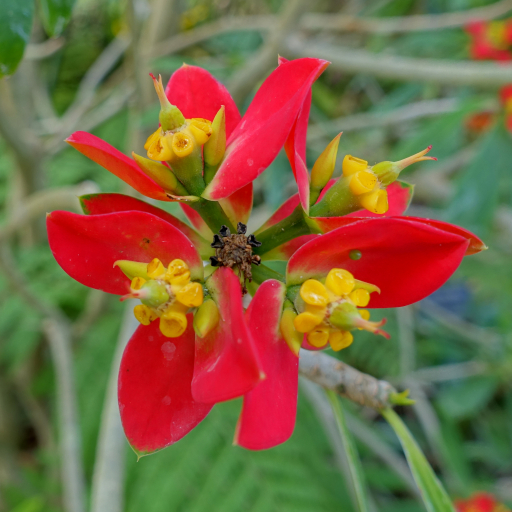
Often called the Jamaican Poinsettia or Flame of the Woods, this Caribbean native is a showstopper that brings a tropical "flare" to any landscape. Unlike the common holiday Poinsettia that fades after December, Euphorbia punicea is a perennial shrub that maintains its fiery appearance for much of the year. In its native Jamaica, it is cherished for its ability to thrive in rocky, harsh conditions while looking effortlessly elegant.
🔍 How to Identify
- 🔴 Brilliant Bracts: The most striking feature is the "false flowers"—bright crimson or scarlet leaf-like structures called bracts that surround the tiny, true yellow flowers at the center.
- 🍃 Leathery Foliage: The leaves are long, narrow, and a deep matte green. They are usually clustered toward the ends of the branches, giving the plant a tufted, "pom-pom" appearance.
- 🌳 Architectural Form: It grows as a woody shrub or small tree, reaching up to 12 feet in its natural habitat, with a sturdy, pale grey trunk and a branching, open canopy.
🏡 In Your Garden
- ☀️ Sun Seeker: This plant is a dedicated sun worshiper. If it doesn't get enough direct light, the vibrant red bracts will lose their intensity and may even turn a dull green.
- 💧 Drought Specialist: Adapted to rocky limestone cliffs, it has a "succulent-like" soul and hates "wet feet." It is highly susceptible to root rot, so it requires fast-draining soil and a "soak and dry" watering rhythm.
- ❄️ Cold Sensitive: Being a true tropical, it has zero tolerance for frost. In temperate zones, it is best grown in a large container that can be moved into a heated greenhouse or bright sunroom during the winter months.
⚠️ Safety & Toxicity
- 🚫 Toxic Sap: Like all members of the Euphorbia family, this plant contains a thick, milky white latex (sap) that is a potent irritant.
- 👁️ Skin & Eye Alert: The sap can cause contact dermatitis (blistering) on the skin and severe pain or temporary blindness if it makes contact with the eyes. Always wear gloves and eye protection when pruning.
- 🐾 Pet Danger: It is considered toxic to cats, dogs, and horses. Ingestion can lead to severe irritation of the mouth, drooling, and gastrointestinal distress.
✨ Fun Fact
- 🧬 The Royal Cousin: While it looks like a large, woody tree, it is a direct cousin to the common Christmas Poinsettia and the spiny Crown of Thorns. It essentially represents the "giant" side of the Euphorbia family tree!

Detailed Care Instructions
To grow Euphorbia Punicea (also known as the Jamaican Poinsettia or Red Crown of Thorns), follow these steps:
- Climate and Conditions: Euphorbia Punicea prefers a warm and dry climate. It is commonly grown as a houseplant in areas with colder winters. Ensure it receives plenty of bright, indirect sunlight.
- Choosing the Right Pot: Select a well-draining pot that is slightly larger than the plant's current container. The pot should have drainage holes to prevent waterlogging.
- Soil: Use a well-draining soil mix suitable for succulents or cacti. You can also make your own mix by combining equal parts of potting soil, sand, and perlite.
- Watering: Allow the soil to dry out between watering. Overwatering can lead to root rot. Generally, Euphorbia Punicea prefers drier soil compared to other houseplants. During the growing season (typically spring to fall), water the plant thoroughly and allow the excess water to drain away.
- Fertilizer: Feed your Euphorbia Punicea every two to three weeks with a balanced, water-soluble houseplant fertilizer during the growing season. Follow the instructions on the fertilizer packaging for proper dosage.
- Pruning: If your plant is becoming too large or unruly, you can prune it back in the spring. Wear gloves and be cautious as the plant releases a milky sap that can cause skin irritation.
- Propagation: Euphorbia Punicea can be propagated through stem cuttings. Take a cutting from a healthy plant, allow it to dry out for a few days, and then plant it in a well-draining soil mix. Keep the soil slightly damp until roots develop.
- Pests and Diseases: Euphorbia Punicea can be prone to pests such as mealybugs and aphids. Inspect the plant regularly for signs of infestation and treat with appropriate insecticidal soap or neem oil if necessary.
Remember, Euphorbia Punicea is toxic to both humans and pets, so handle it with care and keep it out of reach of children and animals.
To water the Euphorbia Punicea plant, you should follow these steps:
- Observe the soil: Before watering, check the soil moisture level. Insert your finger about an inch deep into the soil near the plant's base. If it feels dry, it is time to water.
- Choose the right water: Use room temperature water for watering the Euphorbia Punicea. It is best to use distilled or filtered water, as tap water can sometimes contain chlorine and other chemicals that may harm the plant in the long run.
- Watering technique: Slowly and evenly pour the water around the base of the plant, making sure to wet the entire root ball. Avoid overwatering, as this plant is prone to root rot. Ensure that excess water drains away freely from the pot's bottom.
- Quantity of water: Water the Euphorbia Punicea plant thoroughly, allowing the water to reach all the roots. Keep watering until water starts to trickle out from the drainage holes at the bottom of the pot.
- Watering frequency: The watering frequency depends on factors like humidity, temperature, and pot size. Generally, Euphorbia Punicea prefers dry conditions and should be watered sparingly. Allow the top layer of soil to dry out between watering sessions. In indoor conditions, watering every 2-3 weeks during the growing season is appropriate. However, during winter dormancy, reduce watering to once a month or even less.
- Avoid foliage contact: When watering, make sure to avoid direct contact between the water and the plant's foliage or stem. This can help prevent fungal diseases and rotting.
- Assess surroundings: Consider the plant's surroundings when watering. If placed near a hot window or in a particularly warm spot, the plant may require more frequent watering. On the other hand, if the plant is located in a cool or shady area, it may need less frequent watering.
Remember that it's always better to underwater than overwater the Euphorbia Punicea plant as it tolerates drought better than excess moisture. Observe the plant's response to watering and adjust the watering schedule accordingly.
To fertilize the Euphorbia Punicea plant, use a balanced water-soluble fertilizer. Dilute the fertilizer according to the instructions provided by the manufacturer. Generally, a ratio of approximately 1/4 to 1/2 teaspoon of fertilizer per gallon of water is suitable. Apply the fertilizer solution to the soil around the base of the plant, avoiding direct contact with the leaves or stem. It is recommended to fertilize this plant once every one to two months during the growing season, which typically occurs from spring to fall. Adjust the frequency and concentration of fertilization based on the plant's growth and response to ensure optimal health and development. Remember to always follow the specific instructions on the fertilizer packaging and monitor the plant's condition to avoid overfertilization, which can lead to damage or stress.
When selecting soil for the Euphorbia Punicea plant, it is important to consider its natural habitat and growth requirements. The ideal soil should offer good drainage to prevent waterlogging, as the plant is susceptible to root rot. It should also provide a balance between moisture retention and aeration to support healthy root development.
A recommended soil mixture for this plant is a well-draining cactus or succulent soil mix. This type of soil is specifically formulated to meet the needs of arid-loving plants like the Euphorbia Punicea. It generally consists of a combination of regular potting soil, coarse sand or perlite, and porous materials like pumice or lava rock.
The potting soil component provides a base for the plant's roots to anchor into, while the coarse sand or perlite helps improve drainage. The addition of porous materials like pumice or lava rock aids in enhancing aeration and prevents compaction of the soil, allowing oxygen to reach the roots.
It is advisable to avoid using heavy or clay-based soils or ones that retain excessive moisture, as this can lead to the plant's roots sitting in soggy conditions, which is not favorable for its overall health. Additionally, stay away from soils that contain high amounts of organic matter or water-holding additives such as peat moss, as they can make the soil too moisture-retentive for the Euphorbia Punicea.
In summary, an appropriate soil mix for the Euphorbia Punicea should be well-draining, moisture-retentive yet airy, and composed of cactus or succulent soil mixed with sand or perlite, as well as porous materials like pumice or lava rock.
Euphorbia punicea, also known as "plant A," can be propagated through several methods, including stem cuttings, seeds, and offsets. Here are the details on how to propagate this plant:
- Stem Cuttings:
- Select a healthy and mature stem of the plant to take a cutting from.
- Using a sharp and clean pair of pruning shears or a knife, cut a 4-6 inch long stem.
- Let the cutting dry for a few days to allow the wound to heal and prevent rotting.
- Fill a small pot with well-draining soil mix, such as a combination of cactus or succulent mix and perlite or sand.
- Dip the cut end of the stem in rooting hormone to encourage faster root development (optional but helpful).
- Make a small hole in the soil with your finger and gently place the stem cutting into it.
- Water the soil lightly and place the pot in a warm and bright location, avoiding direct sunlight.
- Mist the cutting regularly to maintain high humidity levels around it.
- Within a few weeks to a couple of months, roots should start to develop, and the cutting will establish itself as an independent plant.
- Select a healthy and mature stem of the plant to take a cutting from.
- Seeds:
- Collect seeds from a mature euphorbia punicea plant by allowing its flowers to bloom and produce seed capsules.
- Once the seed capsules turn brown and start to split open, carefully collect the seeds.
- Prepare a seed-starting tray or small pots with a well-draining soil mix.
- Sprinkle the seeds evenly on the surface of the soil and lightly press them down with your finger.
- Cover the seeds with a thin layer of soil mix or vermiculite.
- Mist the soil with water to provide moisture but ensure it doesn't become waterlogged.
- Place the tray or pots in a warm location with bright, indirect light.
- Maintain consistent moisture levels and avoid letting the soil dry out completely.
- Germination can take anywhere from a few weeks to a few months, so be patient.
- Once the seedlings develop two sets of true leaves, they can be transplanted to individual pots.
- Collect seeds from a mature euphorbia punicea plant by allowing its flowers to bloom and produce seed capsules.
- Offsets:
- Euphorbia punicea occasionally produces offsets, which are small plantlets that shoot out from the main plant's base.
- Gently separate the offsets from the main plant using a clean and sharp knife or scissors.
- Ensure that each offset has some roots attached to it.
- Prepare small pots or containers with well-draining soil mix.
- Plant the offsets in the pots, burying the roots and leaving the crown exposed.
- Water the soil to make it moist but not soaked.
- Place the pots in a warm and bright location, preferably avoiding direct sunlight.
- Water regularly to keep the soil lightly moist and wait for the offsets to grow and establish themselves.
Remember to handle Euphorbia punicea with care as its sap can be toxic and irritate the skin or eyes. Wearing gloves and using caution while working with this plant is advisable.
- Euphorbia punicea occasionally produces offsets, which are small plantlets that shoot out from the main plant's base.








