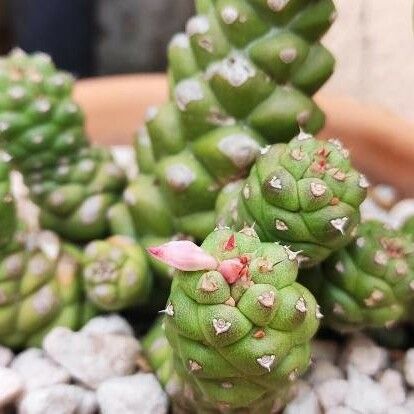
Plant Overview
Often called the "Velvet Spurge" or simply by its former name, Monadenium ritchiei, this East African native looks like something plucked straight from a prehistoric landscape. Hailing from the steep, rocky slopes of Kenya, it is a slow-growing succulent prized by collectors for its thick, knobby stems and vibrant, "neon" flowers. It is the perfect choice for those who love "weird" plants that tell a story of survival in harsh environments.
🔍 How to Identify
- 🌵 The Stems: Thick, olive-green, and cylindrical, these stems are covered in spiraling, tooth-like bumps called tubercles, which give the plant a textured, reptilian appearance.
- 🍃 The Foliage: During the growing season, small, fleshy, teardrop-shaped leaves sprout from the tips of the tubercles. These leaves are often deciduous, meaning the plant will go "bald" during its dormant period.
- 🌸 The "Flowers": It produces small, stunningly bright pink or reddish bracts (called cyathia) that cluster at the top of the stems, usually appearing in late summer or autumn.
🏡 In Your Garden
- 🧱 The "Dry" Life: Because it evolved in rocky crevices, this plant is highly susceptible to root rot. Use a gritty, mineral-heavy cactus mix and a pot with excellent drainage. It prefers to be "snug" in its container.
- 💤 Seasonal Slumber: Don't panic if it drops its leaves in winter! This is its natural way of conserving energy. During this dormancy, keep the soil almost completely dry and move it to a cool, bright spot.
- ☀️ Light Lover: To keep those stems thick and the bumps prominent, provide plenty of bright, indirect sunlight. If it doesn't get enough light, the new growth will become thin and weak (etiolated).
⚠️ Safety & Toxicity
- 🚫 Toxic Latex: Like all members of the Euphorbia family, this plant contains a thick, milky white sap (latex) that is highly irritating.
- 🧤 Skin & Eye Warning: Always wear gloves when pruning or repotting. If the sap touches your skin, it can cause redness or blistering; if it gets into your eyes, it can cause severe pain and temporary blindness.
- 🐾 Pet Safety: Keep this plant out of reach of curious cats and dogs. Ingesting any part of the plant can lead to vomiting, drooling, and mouth irritation.
✨ Fun Fact
The "bumps" on the stems (tubercles) aren't just for show! They are a clever evolutionary adaptation that helps the plant cast tiny shadows on itself, reducing the overall temperature of the stem surface in the blistering Kenyan sun.

Detailed Care Instructions
To grow Euphorbia ritchiei, also known as the Thai crown of thorns, you can follow these steps:
- Choose a suitable location: Euphorbia ritchiei prefers full sun but can tolerate partial shade. Ensure the location has well-draining soil.
- Prepare the soil: Amend the soil with organic matter, such as compost, to improve drainage and fertility. Ensure the soil pH is between 5.5 and 7.0.
- Planting: Dig a hole slightly larger than the root ball of the plant. Place the plant in the hole, ensuring the crown is level with or slightly above the soil surface. Backfill the hole and gently firm the soil around the plant.
- Watering: Initially, water the plant thoroughly after planting. Afterward, water Euphorbia ritchiei regularly but allow the top inch of the soil to dry between waterings. Avoid overwatering, as it can lead to root rot.
- Fertilizing: Apply a balanced fertilizer in spring, summer, and fall. Follow the manufacturer's instructions for dosage and application frequency. Avoid fertilizing during the winter months.
- Pruning: Trim back any dead or damaged branches to maintain the plant's shape. Additionally, remove any unwanted suckers that may appear.
- Pests and diseases: Euphorbia ritchiei is generally resistant to pests and diseases. However, keep an eye out for common issues such as aphids, mealybugs, or root rot. Treat any infestations or diseases promptly using appropriate methods or organic insecticides.
- Winter care: If you live in a colder climate, bring the plant indoors during the winter months. Place it in a well-lit location and reduce watering frequency. Keep the plant away from drafts or cold windows.
By following these steps, you can successfully grow Euphorbia ritchiei and enjoy its beautiful flowers and foliage.

Place in a bright room that is sun drenched almost all day. Or directly in a south-facing window.

Watering Euphorbia ritchiei involves carefully applying water to the soil surrounding the plant's root system. This should be done in a manner that does not allow water to come into direct contact with the plant's leaves or stems. It is important to avoid over-watering, as Euphorbia ritchiei is susceptible to root rot. The soil should be allowed to dry out slightly in between watering to prevent this. Euphorbia ritchiei prefers well-draining soil, so it is important to ensure that any excess water can drain away. Finally, it is important to keep in mind that Euphorbia ritchiei is a desert plant and does not require as much water as some other houseplants.
To fertilize Euphorbia Ritchiei, you should use a balanced fertilizer with equal amounts of nitrogen, phosphorus, and potassium. Avoid excessive amounts of fertilizer, as this may cause the plant to grow too quickly and become weak. Apply the fertilizer every two weeks during the growing season, and stop fertilizing during the winter months. Be sure to dilute the fertilizer to half-strength before applying it to the plant. Finally, water the plant thoroughly after fertilizing to ensure that the nutrients are absorbed properly.
Euphorbia Ritchiei plant prefers a well-draining soil with good aeration. It is recommended to use a sandy or rocky soil mix to ensure good drainage. Additionally, the soil should have a slightly acidic to neutral pH level, between 6.0-7.5. Fertilizers are not necessary for this plant, as it can thrive in nutrient-poor soil. It is important to avoid using overly rich soil or soil that retains too much moisture, as this can lead to root rot and other issues.
To propagate this plant, begin by taking stem cuttings from the parent plant. It's important to use clean and sharp pruning shears to prevent any damage to the stem. Cut a 4-5 inch (10-12 cm) stem below a node or leaf point.
Prepare a well-draining potting mix by mixing perlite, coarse sand, and peat moss. Moisten the mixture and fill a small pot with it. You can use a rooting hormone like Indole-3-butyric acid (IBA) to enhance rooting. Dip the cut end of the stem into the rooting hormone and gently tap off the excess.
Make a hole in the potting mix and insert the cutting into it. Firm the soil around the stem and water enough to keep it moist, but not waterlogged. Cover the pot with a clear plastic bag or a propagation dome to maintain humidity.
Place the pot in bright, indirect light and maintain temperatures between 60-70°F (15-21°C). After 3-4 weeks, check for root development by gently tugging on the plant. If there is resistance, it means roots have started to grow. Remove the plastic cover and continue to care for the plant by watering regularly and fertilizing monthly with a balanced fertilizer. Once the plant has grown big enough, it can be potted into its permanent container.
Common pests of the medusa's head cactus include Scale insect, mealybugs, spider mites. Make a habit of checking your medusa's head cactus frequently for pests so that any infestations can be caught and managed early.








