Plant Overview
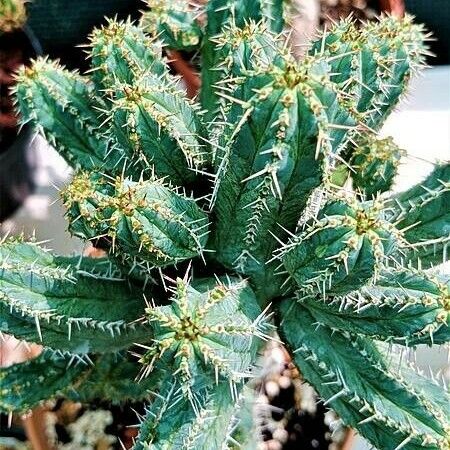
Often called a "Living Sculpture," Euphorbia seibanica is a rare and striking succulent hailing from the rugged, arid landscapes of Yemen. Collectors prize it for its unique, architectural growth pattern that resembles a miniature, spiny mountain range or an alien coral reef. Because it is perfectly adapted to harsh desert environments, it brings a touch of prehistoric resilience to any specialized plant collection.
🔍 How to Identify
- 🌵 The Central Body: Features a thickened, often globose or cylindrical central stem (caudex) that serves as a water reservoir during long periods of drought.
- ⚔️ Spiny Ridges: The branches are lined with short, sharp, paired spines that emerge from distinct "tubercles" or bumps along the ribs, giving it a jagged silhouette.
- 🌼 Subtle Blooms: It produces tiny, inconspicuous yellow-green flowers known as "cyathia," which typically appear in clusters at the tips of the newest growth.
🏡 In Your Garden
- 🪨 The "Dry Feet" Rule: This plant evolved in rocky, well-draining Yemeni soil. It is extremely sensitive to overwatering; a gritty, inorganic potting mix (like pumice or lava rock) is essential to prevent the roots from rotting.
- ☀️ Light & Form: It craves high light levels to maintain its compact, "squat" shape. If kept in too much shade, the plant will stretch toward the light, losing its iconic sculptural aesthetic and becoming structurally weak.
⚠️ Safety & Toxicity
- 🚫 Toxic Milky Latex: Like almost all members of the Euphorbia family, this plant contains a white, milky sap (latex) that is chemically complex and highly irritating.
- 🧴 Irritation Warning: The sap can cause painful skin rashes (dermatitis) and severe inflammation if it touches the eyes. Always wear gloves when handling or pruning, and keep this plant away from curious pets and children.
✨ Fun Fact
- 🏜️ Desert Heritage: The species name seibanica refers to the Seiban mountains in the Hadhramaut region of Yemen. This area is a "biodiversity hotspot" where plants have spent millions of years evolving bizarre shapes to survive extreme heat and sunlight.

Detailed Care Instructions








