Plant Overview
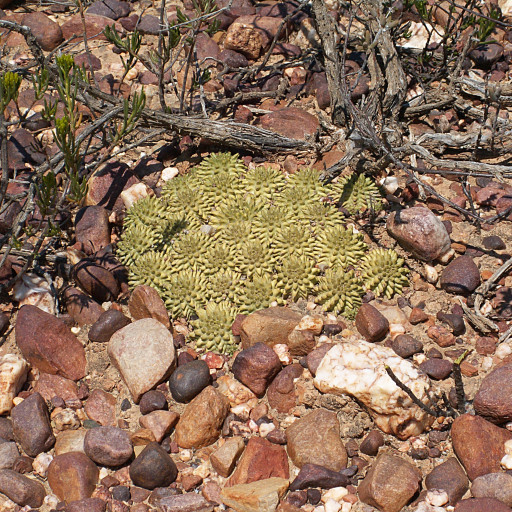
Often called "Suzanne’s Spurge," this South African native is a charming, slow-growing succulent that looks like a cluster of tiny, green hedgehogs. In the wild, it survives the harsh, arid conditions of the Little Karoo by growing partially submerged in the rocky soil to protect itself from the sun. For indoor gardeners, it is a geometric masterpiece that stays compact and forms impressive "mounds" over many years.
🔍 How to Identify
- 🌵 The Body: It grows as a small, globular stem that eventually becomes cylindrical. It naturally "offsets," meaning it creates many little babies around its base to form a dense clump.
- 🧶 Tubercles: The surface is covered in prominent, tooth-like bumps called tubercles. Each one is tipped with a soft, brownish bristle that looks prickly but is actually quite flexible and harmless.
- 🌼 Flowers: It produces tiny, inconspicuous greenish-yellow flowers (cyathia) primarily at the top of the stems during the spring and autumn.
🏡 In Your Garden
- ☀️ Light & Color: While it loves bright light, the "skin" can sunburn if moved too quickly into harsh, direct summer sun. In high-light conditions, the deep green body may develop a beautiful reddish-purple tint as a natural sunblock.
- 🪴 Drainage is Key: This plant has a delicate root system that hates "wet feet." Use a potting mix that is at least 50% grit or perlite. It prefers a shallow pot since its roots don't grow very deep.
- ❄️ Winter Dormancy: During the cold months, the plant goes to sleep. It is vital to stop watering almost entirely during this time; providing water when the plant isn't growing is the fastest way to cause root rot.
⚠️ Safety & Toxicity
- 🧪 Irritating Sap: Like all members of the Euphorbia family, this plant contains a white, milky latex sap that is toxic.
- 🚫 Skin & Eyes: The sap can cause contact dermatitis (a painful rash) on the skin and is extremely dangerous if it gets into the eyes. Always wear gloves when repotting and keep the plant away from curious pets or children who might break a stem.
✨ Fun Fact
- 🏅 A Botanical Honor: This plant was named after Suzanna Muir, the wife of the Scottish doctor and plant collector John Muir, who discovered the species in South Africa in the early 1900s. It has since won the prestigious Royal Horticultural Society's Award of Garden Merit!

Detailed Care Instructions
To grow Euphorbia Suzannae plant, also known as Moroccan Mound, you can follow these steps:
- Rooting: Obtain a healthy stem cutting from an established Euphorbia Suzannae plant. Ensure the cutting is about 6 inches in length and has a few sets of leaves.
- Drying: Allow the cutting to dry for a few days until the cut end forms a callus. This will prevent rotting when planted.
- Potting: Fill a small pot with well-draining cactus or succulent soil mix. Make a small hole in the center using your finger or a pencil.
- Planting: Insert the calloused end of the cutting into the hole you made in the soil, making sure it is stable and standing upright.
- Light and temperature: Place the pot in an area that receives bright indirect sunlight. Euphorbia Suzannae plants prefer temperatures between 65-85°F (18-29°C).
- Watering: Water the plant sparingly, allowing the soil to dry out completely between waterings. Overwatering can lead to root rot, so it's crucial to avoid excessive moisture.
- Fertilizing: Feed the plant with a diluted cactus or succulent fertilizer once a month during the growing season (spring and summer).
- Pruning: As the plant grows, you can trim back any leggy or uneven growth to maintain its compact form.
- Repotting: Euphorbia Suzannae plants have a shallow root system. When it outgrows its pot, gently remove it from the current container, and replant it into a slightly larger pot with fresh soil.
- Caution: Be careful when handling Euphorbia Suzannae as it contains a milky sap that can be irritating to the skin and harmful if ingested. Always wear gloves when handling and keep it away from children and pets.
By following these steps, you should be able to successfully grow your Euphorbia Suzannae plant.

Place in a window with dappled sun or a spot in the middle of a room. Or directly in a window facing west or east.

Euphorbia Suzannae plant should be watered regularly, but avoid overwatering as it can lead to root rot. The soil should be allowed to dry out slightly between watering. The plant prefers well-draining soil and should be placed in a location with bright, indirect sunlight. When watering, it is best to water the soil directly and avoid getting water on the leaves or stem. It is also important to wear gloves or wash hands thoroughly after handling the plant, as it produces a white sap that can be irritating to the skin and eyes.
Sure, here are fertilizing instructions for Euphorbia Suzannae plant:
- Choose a balanced, water-soluble fertilizer with an N-P-K ratio of 10-10-10 or similar for general plant nutrition.
- Dilute the fertilizer according to the package instructions. Typically, this involves mixing a certain amount of fertilizer with water.
- Apply the diluted fertilizer to the soil around the base of the plant. Avoid applying it directly onto the plant's leaves or stem.
- Use the fertilizer once every two to four weeks during the active growing season, which is usually spring and summer.
- Avoid fertilizing during the winter months or when the plant is in a dormant phase.
- Water the plant lightly after fertilizing to help distribute the nutrients into the soil.
- If the plant starts showing signs of fertilizer burn, such as yellowing or wilting leaves, reduce the amount of fertilizer or dilute it further for future applications.
- Regularly monitor the plant's health and adjust the fertilization schedule or amount as needed based on its growth and appearance.
The recommended soil for Euphorbia Suzannae is a well-draining mix that is composed of equal parts of loam, sand, and peat moss. The soil should have a pH level that ranges between slightly acidic to neutral with a pH of around 6.0 to 7.0 being ideal. The plant prefers a soil that is rich in nutrients but not too fertile as over-fertilization can lead to rapid growth, which can be detrimental to the health of the plant. As a desert plant, Euphorbia Suzannae likes to live in an environment that is dry and well-drained, so the soil used should not hold onto water for too long, which can lead to root rot. A sandy or gritty soil mix is recommended to ensure adequate drainage. Additionally, Euphorbia Suzannae prefers to grow in a soil that has good aeration, so incorporating perlite or pumice into the soil mix can be helpful.
Propagation of Euphorbia suzannae can be achieved through various methods. Here are a few ways to successfully propagate this plant:
- Stem Cuttings: Take a cutting from a healthy Euphorbia suzannae plant using clean, sharp pruning shears or a knife. Ensure that the cutting is about 4-6 inches long and has a few sets of leaves attached. Allow the cutting to dry and callous over for a few days before planting it into a well-draining potting mix. Keep the soil slightly moist and place the cutting in a bright, indirect light location. Within a few weeks, roots should start to form, indicating successful propagation.
- Leaf Cuttings: Select a healthy leaf from a mature Euphorbia suzannae plant. Gently twist the leaf to remove it from the stem, ensuring that a clean section of the leaf's base remains intact. Allow the cut end to dry and callous over for a few days. Fill a small pot with well-draining soil and make a small hole for the leaf cutting. Insert the leaf into the soil, burying the base slightly. Place the pot in a bright, indirect light spot and keep the soil slightly moist. Over time, new plantlets will emerge from the leaf base, indicating successful propagation.
- Division: If you have a mature Euphorbia suzannae plant with multiple stems, you can propagate it through division. Gently remove the plant from its pot and separate the individual stems, ensuring that each section has its own set of roots. Plant each divided section into its own pot filled with well-draining soil. Water the newly separated plants and place them in a bright location with indirect sunlight. Keep the soil slightly moist until new growth indicates successful propagation.
- Offsets: Euphorbia suzannae can produce offsets or baby plants around its base. These offsets can be carefully separated from the parent plant and planted into their individual pots. Ensure that each offset has some roots intact. Plant them in well-draining soil, keep the soil slightly moist, and provide bright, indirect light. Over time, the offsets will establish themselves and grow into mature plants.
Remember, when propagating Euphorbia suzannae, it is crucial to wear protective gloves due to the plant's toxic sap. Additionally, allow any cut or broken sections to dry and callous over before planting to prevent rotting. Provide proper care and attention to the propagated plants to ensure their successful growth and development.
Common pests of the hedgehog milkball include Scale insect, mealybugs, spider mites. Make a habit of checking your hedgehog milkball frequently for pests so that any infestations can be caught and managed early.







