Plant Overview
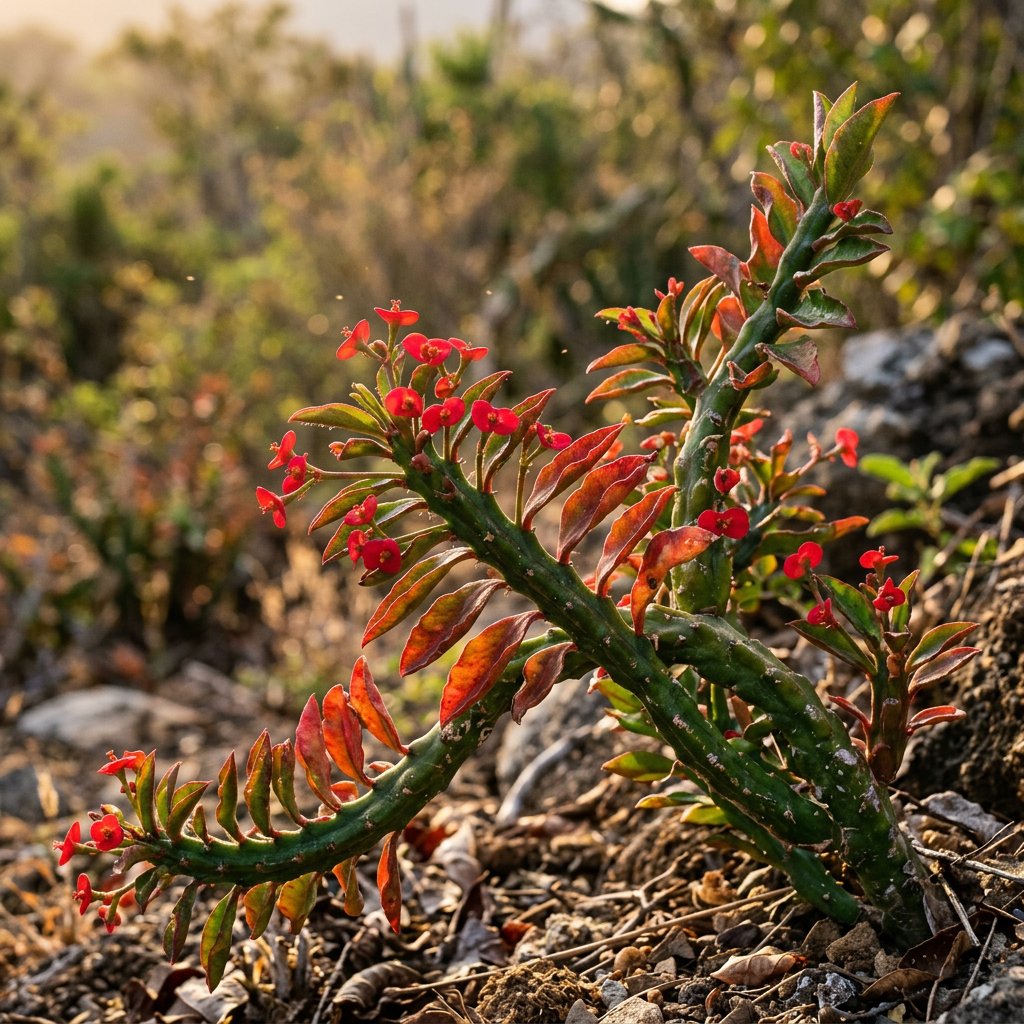
Often called the Devil's Backbone or Zig-Zag Plant, this succulent-like shrub is a master of geometric growth. Its stems literally change direction every time a leaf appears, creating a permanent lightning-bolt pattern that looks like a miniature green staircase. In some regions, its bright red, slipper-shaped bracts have earned it the nickname Redbird Flower, as they look like tiny cardinals perched along the branches.
🔍 How to Identify
- 🌿 The Zig-Zag Stem: The most iconic feature is the thick, fleshy stem that bends sharply at each node, creating a distinct "backbone" or zig-zag silhouette.
- 🍃 Fleshy Leaves: The leaves are usually pointed ovals with a waxy texture; many garden varieties feature beautiful white or pink variegation along the edges.
- 🐦 Bird-Shaped Bracts: During the blooming season, it produces unique red or pink structures at the tips of the stems that remarkably resemble a bird’s head or a lady’s slipper.
🏡 In Your Garden
- ☀️ Lighting Nuance: While it craves bright, indirect light to maintain its variegated colors, direct midday sun can bleach or scorch the leaves. If the plant gets too little light, the "zig-zag" pattern may stretch out and become less pronounced.
- 💧 Watering Logic: It is highly drought-tolerant due to its succulent stems, but it hates "wet feet." Ensure the soil is gritty and fast-draining, as the roots are prone to rot if kept in soggy conditions during the winter months.
⚠️ Safety & Toxicity
- 🚫 Irritant Sap: Like most members of the Euphorbia family, this plant contains a thick, white milky latex that is highly irritating to the skin and eyes.
- 🐾 Pet & Child Safety: It is toxic if ingested, leading to severe stomach upset and mouth irritation. Always wear gloves when pruning and keep the plant out of reach of curious cats, dogs, or toddlers.
✨ Fun Fact
The plant's zig-zag growth is a botanical phenomenon called "divergent branching." This isn't just for looks—in its native tropical habitat, this structural trick helps the plant navigate through dense undergrowth to find the best pockets of sunlight!

Detailed Care Instructions
| Humidity | Normal |
| Lighting | Part Sun |
| Toxicity | Poisonous |
| Difficulty | Medium |
| Temperature | 18°C - 25°C |
| Hardiness Zones | 10A - 11B |
To grow Euphorbia Tithymaloides, also known as Devil's Backbone or Redbird Cactus, you can follow the steps below:
- Choose a suitable location: Euphorbia Tithymaloides prefers bright indirect sunlight, so place the plant in a spot where it can receive plenty of bright but filtered light throughout the day. Avoid direct sunlight, as it can scorch the leaves.
- Select the right soil: Use a well-draining potting mix that is formulated for cacti and succulents. These types of soil allow excess water to drain efficiently, preventing root rot.
- Planting: Take a small cutting from an existing plant or purchase a young Euphorbia Tithymaloides plant from a nursery. Plant it in a pot or container with drainage holes. Ensure the cutting or plant is positioned firmly in the soil, without burying it too deep.
- Watering: Euphorbia Tithymaloides is a succulent and doesn't require frequent watering. Only water the plant when the soil has completely dried out. Overwatering can lead to root rot, so it is essential to let the soil dry between waterings.
- Fertilizing: Use a balanced fertilizer specifically formulated for succulents or cacti during the growing season (spring and summer). Follow the instructions on the fertilizer package for the correct application amount and frequency.
- Pruning: If your Euphorbia Tithymaloides becomes leggy or unevenly shaped, you can prune it to encourage bushier growth. Use clean and sharp pruning shears to cut back the stems to the desired length. Be cautious when handling the plant, as its sap can be toxic and irritating to the skin and eyes, so wear gloves and protective eyewear.
- Pests and diseases: Euphorbia Tithymaloides is generally not prone to many pests or diseases. However, watch out for common succulent pests like mealybugs or spider mites. In case of infestation, treat them with an appropriate insecticidal soap or neem oil solution.
Remember to research your local climate and provide suitable conditions accordingly. Additionally, keep the plant away from pets and children, as the sap can be toxic if ingested.

Place in a window with dappled sun or a spot in the middle of a room. Or directly in a window facing west or east.

To water this plant, it is important to use a pot with drainage holes to avoid waterlogging the roots. Make sure the soil dries out partially between watering, and then thoroughly water the soil until the excess water drains out of the pot. Avoid getting water on the leaves or stems of the plant, as this can cause damage. Water the plant regularly, but reduce the frequency and amount of watering during the dormant season.
To fertilize this plant, use a balanced fertilizer with equal amounts of nitrogen, phosphorus, and potassium. Dilute the fertilizer to half strength, and apply it to the plant every four to six weeks during the growing season. Water the plant thoroughly before and after fertilizing to prevent fertilizer burn. Avoid getting the fertilizer on the foliage or stems of the plant to prevent damage.
The ideal soil for Euphorbia Tithymaloides plant is a well-draining soil that has good aeration and drainage. The soil should be slightly moist but not overly wet as it can lead to root rot. A mixture of sandy and loamy soil with a slightly acidic to neutral pH level is preferred. Adding peat moss or compost can help enrich the soil and improve its overall quality. Avoid using heavy clay soils or soils that are too fine as they can cause water to pool around the roots. Additionally, it is important to ensure that the soil is not contaminated with any chemicals or pollutants as Euphorbia Tithymaloides plants are sensitive to such elements.
To propagate this plant, you will need to take a stem cutting from a healthy, mature plant. The cutting should be around 4-6 inches long and have at least two leaves. Remove any lower leaves on the cutting, leaving just a few at the top.
Allow the cutting to dry out for a few hours, or overnight, before planting it in a well-draining potting mix. Make a hole in the soil with a pencil or similar object, and gently insert the cutting. Firmly press the soil around it to ensure it stays upright.
Water the cutting well and place it in a spot with bright, indirect light. Keep the soil moist but not waterlogged, and mist the cutting with water occasionally to provide extra humidity.
After a few weeks, you should notice new growth on the cutting, indicating that it has rooted successfully. At this point, you can transplant it into a larger pot or directly into the garden if the weather is warm enough.
Common pests of the slipper-flower include Scale insect, mealybugs, aphids. Make a habit of checking your slipper-flower frequently for pests so that any infestations can be caught and managed early.








