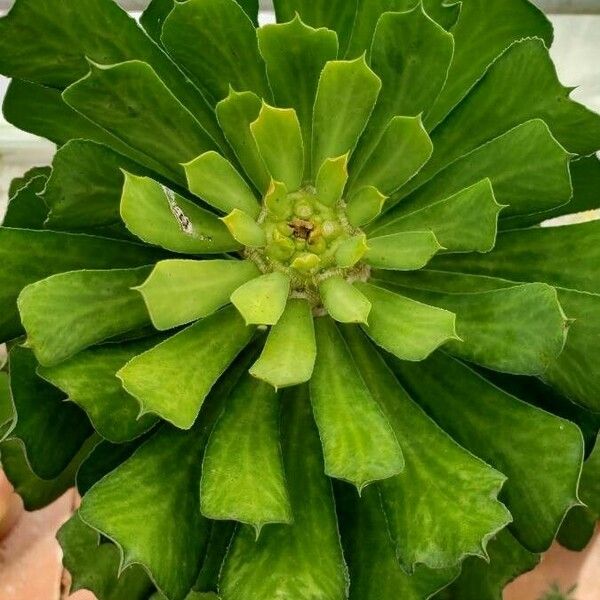
Plant Overview
Often called the "Poison-Maker," Euphorbia venenifica is a striking, architectural succulent native to the rocky savannas of West Africa. With its pale, cylindrical stems and crown of leafy greens, it looks like a prehistoric relic meant for a desert landscape. While it is a prized specimen for rare plant collectors, its name serves as a literal warning: in its native lands, its potent sap has been used for centuries to create lethal poison-tipped arrows.
🔍 How to Identify
- 🌵 The Stem: Features thick, upright, columnar stems that are usually a pale silvery-grey or muted green. They can grow quite tall, resembling a club.
- 🍃 The Leaves: During the growing season, large, fleshy, paddle-shaped leaves sprout in a spiral at the very top of the stems, giving it a palm-like appearance.
- 📍 The Spines: Unlike many cacti, it features short, sharp, single spines (stipular thorns) that are spaced out along the stem's surface.
🏡 In Your Garden
- ☀️ Sun Seeker: This plant craves high-intensity light. To maintain its silvery "armor" and prevent it from stretching, place it in the brightest spot available. It is adapted to harsh, direct sunlight.
- 🏜️ Drainage is Key: Because it possesses a sensitive taproot, it hates "wet feet." Use a very gritty, mineral-heavy soil mix. It is better to underwater this plant than to overwater it, as the fleshy stem stores a massive reservoir of moisture.
- 🌡️ Warmth Lover: Being from West Africa, it has zero tolerance for frost. If the temperature drops below 50°F (10°C), it should be moved indoors to a sunny windowsill.
⚠️ Safety & Toxicity
- 🚫 Status: EXTREMELY TOXIC. This is one of the most hazardous species in the Euphorbia family.
- 🧪 The Sap: The milky white latex contains high concentrations of diterpene esters. If it touches your skin, it can cause severe blistering and "burning."
- 👀 Critical Risk: Never touch your eyes after handling this plant; the sap can cause temporary or permanent blindness. It is highly toxic to cats, dogs, and children if even a small amount is ingested. Always wear gloves and eye protection when pruning.
✨ Fun Fact
The specific epithet venenifica comes from the Latin word for "witch" or "poison-maker." This refers to the historical use of the plant's latex by local tribes to coat hunting arrows, powerful enough to bring down large game.

Detailed Care Instructions

Place in a bright room that is sun drenched almost all day. Or directly in a south-facing window.

When the top few inches of soil dry out, water your plants. If the top few inches of soil are still moist, do not water your plant. Wait a few days, then poke your finger into the soil to see if anything has changed. Overwatering poses a disease risk, such as the development of fungal diseases in the roots. These plants have adaptations in there leaves that allow them to survive in low water supply.








