Plant Overview
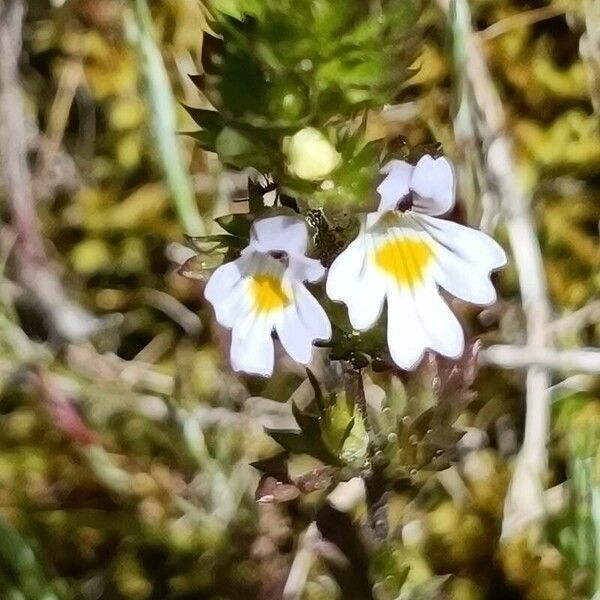
Often called the "Common Eyebright," Euphrasia nemorosa is a tiny but tough wildflower that plays the role of a "hidden thief" in the meadow. Its name stems from centuries of folk medicine, where its bloodshot-looking flower veins led herbalists to believe it could cure eye ailments. While it looks like a delicate woodland gem, it is actually a semi-parasitic survivor that thrives by tapping into the roots of neighboring grasses.
🔍 How to Identify
- 🌸 The "Eye" Pattern: Small, white-to-pale-lilac flowers featuring a distinct yellow "yolk" spot on the lower lip and delicate purple streaks that look like tiny veins.
- 🍃 Toothed Foliage: The leaves are tiny, dark green, and sharply toothed (serrated), arranged in opposite pairs along the stem.
- 🌱 Wiry Stature: A low-growing plant, usually reaching only 10–20 cm, with stiff, often purplish stems that branch out near the top.
🏡 In Your Garden
- 🌾 The Meadow Helper: Because it is a hemi-parasite, it steals water and nutrients from aggressive grasses. This actually helps gardeners and conservationists maintain biodiversity, as it prevents grass from smothering other delicate wildflowers.
- ☀️ Sun & Soil Nuance: It prefers well-drained, chalky, or sandy soils and lots of sunshine. It is notoriously difficult to "cultivate" intentionally because it requires a specific host plant (like a grass or clover) to truly thrive.
⚠️ Safety & Toxicity
- ✅ Low Risk: Euphrasia nemorosa is generally considered non-toxic to humans and pets if touched.
- 👁️ Medical Caution: While its name suggests eye health, you should never apply DIY preparations of this plant to your eyes. Modern herbalists use it cautiously, but home-made infusions can carry bacteria that lead to serious infections.
✨ Fun Fact
The genus name Euphrasia is derived from the Greek word Euphrosyne, who was one of the three Graces known for "joy and gladness." It was believed that the plant's ability to clear the vision would bring a literal and metaphorical lightness to the soul.

Detailed Care Instructions
Here are some tips for growing Euphrasia Nemorosa plant:
- Start by choosing a suitable location for your Euphrasia Nemorosa plant. It prefers a sunny or partially shaded spot with well-draining soil.
- Plant the seeds or seedlings in the spring or fall. Make sure to space them at least 6-12 inches apart to allow for proper growth.
- Water your Euphrasia Nemorosa plant regularly, especially during dry periods. However, be careful not to overwater as this can cause root rot.
- Fertilize your plant with a balanced fertilizer once a month during the growing season to promote healthy growth.
- Prune your Euphrasia Nemorosa plant regularly to encourage bushier growth and remove any dead or damaged foliage.
- Keep an eye out for pests and diseases, and take appropriate measures to control them if necessary.
- In colder climates, protect your plant from frost by covering it with a frost cloth or bringing it indoors during the winter months.
By following these tips, you should be able to successfully grow a beautiful Euphrasia Nemorosa plant in your garden.

Place in a bright room that is sun drenched almost all day. Or directly in a south-facing window.

Euphrasia Nemorosa plants should be watered regularly to ensure they receive enough moisture to thrive. It is important to water the plant directly at the base, avoiding getting the foliage wet as this can increase the risk of disease. The soil should be kept consistently moist but not waterlogged, as excessive moisture can lead to root rot. It is recommended to water the plant in the morning or evening to reduce water loss through evaporation. Additionally, using a watering can with a spout to deliver water directly to the soil can help prevent water from splashing onto the leaves. Overall, it is important to monitor the moisture levels of the soil and adjust the watering schedule as needed to keep the plant healthy.
To fertilize the plant, you can use a balanced liquid fertilizer diluted to half strength. Apply the fertilizer every 2-4 weeks during the growing season, which is typically spring to fall. Be careful not to over-fertilize as this can harm the plant. Water the plant well before and after applying the fertilizer to help it absorb the nutrients effectively. Remove any excess fertilizer that may have spilled onto the leaves to prevent leaf burn.
Euphrasia Nemorosa, a delicate and small plant, prefers well-draining soil that is rich in organic matter. It thrives in a slightly acidic to neutral pH range. a Good soil mixture for Euphrasia Nemorosa would consist of a combination of peat moss, sand, and perlite to ensure proper aeration and drainage. Avoid heavy clay soils that retain moisture, as this can lead to root rot and other issues. It's important to regularly check the moisture level of the soil and water only when the top inch feels dry to the touch. Overall, providing a well-balanced, nutrient-rich soil mixture will help Euphrasia Nemorosa thrive and produce beautiful blooms.
Euphrasia nemorosa can be propagated through division or by collecting and sowing seeds.
To propagate through division, carefully dig up the plant and separate the roots into several smaller clumps. Replant these clumps in separate pots or directly in the garden, ensuring they are kept moist until they establish themselves.
To propagate through seeds, wait until the plant has finished flowering and collect the seed capsules. Open the capsules and collect the tiny seeds. Sow these seeds in a well-draining potting mix and keep them moist until they germinate. Once the seedlings have developed a few true leaves, they can be transplanted into individual pots or directly into the garden.
Both propagation methods should be done in spring or early summer when the plant is actively growing. It is important to provide the new plants with adequate sunlight, water, and nutrients to ensure successful growth.








