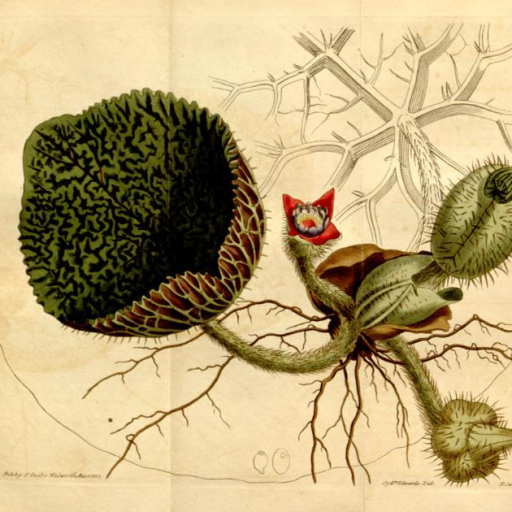
Plant Overview
Often called the "Gorgon Nut" or "Fox Nut," Euryale ferox is a spectacular aquatic plant that looks like something straight out of the Jurassic period. While it resembles its famous cousin, the Giant Amazonian Water Lily, it is much hardier and has been cultivated for thousands of years in India and China. Its species name, ferox, is a Latin warning of its "ferocious" nature—referring to the formidable sharp spines that cover almost every inch of its body.
🔍 How to Identify
- 🪷 The Leaves: Massive, circular floating pads that can reach 3 to 5 feet in diameter, featuring a distinct quilted or "crinkled" texture with deep purple or red undersides.
- ⚔️ The Armor: Nearly every part of the plant—including the leaf veins, long stems, and flower buds—is covered in sharp, needle-like thorns to deter hungry aquatic animals.
- 💜 The Blooms: Dainty, vibrant purple-to-blue flowers peek through the water's surface, though many of its flowers actually bloom and self-pollinate entirely underwater.
🏡 In Your Garden
- 🥣 Deep Mud Lovers: This is not a plant for a small decorative fountain; it requires a large pond with a thick layer of rich, heavy clay or mud at the bottom to anchor its aggressive root system.
- ☀️ Heat Seekers: The Gorgon Nut craves intense summer heat and maximum sun exposure. In cooler climates, it is often grown as an annual because it requires consistently warm water to produce its famous seeds.
- 🛶 Space Requirements: Give it room! A single plant can easily take up 10 to 15 square feet of water surface, potentially crowding out smaller lilies or oxygenating plants.
⚠️ Safety & Toxicity
- ✅ Status: Generally non-toxic and highly valued as a food source.
- 🧤 Physical Hazard: The primary danger is physical. The spines are incredibly sharp and can easily puncture skin or thin gardening gloves. Handle with extreme caution during maintenance or seed harvesting.
- 🐾 Pet Safety: It is safe for pets in terms of toxicity, but curious dogs should be kept away from the water's edge to avoid painful stings from the thorns.
✨ Fun Fact
The seeds of this plant are the source of the popular superfood snack known as "Makhana." When the seeds are harvested and roasted over high heat, they "pop" just like popcorn, resulting in a light, crunchy, and highly nutritious treat that has been a staple in Ayurvedic medicine for centuries!

Detailed Care Instructions
To grow a Euryale ferox plant, also known as the fox nut or water caltrop, you will need to follow these steps:
- Purchase seeds: Obtain high-quality fresh seeds from a reputable supplier. Euryale ferox seeds can be found online or at local garden centers.
- Soak the seeds: Place the seeds in a container of warm water and allow them to soak for about 24 hours. This will help to soften the hard outer shell and improve germination rates.
- Prepare a growing container: Fill a shallow container or seed tray with a well-draining potting mix. Alternatively, you can use a shallow pond or container filled with aquatic planting medium.
- Plant the seeds: Place the seeds directly on the soil surface or lightly bury them in the mix. If using an aquatic container, gently press the seeds into the substrate.
- Add water: If using a traditional container, water the seeds until the soil is evenly moist but not waterlogged. If growing in a pond or aquatic container, fill it with water to a depth of 2-3 inches, ensuring the seeds are covered.
- Provide warmth and sunlight: Euryale ferox plants require warm temperatures and plenty of sunlight to thrive. Place the container or pond in a sunny location, ideally with temperatures between 70-85°F (21-29°C).
- Maintain moisture: Keep the soil or water consistently moist throughout the growing season. If growing in a pond or aquatic container, make sure the water level is always maintained.
- Thin out seedlings: After germination, thin out the seedlings, leaving only the strongest and healthiest plants. This will prevent overcrowding and give the remaining plants more space to grow.
- Fertilize: Apply a balanced liquid fertilizer once every two weeks during the growing season to provide essential nutrients for healthy plant development.
- Harvesting: The Euryale ferox plant will usually start producing nuts after about 100-120 days. Harvest the mature nuts when the outer husks turn brown and hard. Remove the husks and allow the nuts to dry for a few days before storing.
- Overwintering: If you live in a region with cold winters, you may need to overwinter your Euryale ferox indoors. Move the plant to a bright, cool location and reduce watering. Resume regular care in the spring.
Remember to research and understand the specific requirements of Euryale ferox plants and adjust your care accordingly.

Place in a bright room that is sun drenched almost all day. Or directly in a south-facing window.

The plant should be watered with clean water on a regular basis. The soil should be kept moist but not waterlogged, as over-watering can lead to root rot. The amount of water required may vary depending on the season and the location of the plant, so it is important to monitor the soil moisture level and adjust watering accordingly. Additionally, it is important to make sure the plant has proper drainage to prevent standing water in the pot or container.
To fertilize this plant, you will need a balanced fertilizer that contains equal amounts of nitrogen, phosphorus, and potassium. During the growing season, apply the fertilizer once every two weeks. Dilute the fertilizer to half the strength recommended on the label. Make sure to water the plant thoroughly before and after applying the fertilizer. Avoid fertilizing the plant during the dormant season.
Euryale Ferox plant requires a rich soil that is loamy and well-draining. The soil should have a pH level of 6.0 to 8.0. This plant prefers a nutrient-rich substrate that contains a mix of organic matter, such as well-rotted animal manure, compost, and peat moss. The soil should also be able to retain moisture without becoming waterlogged, as this can lead to root rot. A soil mix containing perlite or vermiculite can help with drainage. When potting Euryale Ferox, it's recommended to use a container that is at least 18 inches in diameter and six inches deep. Fertilizers can be added to the soil mix during potting or throughout the growing season to provide additional nutrients for the plant.
- Identification: First, you need to ensure that you have the correct plant species by identifying its botanical characteristics.
- Collection: Collect mature seeds from the plants as they ripen and remove the outer seed coat.
- Germination: Soak the seeds in water for 24-48 hours, then sow them in loamy soil with good drainage and plenty of organic matter. Keep the soil moist but not waterlogged. Germination can take up to a month.
- Transplanting: Once the seedlings are strong enough, transplant them to individual pots filled with suitable growing medium.
- Growing conditions: Euryale Ferox requires a warm growing environment with plenty of sunlight, filtered light, or partial shade. It prefers to grow in shallow water or wet soil.
- Maintenance: Regularly fertilize and water the plant as needed. Prune away any dead leaves or flowers.
- Reproduction: Euryale Ferox reproduces through seed propagation or vegetative reproduction by rhizome division.
- Rhizome division: Dig up the entire root system of a mature plant, divide the rhizome, and replant the sections in suitable soil.
- Propagation: Euryale Ferox can be propagated by dividing mature rhizomes or from seeds, and it is a slow-growing plant that requires patience and care.








