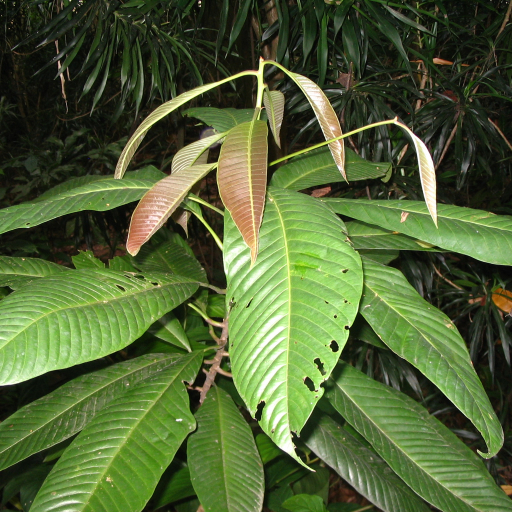
Plant Overview
Known as the "King of the Bornean Forests," the Bornean Ironwood, or Belian, is a botanical titan of Southeast Asia. This legendary tree is famous for producing wood so hard and dense that it defies the natural laws of most timber—it actually sinks in water! While it grows at a glacial pace, a single tree can stand watch over the rainforest for over a thousand years, witnessing the rise and fall of entire civilizations.
🔍 How to Identify
- 🌳 The Silhouette: In its natural habitat, this is a massive canopy tree, reaching heights of up to 50 meters with a straight, cylindrical trunk that often lacks the wide buttress roots common in other tropical giants.
- 🍃 Leathery Foliage: The leaves are alternate and elliptical, possessing a thick, leathery texture with a glossy deep-green finish that helps them shed heavy tropical rainwater.
- 🥥 The "Ovoid" Fruit: It produces a distinct, large, egg-shaped fruit (a drupe) that can be up to 15 centimeters long, containing a single, very hard seed protected by a fibrous shell.
- 🪵 Iron-Like Bark: The bark is relatively smooth and grey-brown, but it is the wood beneath that is unmistakable—dark brown to nearly black, it is exceptionally heavy and feels more like stone than plant matter.
🏡 In Your Garden & Ecology
- 🌱 Slow and Steady: If you are lucky enough to grow one, patience is mandatory. The Belian grows incredibly slowly, often taking 100 years or more to reach a harvestable size, making it a "legacy tree" rather than a quick landscape filler.
- 💧 Rainforest Roots: It thrives in lowland primary forests with high humidity and well-draining, acidic soils. It relies on a deep taproot system, which means it absolutely hates being moved once it has established itself in the ground.
- 🛡️ Natural Armor: Its sap and wood are naturally infused with high concentrations of silica and tannins, which provide a built-in defense system against termites, fungi, and marine borers.
⚠️ Safety & Toxicity
- 🟢 Non-Toxic Handling: There are no known reports of the leaves or bark being toxic to the touch; however, the wood is so hard that it can cause significant "tool kickback" or splinters that are difficult to remove.
- 🚫 Seed Caution: While the fruit isn't a common household hazard, the seeds of many tropical Lauraceae species contain compounds that should not be ingested by humans or pets.
- 🛑 Conservation Status: Because it is so valuable and slow-growing, it is classified as Vulnerable. In many regions, it is illegal to harvest or export wild Belian, so always ensure your source is ethically certified.
✨ Fun Fact
The wood of the Bornean Ironwood is so resistant to decay that "ironwood" posts found in ancient archaeological sites in Indonesia remain perfectly intact after hundreds of years submerged in mud or salt water—long after every other material has rotted away.

Detailed Care Instructions
To grow Eusideroxylon Zwageri (Borneo Ironwood) plants, you can follow these steps:
- Obtain seeds or saplings: Purchase seeds or saplings from a reputable nursery or seed supplier. Make sure you are obtaining them legally and from sustainable sources.
- Select an appropriate location: Borneo Ironwood plants thrive in tropical climates. Choose a location that receives full to partial sun and has well-draining soil with a pH between 4.5 and 6.5. The area should also be protected from strong winds.
- Prepare the planting site: Clear the area of weeds, rocks, and debris. Remove any grass or other vegetation around the planting site. This will allow the plant to establish itself without competition.
- Plant the seeds or saplings: For seeds, sow them in a nursery bed or a potting tray filled with a well-draining, soilless potting mix. Cover them lightly with a thin layer of soil. If using saplings, dig a hole that is slightly larger than the root ball and gently place the sapling, making sure the soil is level with the surrounding ground. Fill the hole with soil and lightly press it down to remove any air pockets.
- Water regularly: Keep the soil consistently moist but not waterlogged. Water the plants regularly, especially during dry periods, to ensure they don't dry out. Avoid overwatering, as it can lead to root rot.
- Fertilize appropriately: Borneo Ironwood plants have low to moderate nutrient requirements. Apply a balanced, slow-release fertilizer once or twice a year. Follow the package instructions for the appropriate dosage.
- Mulch the base: Mulching helps retain moisture, suppresses weed growth, and cools the soil. Apply a layer of organic mulch, such as wood chips or compost, around the base of the plant. Leave a gap between the mulch and the stem to prevent moisture-related issues.
- Prune if necessary: Borneo Ironwood plants generally have a strong and upright growth habit. However, you can prune them lightly to remove damaged or crossing branches and maintain a desired shape. Pruning is best done during the dormant season.
- Monitor for pests and diseases: Keep an eye out for common pests like aphids, scales, or mealybugs. If you notice any signs of pest infestation or disease, treat them accordingly with organic or chemical control methods.
- Be patient: Eusideroxylon Zwageri is a slow-growing tree, and it may take several years for it to reach maturity. Be patient and provide proper care and maintenance to help it grow successfully.
Remember to consider the local regulations and laws regarding the cultivation and harvesting of Eusideroxylon Zwageri, as it is a protected and endangered species in some regions.

Place in a bright room that is sun drenched almost all day. Or directly in a south-facing window.

To properly water the Eusideroxylon Zwageri plant, you need to consider a few important factors. Firstly, assess the soil's moisture levels before watering to avoid overwatering. Insert your finger about 1-2 inches into the soil near the roots to determine if it feels dry.
Once you've confirmed the need for watering, use a watering can or hose with a gentle flow to irrigate the plant. Aim to water directly at the base of the plant, ensuring the water reaches the root zone. This method encourages deep root growth and supports the plant's overall health.
Avoid spraying water on the leaves as this can lead to fungal diseases. Instead, focus on the soil around the plant, making sure to moisten it evenly.
The frequency of watering depends on various factors such as the surrounding temperature, humidity, and the time of year. As a general guideline, it is recommended to water Eusideroxylon Zwageri deeply once or twice a week during the growing season. However, always monitor the soil's moisture level and only water when necessary.
During winter or dormant periods, reduce the watering frequency, allowing the soil to dry out partially between each watering session. This helps prevent the plant from suffering from root rot or other fungal issues.
In addition to regular watering, consider mulching around the base of the Eusideroxylon Zwageri plant. This helps retain soil moisture, suppress weeds, and maintain a more consistent soil temperature.
Lastly, it is essential to monitor the plant's response to watering. If the leaves become droopy or start to yellow, it may indicate overwatering or drainage issues. Adjust the watering schedule accordingly to promote optimal growth and maintain a healthy Eusideroxylon Zwageri plant.
To fertilize Eusideroxylon Zwageri, follow these instructions:
- Choose a balanced fertilizer with an N-P-K ratio of around 10-10-10 or 20-20-20.
- Dilute the fertilizer with water according to the manufacturer's instructions or use a slow-release granular fertilizer.
- Apply the fertilizer once every three months during the growing season, which is typically in spring and summer.
- Measure the appropriate amount of diluted fertilizer or granules based on the plant's size and the product's instructions.
- Pour the fertilizer mixture onto the soil around the base of the plant, avoiding contact with the foliage.
- Gently work the fertilizer into the top layer of soil, ensuring it is evenly distributed.
- Water the plant thoroughly after fertilizing to help the nutrients reach the plant's roots.
- Monitor the plant for any signs of nutrient deficiencies or excesses, such as yellowing or wilting leaves, and adjust the fertilization schedule accordingly.
- Additionally, consider supplementing with organic fertilizers or compost to improve the soil's overall fertility and health.
Remember to read and follow the specific instructions mentioned on the fertilizer packaging and adapt the fertilization routine to suit the needs of your Eusideroxylon Zwageri plant.
The Eusideroxylon Zwageri plant, commonly known by various names, thrives in well-draining soil that is rich in organic matter. It prefers a soil pH level that ranges from slightly acidic to slightly alkaline.
The ideal soil for this plant should have a loose texture, allowing for proper aeration and drainage. It should retain moisture well, without becoming waterlogged. The addition of organic matter, such as compost or well-rotted manure, to the soil can improve its structure and fertility.
When planting Eusideroxylon Zwageri, it is recommended to incorporate a balanced slow-release fertilizer into the soil. This will provide necessary nutrients for the plant's growth and development over an extended period.
It is important to avoid using heavy clay soils, as they tend to compact easily and may hinder root development. Sandy soils, on the other hand, may drain too quickly, leading to inadequate moisture retention. Therefore, a loamy soil texture, which combines adequate drainage with water retention capacity, is preferable.
Regular soil moisture monitoring is necessary to ensure that the Eusideroxylon Zwageri plant is neither over-watered nor under-watered. This can be done by checking the moisture level in the soil, either by feeling the soil with your fingers or using a moisture meter.
Overall, maintaining the right soil conditions is crucial for the healthy growth and development of the Eusideroxylon Zwageri plant, enabling it to thrive and display its unique characteristics and beauty.
To propagate Eusideroxylon Zwageri, follow these steps:
- Select a healthy parent plant: Choose a mature and disease-free Eusideroxylon Zwageri plant with desirable characteristics for propagation.
- Collect seeds: Wait for the plant to produce fruits or capsules containing seeds. Harvest the ripe fruits or capsules and collect the seeds.
- Seed preparation: Clean the seeds by removing any excess flesh or debris. Soak the seeds in water for 24 hours to enhance germination.
- Germination: Fill a small nursery pot or seed tray with a well-draining growing medium. Moisten the medium with water, ensuring it is evenly damp. Sow the seeds onto the surface of the medium and lightly press them down. Cover the pot or tray with a clear plastic wrap or lid to maintain high humidity.
- Provide suitable conditions: Place the nursery pot or tray in a warm and bright location, away from direct sunlight. Maintain a temperature of around 75-85°F (24-29°C) for optimal germination. Keep the medium consistently moist but not waterlogged.
- Monitor and care for seedlings: Germination may take anywhere from a couple of weeks to a few months. Once the seedlings emerge, remove the plastic cover and provide indirect sunlight. Ensure they receive enough water and keep the soil evenly moist.
- Transplanting: Once the seedlings have developed multiple sets of true leaves, they can be transplanted into individual pots. Prepare a well-draining potting mix and gently transfer the seedlings, being careful not to damage their delicate roots.
- Growth and maintenance: Place the potted seedlings in a location with bright but indirect sunlight. Provide regular watering, allowing the soil to partially dry out between waterings. Fertilize the plants with a balanced liquid fertilizer every few weeks during active growth.
- Harden off and transplant: After a few months of growth, gradually expose the plants to outdoor conditions by placing them in a sheltered spot for a few hours each day. Over the course of a week, gradually increase their exposure to direct sunlight and outdoor elements. Once hardened off, they can be transplanted into a larger pot or directly into the ground.
Remember, propagating Eusideroxylon Zwageri from seeds requires patience and care. Not all seeds may successfully germinate, and the process can take several months before healthy seedlings are established.








