Plant Overview
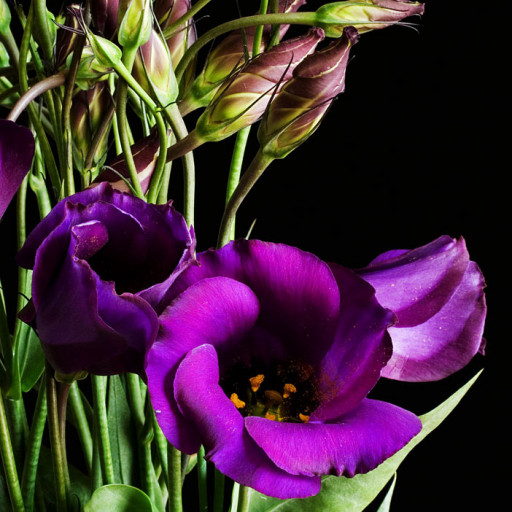
Commonly known as the Lisianthus, the "Poor Man’s Rose," or the "Texas Bluebell," Eustoma is the ultimate symbol of elegance in the floral world. Native to the sun-drenched prairies of the Southern United States and Mexico, it was once a humble wildflower before Japanese breeders transformed it into the ruffled, multi-petaled masterpiece we see today. It is a favorite in bridal bouquets because it perfectly captures the romance of a rose with the delicate charm of a poppy.
🔍 How to Identify
- 🌸 The Blooms: Look for funnel-shaped flowers with velvety, papery petals. They often appear in shades of deep purple, soft pink, cream, or white, sometimes with "picotee" edges where the rim is a different color than the base.
- 🍃 The Foliage: The leaves are a distinct blue-green (glaucous) color with a slightly waxy, succulent-like texture. They grow opposite each other along the stem.
- 📏 The Stature: Long, elegant, and slender stems that can reach up to 3 feet in height, often branching at the top to hold multiple buds at various stages of opening.
🏡 In Your Garden
- 🌱 The "Diva" Reputation: Eustoma is famous for being a bit picky. It hates being moved once planted because of its sensitive taproot, so choose its "forever home" in your garden carefully.
- ⚖️ The pH Balance: Unlike many garden favorites that prefer acidic soil, these plants crave slightly alkaline (lime-rich) conditions. If your soil is too acidic, the plant may simply refuse to grow.
- ☀️ Sun & Air: They thrive in heat and full sun but require excellent air circulation to prevent fungal issues on their delicate petals.
⚠️ Safety & Toxicity
- 🐾 Pet-Friendly: Great news for pet parents! Eustoma is generally considered non-toxic to cats, dogs, and horses.
- 👶 Child Safe: There are no known toxic effects if accidentally touched or nibbled by curious toddlers, making it a safe choice for family flower beds.
✨ Fun Fact
Eustoma is the undisputed champion of the vase. While most cut flowers fade within a week, a fresh-cut Lisianthus can remain vibrant and beautiful for up to three weeks if the water is kept clean!

Detailed Care Instructions

Place in a bright room that is sun drenched almost all day. Or directly in a south-facing window.

Eustoma plants require regular watering to thrive. When watering, it is important to avoid getting water on the leaves as this can cause damage and promote fungal growth. A good way to water Eustoma plants is by using a watering can with a long spout and directing the water towards the base of the plant. The soil should be kept evenly moist but not waterlogged. It is a good idea to let the top inch of soil dry out between watering to prevent overwatering. Eustoma plants also benefit from occasional misting to increase humidity levels around the plant. Additionally, it is important to avoid watering during the hottest part of the day and instead water in the early morning or evening to prevent the water from evaporating too quickly.
The ideal soil for growing this plant should be rich in organic matter and well-draining. It should have a slightly acidic to neutral pH level of around 6.0 to 7.0. It should also be loose and porous to allow for proper root development and aeration. A soil mix composed of peat moss, perlite, and vermiculite or a commercial potting mix for flowering plants can be used. Avoid using heavy clay-based soil as it can retain too much moisture and hinder proper drainage. Fertilize the soil with a balanced fertilizer once a month during the growing season to provide the necessary nutrients for healthy plant growth.







