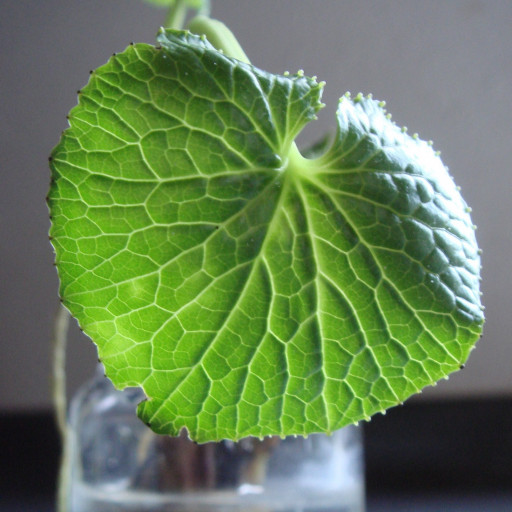
Plant Overview
Known globally as Wasabi or "Japanese Horseradish," this emerald-green beauty is the legendary source of the world’s most famous sinus-clearing spice. Native to the cool, shaded banks of Japanese mountain streams, it is often whispered about by enthusiasts as one of the most difficult plants to cultivate outside its natural habitat. Beyond its culinary fame, it features lush, kidney-shaped foliage that makes it a stunning, albeit temperamental, shade-lover.
🔍 How to Identify
- 🍃 The Foliage: Large, glossy, heart-to-kidney-shaped leaves with prominent veins and slightly wavy margins.
- 🌱 The Rhizome: A thick, bumpy, green underground stem (the part used for paste) that grows slowly over two years.
- 🌼 The Flowers: Delicate, four-petaled white flowers that appear on long, thin stalks during the cool months of early spring.
🏡 In Your Garden
- 🌊 The "Goldilocks" Humidity: Wasabi is famous for its love of running water. It requires "Sawa" conditions—constant moisture, high humidity, and cool temperatures (ideally between 45°F and 70°F). If it gets too hot, the plant will wilt almost immediately.
- 🌑 Deep Shade Preference: In the wild, it grows under the heavy canopy of trees. In a home setting, it must be kept out of direct sunlight, which can easily scorch its tender leaves. It is an excellent candidate for a shaded water feature or a highly controlled greenhouse.
⚠️ Safety & Toxicity
- 🟢 Status: Generally safe and highly edible.
- 👃 Sensory Irritant: While not "toxic" in the traditional sense, the entire plant contains allyl isothiocyanate. This creates a powerful pungent heat that can irritate the eyes, nose, and throat.
- 🐾 Pets: It is not considered poisonous to cats or dogs, but most pets will avoid it due to the intense smell. If a curious pet eats a large amount, they may experience temporary mouth irritation or an upset stomach.
✨ Fun Fact
Real wasabi is a race against time! Once the rhizome is grated into a paste, the chemical reaction that creates its signature "heat" peaks at about 5 minutes and almost completely vanishes after 20 minutes of exposure to air. This is why most "wasabi" in grocery stores is actually just dyed common horseradish!

Detailed Care Instructions
To grow Eutrema japonicum, also known as Japanese wasabi or wasabia japonica, follow these steps:
- Start with high-quality seeds or seedlings: Purchase the seeds or seedlings from a reputable source to ensure you have a healthy plant.
- Choose the right location: Wasabi plants prefer a cool and shaded environment with a temperature range of 8-20°C (45-68°F). Avoid direct sunlight as it can damage the leaves.
- Prepare the soil: Wasabi thrives in rich and well-drained soil. Mix in compost or organic matter to improve soil fertility and drainage. Ideally, the soil should be slightly acidic with a pH of around 6.0-7.0.
- Create a water source: Wasabi plants require a constant water source to support their growth. They prefer growing near flowing water or in a location where water can be consistently provided.
- Plant the seeds or seedlings: If using seeds, sow them in trays or pots with a fine layer of soil on top. Water gently and keep the soil moist, but not waterlogged. Transplant the seedlings to pots or a suitable outdoor location once they have developed a few leaves.
- Regular watering: Keep the wasabi plants well-watered, ensuring the soil remains consistently moist. Avoid letting the soil dry out, as it can negatively impact the plant's growth.
- Maintain a cool and shaded environment: Shield the wasabi plants from direct sunlight and extreme temperature fluctuations. Creating a shade structure or using shade cloth can help protect the plants from excessive heat.
- Weed control: Regularly check for weeds and remove them to prevent competition for nutrients and water.
- Fertilize: Apply a balanced fertilizer regularly to ensure the plants receive adequate nutrients. Follow the fertilizer manufacturer's instructions for application rates.
- Harvesting: Harvest the wasabi roots when they reach a desirable size, usually after 12-18 months. Carefully dig up the roots while being cautious not to damage them.
Remember, growing wasabi may require specific environmental conditions and may be more challenging compared to other plants. Ensure you provide the necessary care and attention throughout the process.

Place in a window with dappled sun or a spot in the middle of a room. Or directly in a window facing west or east.
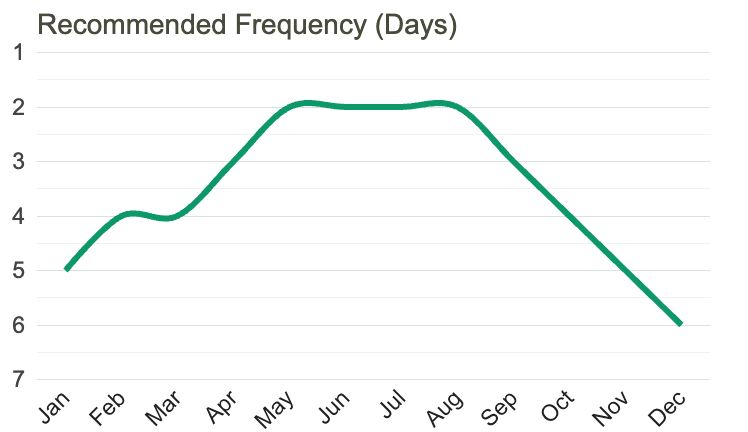
To water this plant, one should assess the soil moisture level by sticking a finger into the soil about an inch deep. If the soil feels dry, water the plant thoroughly until water runs out of the drainage holes in the pot. It is important to ensure that the soil is never waterlogged, as this can lead to root rot. Allow the soil to dry out slightly between watering, but do not let it become bone dry. It is also important to use room temperature or lukewarm water when watering this plant, as cold water can shock the roots.
- Choose a balanced fertilizer with equal amounts of nitrogen, phosphorus, and potassium.
- Dilute the fertilizer according to package instructions.
- Apply the fertilizer to the soil around the base of the plant.
- Water the plant thoroughly after fertilizing to help the nutrients reach the roots.
- Fertilize once a month during the growing season (spring and summer).
- Avoid fertilizing during the dormant season (fall and winter) as the plant does not require as many nutrients.
Eutrema Japonicum prefers a well-draining soil that is rich in organic matter. A mix of equal parts of sandy loam, peat moss, and perlite is recommended for optimal growth. The soil pH should be slightly acidic to neutral, ranging from 5.5 to 7.0. Additionally, it is important to ensure that the soil is consistently moist, but not overly saturated, as this plant prefers moist growing conditions. Mulching around the base of the plant can help to retain moisture and regulate the temperature of the soil.
Eutrema japonicum can be propagated through seed or through vegetative cuttings. To propagate through seed, collect mature seeds in late summer or early fall. Soak the seeds in water overnight, then plant them in a seed tray or individual containers filled with well-draining soil. Keep the soil moist and place the tray in a warm, bright location with indirect sunlight. Germination usually occurs within 2-3 weeks.
To propagate through vegetative cuttings, take a cutting from a healthy, mature plant in early spring or late summer. Dip the end of the cutting in rooting hormone, then plant it in a well-draining potting mix. Keep the soil moist and cover the container with a plastic bag to create a humid environment. Place the container in a warm, bright location with indirect sunlight. Within a few weeks, roots should start to form, indicating successful propagation.








