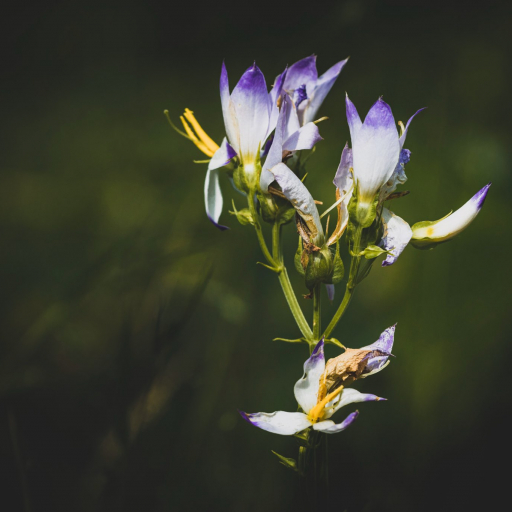
Plant Overview
Commonly known as the Bicolor Persian Violet or Hill Gentian, Exacum tetragonum is a showstopper that looks as though nature painted it with a neon palette. Native to the sun-drenched grassy highlands of India and Southeast Asia, this plant is celebrated for its striking "bicolor" petals that transition from a snowy white base to a deep, royal violet tip. It is a wild, more dramatic relative of the common Persian Violet, often found brightening up meadows and marshy slopes.
🔍 How to Identify
- 🟦 The Bicolor Bloom: The flowers feature four distinct petals that are white near the center and flush into a vivid purple or sky blue at the edges.
- 🟨 Golden Stamens: In the very center of the flower sits a cluster of bright, oversized yellow anthers that look like a tiny burst of sunshine.
- 📐 Square Stems: True to its name (tetragonum), the stems are uniquely four-angled or "square" to the touch, rather than being perfectly round.
- 🌿 Glossy Foliage: The leaves are lance-shaped, smooth, and grow in pairs directly opposite each other, often featuring three to five prominent veins.
🏡 In Your Garden
- 💧 Thirsty Roots: This species naturally thrives in moist grasslands and near wetlands. In a home setting, it dislikes "wet feet" (standing water) but will wilt quickly if the soil dries out completely.
- ☀️ Light & Humidity: It craves bright, indirect light to keep its colors vibrant. Because of its tropical origins, it appreciates high humidity—mist it regularly or place it near a humidifier to mimic its native misty hills.
- 🌱 Short but Sweet: Often grown as an annual or biennial, it puts all its energy into one or two spectacular flowering seasons before naturally reaching the end of its life cycle.
⚠️ Safety & Toxicity
- 🟢 Status: Generally considered non-toxic.
- 🐾 Details: While there are no widespread reports of Exacum tetragonum being poisonous to cats, dogs, or humans, it is always best to discourage pets from chewing on the foliage, as any plant material can cause mild digestive upset if ingested in large quantities.
✨ Fun Fact
- 🐝 The Secret Vibration: Like many members of its family, this plant relies on "buzz pollination." Instead of letting pollen go easily, the flowers keep it locked inside the anthers; bees must vibrate their flight muscles at a specific frequency to "shake" the pollen out!

Detailed Care Instructions

Place in a window with dappled sun or a spot in the middle of a room. Or directly in a window facing west or east.

Some plants require more regular watering than others, which should be done every few days. It's critical to maintain the soil moist all of the time. The water requirements of the same plant placed in pots with varying sizes will differ. Because the water in the smaller pot evaporates faster than the water in the larger pot, it will require more watering. Regardless of pot size, the surface should constantly be maintained moist.








