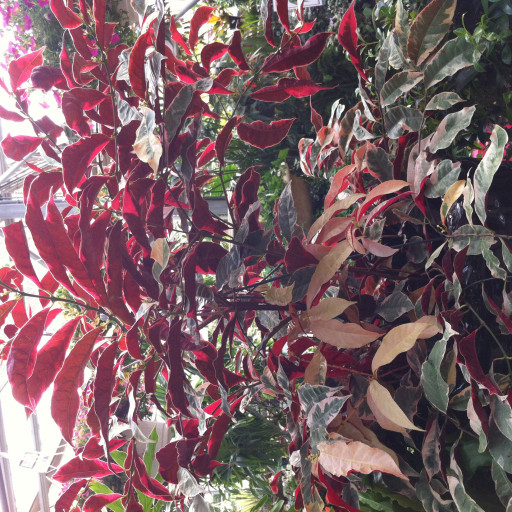
Plant Overview
Often called the Chinese Croton or the "Fire-dragon," this striking tropical shrub is famous for its dramatic, two-toned foliage. Originating from Southeast Asia, it is a favorite for those looking to add a splash of permanent "autumn color" to their collection without waiting for the seasons to change. While it looks like a friendly ornamental, it carries a fiery secret within its stems.
🔍 How to Identify
- 🎨 Bicolor Leaves: The most defining feature is the stark contrast; the top of the leaf is a glossy, deep olive green, while the underside is a vivid, shimmering burgundy or crimson.
- 🍃 Leaf Shape: The leaves are narrow, lance-shaped (lanceolate), and typically grow between 2 to 4 inches long with slightly wavy or finely toothed edges.
- 📏 Growth Habit: It grows as a compact, woody evergreen shrub, often reaching 3 to 5 feet in height, making it a popular choice for colorful low hedges or accent containers.
🏡 In Your Garden
- ☀️ Light for Color: While it can survive in partial shade, the "fire" on the underside of the leaves stays most vibrant when the plant receives bright, indirect sunlight. In too much deep shade, the red may fade to a duller maroon.
- 🌡️ Tropical Temperament: This plant is a true tropical; it hates the cold and will drop its leaves if temperatures dip below 50°F (10°C). It prefers well-draining soil and consistent moisture, as it doesn't have a deep taproot to survive long droughts.
⚠️ Safety & Toxicity
- ☠️ Status: Highly Toxic / Irritant.
- 🚫 Details: Like many members of the Euphorbiaceae family, it contains a milky white latex (sap) that is a potent skin irritant. It can cause severe rashes or dermatitis.
- 👁️ Warning: Its nickname, "Blind-your-eye," comes from the sap's ability to cause temporary blindness or intense pain if it comes into contact with the eyes. Always wear gloves when pruning and keep it far out of reach of curious pets and children.
✨ Fun Fact
In its native regions, the Excoecaria cochinchinensis has a history of being used in traditional medicine to treat gastric issues, but it was also historically used as a source for dart poison due to the potent nature of its toxic sap!

Detailed Care Instructions
To grow Excoecaria Cochinchinensis, also known as the Chinese Croton or the Blindness Tree, you can follow these steps:
- Choose a suitable location: Excoecaria Cochinchinensis prefers bright, indirect light. Avoid placing the plant in direct sunlight, as it can scorch the leaves. Indoors, select a spot near a window where it receives bright, filtered light, or place it outdoors in a partially shaded area.
- Provide the right temperature and humidity: Chinese Croton thrives in warm temperatures between 60-80°F (15-27°C) and high humidity. Provide a humid environment by placing the pot on a tray filled with water and pebbles or by using a humidifier nearby.
- Select well-draining soil: Chinese Croton prefers well-draining soil that is slightly acidic. You can mix equal parts of potting soil, perlite, and peat moss to create a suitable growing medium.
- Water the plant properly: Keep the soil consistently moist but not saturated. Water when the top inch of soil feels dry to the touch. Avoid overwatering, as it can lead to root rot. In winter or during dormancy, reduce watering frequency.
- Fertilize regularly: Use a balanced, water-soluble fertilizer every 4-6 weeks during the growing season (spring and summer). Follow the instructions on the fertilizer package for the proper dilution ratio. Refrain from fertilizing during winter or when the plant is dormant.
- Prune as needed: Chinese Croton can be pruned to maintain its shape and size. Prune any dead, diseased, or damaged leaves and stems. Additionally, you can pinch back the growing tips to encourage bushier growth.
- Protect from cold temperatures: Excoecaria Cochinchinensis is sensitive to cold temperatures and can be damaged or killed by frost. During winter or if you live in a colder climate, move the plant indoors to protect it from cold drafts.
- Watch for pests and diseases: Chinese Croton can be susceptible to pests such as aphids, mealybugs, and spider mites. Regularly inspect the plant for any signs of infestation, and treat them with appropriate organic or chemical pesticides if necessary.
By following these care guidelines, you can successfully grow Excoecaria Cochinchinensis and enjoy its attractive foliage.

Place in a window with dappled sun or a spot in the middle of a room. Or directly in a window facing west or east.

To properly water this plant, you should first check the moisture level of the soil. Stick your finger about an inch or two into the soil to see if it feels dry. If it does, it’s time to water the plant.
When watering, use room temperature water and pour it slowly onto the soil until it starts to drain out of the drainage holes at the bottom of the pot. Avoid letting the plant sit in standing water, as this can lead to root rot.
Water the plant deeply, but allow the top couple of inches of soil to dry out between waterings. The frequency of watering will depend on factors such as the size of the pot, the humidity level, and the amount of light the plant receives.
It’s also important to avoid getting water on the foliage of the plant, as this can lead to leaf spot or fungal infections. If you do get water on the leaves, gently wipe them dry with a soft cloth.
- Prepare a balanced fertilizer with equal parts of nitrogen, phosphorus, and potassium.
- Dilute the fertilizer in water according to the manufacturer's instructions.
- Apply the fertilizer to the base of the plant, avoiding the leaves and stems.
- Water the plant after fertilizing to help nutrients get to the roots.
- Fertilize the plant once every two to three months during the growing season.
Excoecaria cochinchinensis is a plant that prefers soil that is well-draining and slightly acidic. A soil mixture that is composed of equal parts peat moss, perlite, and vermiculite can work well for this plant. It is important to ensure that the soil is moist but not waterlogged to prevent root rot. Additionally, regular fertilization with a balanced fertilizer can help to promote healthy growth and development. It is recommended to avoid using soil that contains high levels of clay or salt, as these can be detrimental to the health of the plant over time. Overall, a high-quality soil mixture that is rich in essential nutrients is key to ensuring the health and vitality of Excoecaria cochinchinensis.
Excoecaria Cochinchinensis can be propagated through stem cuttings. Take a healthy stem cutting of about 4-6 inches long and remove the leaves from the lower half of the cutting. Dip the cut end of the stem in rooting hormone powder and plant it in a pot filled with well-draining soil. Keep the soil moist and place the pot in a shaded area with indirect sunlight. Roots should start to form after a few weeks. Once the plant has established roots, it can be transplanted into a larger pot or planted directly in the ground. It is important to avoid direct sunlight and keep the soil moist during the first few weeks after transplantation.
Common pests of the laila majnu include Mealybugs, spider mites. Make a habit of checking your laila majnu frequently for pests so that any infestations can be caught and managed early.








