Plant Overview
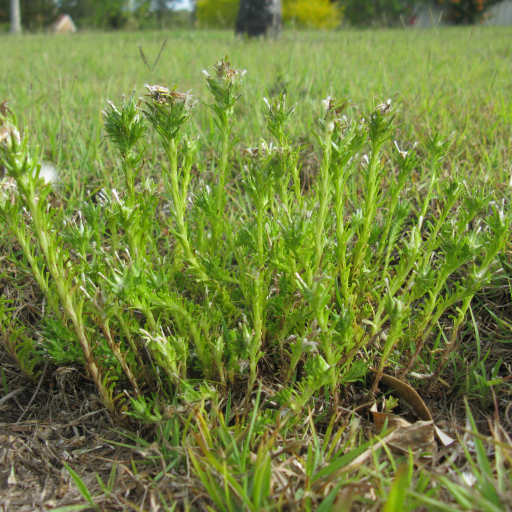
Often called the "Annual Trampweed," Facelis retusa is a humble South American traveler that has successfully "tramped" its way across the globe. This low-profile winter annual is a master of disguise, frequently blending into lawns with its soft, silvery-green foliage. While many gardeners view it as a persistent weed, it is a fascinating example of botanical resilience in sandy, nutrient-poor soils.
🔍 How to Identify
- 🍃 The "Notched" Leaf: The most distinct feature is the leaf tip, which looks like a tiny notch has been cut out of it (the meaning of the Latin name retusa).
- ☁️ Woolly Texture: The entire plant is covered in fine, white, cobweb-like hairs, giving it a soft, grayish appearance that helps it reflect intense sunlight.
- 🌼 Hidden Flowers: It doesn't produce typical "petals." Instead, look for small, cylindrical flower heads tucked among the leaves that eventually turn into fluffy, dandelion-like seed heads.
🏡 In Your Garden
- 🌱 Soil Indicator: If you see Trampweed thriving, it’s usually a sign that your soil is sandy, acidic, or lacking in nitrogen. It loves the spots where lush turfgrass struggles to grow.
- 👟 The Traveling Seed: This plant is named "Trampweed" for a reason—its seeds have feathery bristles (pappus) that catch the wind or hitch a ride on the bottom of your shoes to move to new locations.
- 📅 Winter Lifecycle: Unlike many weeds that appear in the heat of summer, this plant germinates in the cool autumn and remains active through the winter before setting seed and disappearing in the late spring heat.
⚠️ Safety & Toxicity
- ✅ Non-Toxic: Facelis retusa is generally considered non-toxic to humans, dogs, cats, and livestock.
- 🧤 Skin Comfort: While not poisonous, the dense, woolly hairs can sometimes trap dust or pollen, which might cause mild irritation to sensitive skin or those with hay fever during its seeding phase.
✨ Fun Fact
The "retuse" leaf shape—where the leaf tip is blunt with a central notch—is a classic botanical trait used by students to learn plant identification! It’s nature’s way of giving the plant a unique "thumbprint."

Detailed Care Instructions
Here are some steps you can follow to grow Facelis Retusa plant:
- Obtain seeds or a young plant: You can either collect seeds from mature Facelis Retusa plants or purchase them from a reputable nursery.
- Choose a suitable location: Facelis Retusa plants thrive in full sun to partial shade. Select a spot in your garden that receives at least 6 hours of direct sunlight every day.
- Prepare the soil: Facelis Retusa plants prefer well-draining soil. Amend the soil with organic matter like compost to improve drainage and fertility.
- Sow the seeds or plant the young plant: If you're using seeds, scatter them over the prepared soil and lightly cover them with a thin layer of soil. If you have a young plant, dig a hole in the soil large enough to accommodate its roots, place the plant in the hole, and backfill with soil.
- Water regularly: Keep the soil consistently moist, but avoid overwatering. Water the plant deeply once or twice a week, depending on weather conditions and soil moisture levels.
- Provide occasional fertilizer: Facelis Retusa plants do not require heavy fertilization. Use a balanced, slow-release fertilizer once or twice during the growing season to promote healthy growth.
- Remove weeds: Regularly weed around your Facelis Retusa plant to prevent competition for nutrients and moisture.
- Prune if necessary: Facelis Retusa plants have a spreading habit and may require occasional pruning to maintain their shape and size. Prune back any leggy or overgrown branches to promote bushier growth.
- Protect from extreme temperatures: Facelis Retusa plants are generally hardy, but they may need protection from extreme heat or cold. Consider providing shade or using frost cloth during extreme weather conditions.
- Monitor for pests and diseases: Check your Facelis Retusa plant regularly for any signs of pests or diseases. If you notice any issues, treat them accordingly using appropriate organic or chemical methods.
By following these steps, you should be able to successfully grow a Facelis Retusa plant.

Place in a bright room that is sun drenched almost all day. Or directly in a south-facing window.

To properly water this particular plant species, it is important to follow some basic guidelines. The plant requires a moderate amount of water, and it is crucial to avoid overwatering. Before watering, check the soil's moisture level. If the soil feels dry to the touch, it is time to water the plant. Use room temperature water and avoid direct watering on the leaves, as this can lead to the development of fungal diseases. Instead, direct the water towards the soil at the base of the plant and allow the water to soak in slowly. In general, watering once or twice a week is sufficient, but be sure to adjust the frequency based on the plant's needs and the environment in which it is growing.
- Choose a slow-release fertilizer with an NPK ratio of 10-10-10.
- Apply the fertilizer in spring, when new growth starts, and again in mid-summer.
- Determine the plant's size and age and adjust the amount of fertilizer accordingly, following the manufacturer's instructions.
- Water the plant well before fertilizing to avoid burning the roots.
- Scatter the fertilizer evenly around the base of the plant and gently work it into the soil.
- Avoid getting any fertilizer on the leaves or stems to prevent burning.
- Water the plant immediately after fertilizing to help incorporate the nutrients into the soil.
- Monitor the plant's growth and adjust fertilizing as needed. Over-fertilization can lead to excessive growth and weak, leggy stems.
Facelis Retusa plant prefers well-draining soil with a neutral to slightly acidic pH level. The soil should be rich in organic matter and nutrients. It should be able to hold moisture, but also allow for proper drainage to prevent waterlogging. The plant can tolerate poor soil conditions but will grow better in a fertile soil mix. A soil mix that contains a combination of sand, perlite, and compost can provide the ideal growing environment for Facelis Retusa plant. The soil should be kept moist but not waterlogged to prevent root rot. It can also thrive in sandy soils and rocky terrains.
To propagate this plant, you can take stem cuttings from a healthy and mature plant. Select stems that are free from any damage or disease, and about 6 inches long. Use a sharp and clean pair of scissors or knife to make a clean cut just above a node.
Remove the leaves from the lower two-thirds of the stem, leaving only a few at the top. Dip the cut end of the stem in rooting hormone powder or liquid to encourage root growth.
Prepare a well-draining potting mix with a blend of peat moss, perlite, and vermiculite. Moisten the mix and create holes in it with your finger or a pencil. Place each cutting into a hole, gently firm the soil around it, and water thoroughly.
Cover the pot with a clear plastic bag or a dome to create a humid environment around the cuttings. Place the pot in a bright but indirect light and maintain the temperature at around 65-75°F. Mist the cuttings daily to keep the soil moist and the humidity high.
In a few weeks, the cuttings should start developing new roots and shoots. Once the new growth is visible, you can remove the plastic cover and let the plant acclimate to normal conditions. Harden off the plant gradually by exposing it to more light and less humidity before transplanting it to a larger container or outside in the garden.








