Plant Overview
Known as the "Virgin’s Mantle," this hardy survivor hails from the sun-drenched, rocky landscapes of the Mediterranean, North Africa, and parts of Asia. It is a plant that thrives where others wither, turning dry, barren ground into a delicate carpet of purple stars. Beyond its rugged beauty, it carries a deep history in traditional herbalism and is currently a subject of intense modern scientific curiosity.
🔍 How to Identify
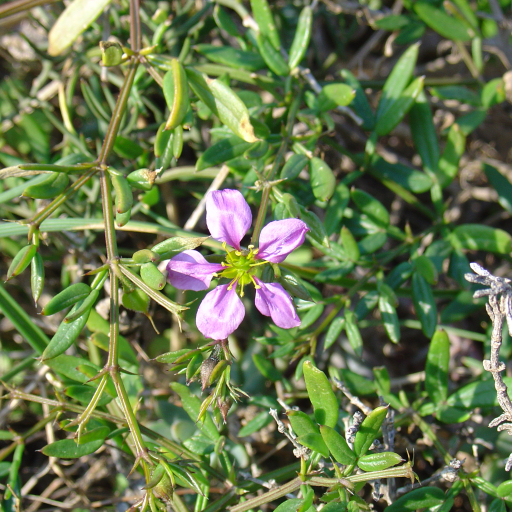
- 🌸 Starry Blooms: Features five-petalled, star-shaped flowers in shades of lilac, pale purple, or pink. Each petal is distinct and slightly narrowed at the base.
- 🌵 Spiny Skeleton: The stems are heavily branched and equipped with sharp, needle-like stipules (thorns) that protect the plant from grazing animals.
- 🍃 Minimalist Foliage: The leaves are small and narrow, usually appearing in sets of three (trifoliate), though they may drop during extreme droughts to conserve moisture.
🏡 In Your Garden
- ☀️ Arid Specialist: This plant is a true "xerophyte," meaning it is genetically programmed for the desert. It requires maximum sun exposure and will struggle in shady or humid spots.
- 🪨 The "No-Water" Rule: The biggest threat to Fagonia is overwatering. It prefers poor, sandy, or rocky soil and hates "wet feet." If your garden soil is heavy clay, this plant is best kept in a terracotta pot with a cactus-mix substrate.
⚠️ Safety & Toxicity
- 🌵 Status: Non-toxic but physically defensive.
- 🩹 Details: While the plant is not known to be poisonous to humans or pets, its sharp spines can cause painful pricks or skin irritation. Place it away from high-traffic areas where children or curious dogs might stumble into it.
✨ Fun Fact
In recent years, Fagonia cretica has made headlines in the medical world; lab studies have explored its potential to selectively target breast cancer cells without harming healthy tissue, though clinical human trials are still in the early stages!

Detailed Care Instructions

Place in a bright room that is sun drenched almost all day. Or directly in a south-facing window.

When the top few inches of soil dry out, water your plants. If the top few inches of soil are still moist, do not water your plant. Wait a few days, then poke your finger into the soil to see if anything has changed. Overwatering poses a disease risk, such as the development of fungal diseases in the roots. These plants have adaptations in there leaves that allow them to survive in low water supply.








