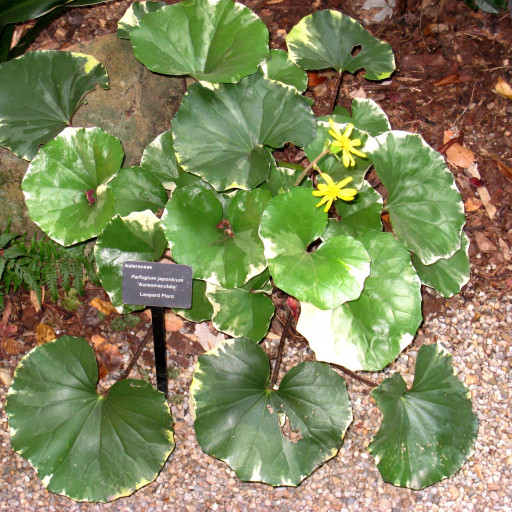
Plant Overview
Known affectionately as the Leopard Plant or the Tractor Seat Plant, Farfugium japonicum is a bold architectural statement from the moist coastal cliffs of East Asia. Its massive, glossy leaves look like they belong in a prehistoric jungle, providing a lush, tropical feel even in temperate shade gardens. Whether it is the solid green variety or the spotted "leopard" cultivars, this plant is a favorite for adding drama to dark corners.
🔍 How to Identify
- 🍃 The Foliage: Large, leathery, kidney-shaped leaves that can grow up to 12 inches across. They often resemble giant lily pads growing on land.
- ✨ The Finish: A thick, waxy sheen covers the leaves, making them look polished or even wet, which helps the plant retain moisture.
- 🌼 The Blooms: In late autumn and early winter, it sends up tall, branched stalks topped with cheery, bright yellow daisy-like flowers.
🏡 In Your Garden
- 💧 The Drama Queen: This plant is famous for its "fainting" spell; if it gets too dry, the leaves will wilt flat to the ground. Don't panic—it usually bounces back perfectly within an hour of being watered.
- ☁️ Shade Lover: Unlike many big-leafed tropicals, Farfugium hates direct afternoon sun, which can scorch its leaves. It is the perfect candidate for those damp, north-facing spots where nothing else seems to grow.
⚠️ Safety & Toxicity
- 🚫 Toxic Status: Contains pyrrolizidine alkaloids, which are toxic to mammals.
- 🐾 Pets & Kids: If ingested, it can cause liver irritation or more serious illness in cats, dogs, and humans. It is best kept as a background plant in areas where curious pets or toddlers won't be tempted to take a bite.
✨ Fun Fact
The variety 'Aureomaculatum' is the true "Leopard Plant." It features random bright yellow circles on the green leaves that look so much like dappled sunlight that gardeners often find themselves looking up to see where the "light" is coming from!

Detailed Care Instructions
To grow a Farfugium Japonicum plant, follow these steps:
- Selection of location: The Farfugium Japonicum prefers partial shade to full shade, and it is important to choose a location with indirect sunlight or dappled shade. It should be protected from direct hot sunlight, which can scorch the leaves.
- Soil requirements: The plant prefers a rich, well-draining soil with a slightly acidic to neutral pH. Amend the soil with organic matter, such as compost, to improve its fertility and drainage.
- Planting: Dig a hole slightly larger than the root ball of the Farfugium Japonicum plant. Place the plant in the hole, backfill with soil, and gently press down around the base to ensure it is secure. Water thoroughly after planting.
- Watering: Farfugium Japonicum requires regular watering to keep the soil consistently moist but not waterlogged. Water deeply when the top inch of soil feels dry.
- Fertilization: Apply a balanced slow-release fertilizer in early spring and again in mid-summer to provide essential nutrients for growth. Follow the instructions on the fertilizer package for application rates.
- Mulching: Mulching around the plant with organic materials like bark chips or straw can help retain moisture, suppress weed growth, and provide insulation for the roots during extreme temperatures.
- Pruning: Farfugium Japonicum plants typically do not require much pruning. However, you can remove any dead or damaged leaves to maintain its appearance.
- Propagation: Farfugium Japonicum plants can be propagated through division. In early spring or fall, carefully dig up a clump of the plant and separate it into smaller sections with roots attached. Replant the divisions in separate pots or new locations in the garden.
- Pests and diseases: Monitor the plant for pests like slugs, snails, and aphids. Treat any infestations promptly using appropriate organic or chemical methods. Also, ensure good air circulation around the plant to prevent the development of fungal diseases.
By following these guidelines, you can successfully grow Farfugium Japonicum plants and enjoy their attractive foliage in your garden or indoor space.

Place in a window with dappled sun or a spot in the middle of a room. Or directly in a window facing west or east.

Farfugium Japonicum is a type of plant that requires consistent watering to survive and thrive. When watering this plant, it's important to avoid overwatering, as this can lead to root rot and ultimately kill the plant. Ideally, the soil should be kept moist but not waterlogged.
To water Farfugium Japonicum, begin by checking the soil's moisture level. Stick your finger into the soil up to the first knuckle. If the soil feels dry at this depth, it's time to water. If it feels moist, wait a day or two and check again.
When it's time to water, use a watering can or hose to evenly distribute water around the base of the plant. Avoid getting water on the leaves, as this can lead to fungal growth and disease. Water deeply enough to saturate the soil, but be sure it is not running off to prevent root rot.
As the plant grows and the weather changes, you may need to adjust your watering schedule to ensure the soil stays consistently moist. During hot, dry weather, you may need to water more frequently. In cooler, wetter weather, you may need to water less often. Monitoring the soil and adjusting your watering schedule accordingly is key to keeping this plant healthy.
The Farfugium Japonicum plant should be fertilized once every month during the growing season with a balanced and water-soluble fertilizer. Be sure to dilute the fertilizer according to the manufacturer's instructions and apply it directly to the soil around the base of the plant. Avoid getting any fertilizer on the foliage or flowers as it can scorch them. Water the plant well after fertilizing to ensure the nutrients are absorbed properly. Finally, avoid fertilizing during the dormant season as it can lead to root burn and damage to the plant.
Farfugium japonicum is a perennial plant that can be planted in a variety of soils, as long as they are well-draining. It prefers slightly acidic to neutral soils that are rich in organic matter. A mixture of loam, peat, and sand is recommended, with a pH level of 5.5 to 7.0. The soil should be kept consistently moist but not waterlogged. Fertilization with a balanced fertilizer once a month during its growing season can help with its growth and health.
Farfugium Japonicum plant can be propagated by division or stem cuttings. To propagate by division, gently dig up the plant and use a sharp, clean knife or pruning shears to separate the roots and leaves into smaller sections. Each section should have its own set of leaves and a healthy root system. Replant each section in a separate pot or in the ground, taking care to keep the soil moist until new growth appears.
To propagate by stem cuttings, select a healthy stem with at least two nodes and several leaves. Cut the stem just below a node, and remove any leaves from the bottom half of the stem. Dip the cut end of the stem in rooting hormone and plant it in a pot filled with moist, well-draining soil. Keep the soil moist and place the pot in a warm, bright location with indirect sunlight. New growth should appear within a few weeks, at which point the plant can be transplanted into a larger pot or into the ground.








