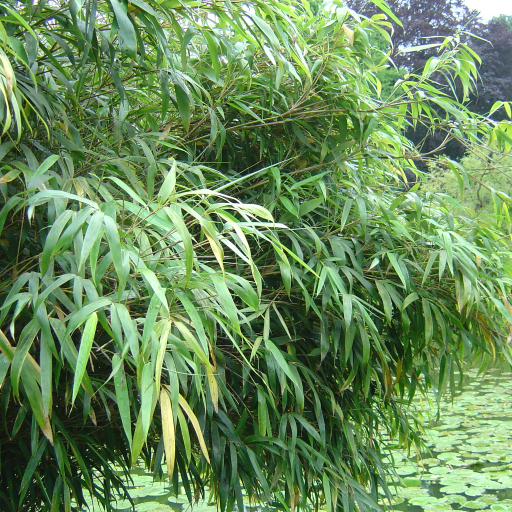
Plant Overview
Often called the "Blue Fountain Bamboo," this elegant clumper is the aristocrat of the bamboo world. Originating from the high-altitude forests of China, it creates a soft, weeping silhouette that looks like a frozen emerald waterfall. It is a favorite for gardeners who want the Zen aesthetic of bamboo without the "horror story" of it spreading uncontrollably and taking over the entire neighborhood.
🔍 How to Identify
- 🌿 The Canopy: Small, narrow, lance-shaped leaves that are exceptionally dainty, creating a dense, feathery texture that rustles beautifully in the wind.
- 🎋 The Culms (Stems): Young canes emerge with a distinct purple-black or powdery blue-grey hue. As they age, they transition into a deep, matte olive green.
- ⛲ The Form: It is a "clumping" bamboo, meaning it grows in a tight circle. The stalks arch outward gracefully from the center, giving it a characteristic fountain-like shape.
🏡 In Your Garden
- ⛅ Cool and Collected: This bamboo is a woodland native; it detests intense midday heat. If it gets too much direct sun, you’ll notice the leaves tightly curl up into thin "needles." This is the plant's clever way of reducing surface area to prevent dehydration.
- 🛡️ Winter Warrior: It is one of the hardiest bamboos in existence, surviving temperatures well below zero. However, it appreciates a spot sheltered from harsh, drying winter winds, which can turn the leaf tips brown.
- 🥨 No Barrier Needed: Because it lacks the aggressive underground "runners" of other bamboo species, you don't need to install expensive root barriers. It stays exactly where you plant it, expanding slowly and politely over time.
⚠️ Safety & Toxicity
- 🐾 Pet Friendly: Fargesia nitida is non-toxic to dogs, cats, and horses. It is a very "safe" choice for a lively backyard.
- 👶 Child Safe: The plant has no thorns, spikes, or irritating sap. It is soft to the touch, though the leaves can be slightly sharp if pulled quickly through the hand.
✨ Fun Fact
Fargesia nitida is famous for a biological phenomenon called "gregarious flowering." Approximately every 100 to 120 years, every single plant of this species on Earth blooms at the same time and then dies. The last mass flowering occurred in the 1990s, meaning the plants we grow today are all "newborn" siblings that won't flower (or die) for another century!

Detailed Care Instructions
Growing Fargesia nitida, commonly known as Chinese Fountain Bamboo, can be a rewarding experience due to its beautiful arching stems and dense clumping habit. Here's a comprehensive guide to help you successfully grow this bamboo:
Site Selection
- Location: Choose a spot that offers partial shade to full shade. While Fargesia nitida can tolerate some sunlight, it prefers to be shielded from the harsh midday sun, especially in hotter climates.
- Soil: Well-draining soil is ideal. The soil should be rich in organic matter. Amend poor soils with compost to improve fertility and drainage.
Planting
- Timing: Plant during the cooler seasons—spring or fall. This allows the roots to establish before facing extreme weather conditions.
- Planting Hole: Dig a hole that is twice the width of the root ball and about the same depth.
- Planting: Place the plant in the hole so that the top of the root ball is level with the soil surface. Fill in with soil, firming it gently around the roots to eliminate air pockets.
Watering
- Initial Period: Water the bamboo thoroughly immediately after planting. Keep the soil consistently moist during the first year to help the plant establish itself.
- Established Plants: Once established, Fargesia nitida is relatively drought-tolerant. However, during prolonged dry periods, you should water your bamboo to prevent stress.
Mulching
- Purpose: Mulch helps to retain soil moisture, regulate soil temperature, and suppress weeds.
- Material: Use organic mulch like bark chips, straw, or compost. Apply a layer about 2-3 inches thick around the base of the plant, extending to the drip line, but keep it a few inches away from the plant's stems to prevent rot.
Fertilizing
- Type: Use a balanced, slow-release fertilizer in the spring. Organic options like compost or well-rotted manure are also beneficial.
- Frequency: Fertilize once in the spring and again in mid-summer to support vigorous growth.
Pruning
- Timing: Prune in late winter or early spring before new growth begins.
- Method: Remove any dead, damaged, or weak canes. Thin out the older canes periodically to encourage new growth and maintain an open, airy clump.
Protection
- Wind: Provide wind protection, especially in areas with harsh winters or strong winds that can damage the delicate canes.
- Cold: Fargesia nitida is cold-hardy, but in extremely cold climates, young plants may benefit from some winter protection like a layer of mulch or a windbreak.
General Tips
- Clumping Bamboo: Fargesia nitida is a clumping bamboo, meaning it won't spread aggressively like running bamboos. It forms tight clumps, so there’s typically no need for barriers.
- Monitoring: Regularly check for pests and diseases, although Fargesia nitida is generally resistant to most problems. Look for signs of stress such as yellowing leaves or stunted growth, and address issues promptly.
By following these steps, you can enjoy a healthy and attractive Fargesia nitida in your garden or landscape.

Place in a window with dappled sun or a spot in the middle of a room. Or directly in a window facing west or east.

Watering Fargesia nitida, a type of bamboo, requires regular attention to maintain its health and vigor. Here's a detailed guide on how to properly water this plant:
1. Soil Moisture: This plant prefers consistently moist soil. It thrives in a well-drained, loamy soil that retains moisture but does not stay waterlogged. Ensure that the soil remains damp, especially during the growing season.
2. Frequency: Water the plant deeply once a week, but increase the frequency during hot, dry weather. In summer, the plant may need watering 2-3 times a week. In cooler months, reduce watering but do not let the soil dry out completely.
3. Water Quality: Use rainwater, distilled water, or tap water that has been left out for 24 hours to allow chlorine to dissipate. Avoid using hard water as it can lead to soil alkalinity which this bamboo doesn't favor.
4. Method: Water at the base of the plant to ensure the roots receive adequate moisture. Avoid overhead watering as it can lead to fungal diseases and other issues.
5. Mulching: Apply a layer of mulch around the base of the plant to help retain moisture, suppress weeds, and maintain even soil temperature. Organic materials like straw, leaves, or bark chips work well.
6. Avoid Overwatering: While this plant likes moisture, overwatering can cause root rot. Ensure your planter or garden bed has good drainage. If you're using a pot, make sure it has drainage holes to prevent water accumulation.
7. Environmental Considerations: Take note of your local climate and adjust your watering schedule accordingly. If you're in a particularly rainy region, you might need to water less frequently. Conversely, in arid areas, you may need to be more vigilant.
8. Signs of Proper Hydration: Healthy plants will have vibrant, green leaves. Yellowing leaves can be a sign of over or under-watering. Keep a close eye on the plant's foliage for any changes.
By following these guidelines, you can ensure that your plant remains healthy and thrives in its environment.
Fargesia nitida is a beautiful clumping bamboo that can enhance your garden with its graceful foliage. Here are some detailed fertilizing instructions for it:
Fertilizing Instructions
- Timing:
- Fertilize in early spring as new growth begins.
- Optionally, provide a second feeding in midsummer to support vigorous growth through the growing season.
- Fertilize in early spring as new growth begins.
- Type of Fertilizer:
- Use a balanced, slow-release fertilizer, such as a 10-10-10 (N-P-K) formulation. This ensures a steady supply of nutrients over time.
- Alternatively, you can use a high-nitrogen fertilizer, especially during the growing season, to support leaf development.
- Use a balanced, slow-release fertilizer, such as a 10-10-10 (N-P-K) formulation. This ensures a steady supply of nutrients over time.
- Application Rate:
- Follow the manufacturer's instructions on the fertilizer package to determine the correct amount based on plant size and age.
- Generally, a young plant requires less fertilizer, while an established plant will need more.
- Follow the manufacturer's instructions on the fertilizer package to determine the correct amount based on plant size and age.
- Method:
- Granular Fertilizer: Spread the granules evenly around the base of the plant, extending outwards to the drip line (the area under the outermost leaves). Avoid direct contact with the stems.
- Liquid Fertilizer: Dilute according to the product instructions and apply directly to the soil around the base or foliar feed by spraying on the leaves.
- Granular Fertilizer: Spread the granules evenly around the base of the plant, extending outwards to the drip line (the area under the outermost leaves). Avoid direct contact with the stems.
- Watering:
- After applying fertilizer, water thoroughly to help the nutrients penetrate the soil and reach the roots.
- Ensure the soil remains consistently moist, but not waterlogged, as this plant thrives in well-drained soil conditions.
- After applying fertilizer, water thoroughly to help the nutrients penetrate the soil and reach the roots.
- Organic Options:
- You can also use organic fertilizers, such as compost, aged manure, or specialized bamboo fertilizers. These not only feed the plant but improve soil health and microbial activity.
Additional Tips
- You can also use organic fertilizers, such as compost, aged manure, or specialized bamboo fertilizers. These not only feed the plant but improve soil health and microbial activity.
- Soil Testing: Consider a soil test to determine nutrient deficiencies or pH imbalances. Fargesia nitida prefers slightly acidic to neutral soil (pH 6.0-7.0).
- Mulching: Apply a layer of mulch around the base to help retain moisture, regulate soil temperature, and provide a slow nutrient release as it decomposes.
- Avoid Over-fertilization: Excessive fertilization can cause more harm than good. It can lead to rapid but weak growth, making the plant susceptible to pests and diseases.
Following these guidelines will help ensure that your Fargesia nitida remains healthy, vibrant, and capable of producing lush, green foliage.
For cultivating Fargesia nitida, selecting the appropriate soil is critical to ensure optimal growth and health. These bamboo plants thrive in well-draining, loamy soil that retains moisture but does not become waterlogged. Here's a detailed guide to the characteristics of the ideal soil for this plant:
- Texture: Aim for loamy soil, which is a balanced mixture of sand, silt, and clay. This combination provides good drainage, adequate moisture retention, and sufficient aeration for the roots.
- Drainage: Well-draining soil is essential to prevent root rot, which can occur if the plant is left in standing water. Incorporate organic matter such as compost or well-rotted manure to improve soil structure and enhance drainage.
- Moisture Retention: While good drainage is necessary, the soil should still hold enough moisture. Adding organic materials like peat moss or coconut coir can enhance moisture retention without compromising drainage.
- pH Level: Fargesia nitida prefers slightly acidic to neutral soil, with a pH range of 6.0 to 7.0. Conduct a soil test to determine the pH level of your soil, and amend it if necessary. Limestone can be added to raise the pH, whereas sulfur or organic matter can be used to lower it.
- Organic Matter: Enrich the soil with plenty of organic matter. This will not only improve soil texture and moisture retention but also provide essential nutrients. Compost, leaf mold, and well-rotted manure are excellent choices to enhance soil fertility.
- Nutrient Content: These plants benefit from nutrient-rich soil. Incorporate slow-release fertilizers or balanced organic fertilizers to ensure a steady supply of nutrients. Avoid overly rich soils that might lead to excessive foliage growth without a robust root system.
- Mulching: Applying a layer of mulch around the plant base can help regulate soil temperature, retain moisture, and suppress weed growth. Organic mulches such as bark chips or straw are recommended.
In summary, Fargesia nitida thrives in well-draining, loamy soil with good moisture retention, a slightly acidic to neutral pH, and rich in organic matter. Proper soil preparation and amendment are key to supporting the healthy growth of this plant.
Fargesia nitida is a clumping bamboo species primarily in the subfamily Bambusoideae. To propagate this plant effectively, you have several options: by seed, division, or cuttings. Here are the detailed steps for each method:
- Propagation by Seed:
a. Seed Collection:- Collect seeds from the plant after it flowers. Note that flowering can be rare and cyclical for bamboo species.
b. Pre-soaking: - Soak the seeds in water for 24-48 hours to enhance germination rates.
c. Soil Preparation: - Prepare a seed tray with a well-draining soil mix. A combination of potting soil and sand or perlite works well.
d. Sowing: - Sow the seeds on the surface of the soil and gently press them down.
- Cover the seeds lightly with a thin layer of soil.
e. Watering: - Water the seeds gently to keep the soil moist but not waterlogged.
f. Germination: - Place the tray in a warm, sheltered location with indirect sunlight.
- Seeds typically germinate within 2 to 4 weeks under optimal conditions.
- Collect seeds from the plant after it flowers. Note that flowering can be rare and cyclical for bamboo species.
- Propagation by Division:
- This method is common and provides quicker results compared to seed propagation.
a. Timing: - The best time to divide the plant is during early spring or late fall when the plant is not in active growth.
b. Preparation: - Water the plant thoroughly the day before you plan to divide it to make it easier to work with.
c. Digging Up: - Carefully dig up the entire plant, making sure to preserve as many roots as possible.
d. Division: - Use a sharp spade or knife to divide the root ball into sections. Each division should have several culms (stalks) and a healthy portion of the root system.
e. Replanting: - Replant the divisions immediately into prepared soil in the garden or pots. Ensure the soil is well-draining and enriched with organic matter.
f. Watering: - Water the new divisions thoroughly and keep the soil consistently moist until the divisions establish new growth.
- This method is common and provides quicker results compared to seed propagation.
- Propagation by Cuttings:
a. Cutting Selection:- Select a healthy, mature culm that is at least one to two years old.
b. Cutting Preparation: - Cut the culm into sections, each with at least one node and preferably two.
c. Rooting Medium: - Prepare a well-draining rooting medium, such as a mix of potting soil and perlite or sand.
d. Planting Cuttings: - Plant the cuttings vertically with one node below the surface and one above.
- Alternatively, you can lay the cutting horizontally, covering partially with soil.
e. Watering: - Water the cuttings well and keep the soil moist but not soggy.
f. Rooting Environment: - Place the cuttings in a warm, shaded location. High humidity and consistent moisture are essential for successful rooting.
g. Monitoring: - Check for new shoots and root development, which can take several weeks to a few months.
By following these propagation techniques, you can effectively grow new Fargesia nitida plants, ensuring healthy and vigorous specimens for your garden or landscape.
- Select a healthy, mature culm that is at least one to two years old.
Common pests of the fountain bamboo include Spider mites, thrips. Make a habit of checking your fountain bamboo frequently for pests so that any infestations can be caught and managed early.








