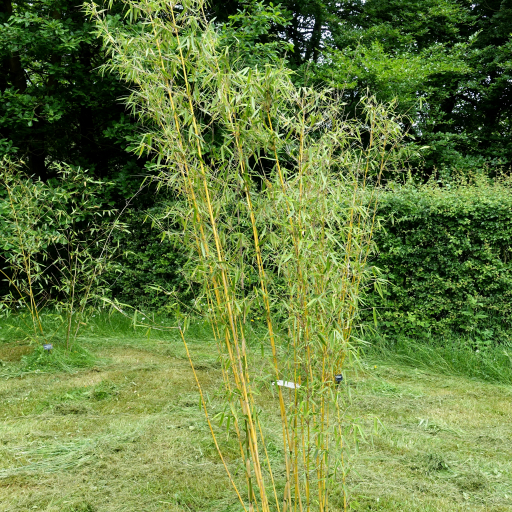
Plant Overview
Known as the "Campbell" bamboo, Fargesia robusta is the gardener’s dream for anyone seeking the beauty of bamboo without the "running" nightmare. Originating from the high-altitude forests of Sichuan, China, this elegant species is a staple diet for Giant Pandas and a top-tier choice for privacy screens. Unlike its cousins that take over the yard, this polite clumper stays exactly where you put it, growing in dense, upright pillars of emerald green.
🔍 How to Identify
- 🎋 Upright Culms: The canes are remarkably straight and stiff, reaching heights of 12 to 15 feet without drooping, which is rare for many clumping varieties.
- 🦓 Zebra Patterning: Young canes feature striking, persistent white culm sheaths that contrast against the dark green stems, creating a distinctive "checkerboard" or striped visual effect.
- 🍃 Glossy Foliage: The leaves are narrow, elongated, and have a deep, lustrous green shine that remains vibrant even through the colder months.
🏡 In Your Garden
- 🛡️ Natural Privacy Screen: Because it grows so densely and stays upright, it is the gold standard for narrow garden borders or "living walls" where space is limited but privacy is needed.
- ☀️ Sun Resilience: While most Fargesia species curl their leaves in the afternoon sun to protect themselves, the "Robusta" variety is much more heat-tolerant and can handle significantly more direct sunlight without looking stressed.
- 🧱 Non-Invasive Growth: It possesses a "pachymorph" rhizome system, meaning the roots grow in tight circles. You don't need to install expensive root barriers; just give it a few feet of breathing room.
⚠️ Safety & Toxicity
- ✅ Safe for All: Fargesia robusta is considered non-toxic to humans, dogs, cats, and horses.
- ✂️ Physical Safety: While not chemically toxic, the leaves have a high silica content and can be quite sharp. Use gloves when pruning to avoid "paper cuts" from the foliage or scratches from the woody canes.
✨ Fun Fact
In its native habitat in the Wolong Nature Reserve, Fargesia robusta is one of the most important food sources for the Giant Panda. Because this bamboo stays green and nutritious throughout the winter, it serves as a critical "survival snack" for pandas when other food sources become scarce.

Detailed Care Instructions

Place in a window with dappled sun or a spot in the middle of a room. Or directly in a window facing west or east.

Some plants require more regular watering than others, which should be done every few days. It's critical to maintain the soil moist all of the time. The water requirements of the same plant placed in pots with varying sizes will differ. Because the water in the smaller pot evaporates faster than the water in the larger pot, it will require more watering. Regardless of pot size, the surface should constantly be maintained moist.
These plant needs regular fertilizing during growing seasons. Fertilizing your plants in dormant state during the winter, might result in scorching or browning of the leaf tips. If mature plants display signs of nutrient insufficiency, fertilizer administration is necessary to restore the plant to its previous state.
You may use All Purpose Plant Food or Green Plant Food for your Clumping Bamboo
Common pests of the clumping bamboo include Thrips. Make a habit of checking your clumping bamboo frequently for pests so that any infestations can be caught and managed early.








