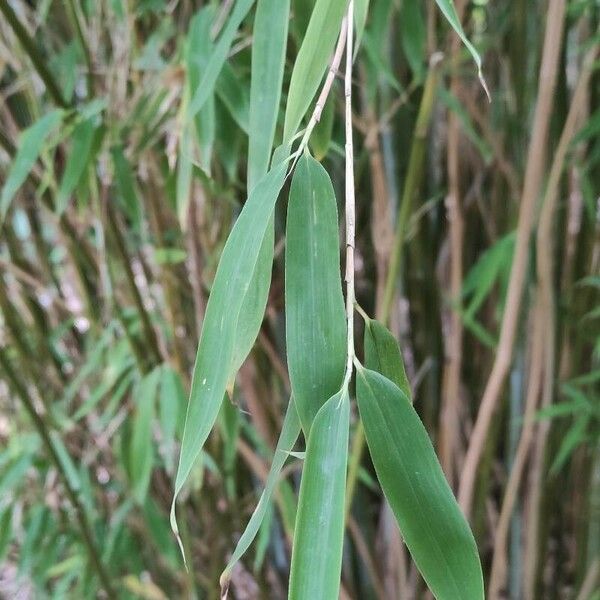
Plant Overview
Often called the Chinese Fountain Bamboo, Fargesia spathacea is the ultimate "polite" bamboo. Originating from the high-altitude mountain forests of China, it is famously known as one of the primary food sources for the Giant Panda. Its graceful, weeping canopy creates a serene, Zen-like atmosphere without the fear of it taking over your entire neighborhood.
🔍 How to Identify
- 🍃 Leaf Texture: It features narrow, lance-shaped leaves that are exceptionally soft and bright green, creating a dense, feathery "fountain" effect as they arch toward the ground.
- 🎋 Culm Sheaths: The young stems (culms) are often protected by pale, papery, or slightly purplish sheaths that provide a beautiful textural contrast before they eventually fall away.
- 🪴 Clumping Habit: Unlike "running" bamboos that spread via underground runners, this species grows in tight, predictable circles. It behaves more like a large ornamental grass than an invasive forest.
🏡 In Your Garden
- 🌬️ Wind Protection: While it is incredibly cold-hardy, its delicate leaves can "curl" or turn brown if exposed to harsh, drying winter winds. Planting it near a fence or wall provides the necessary shelter.
- 🌥️ Light Nuance: This plant is a forest-dweller at heart; it thrives in dappled shade or morning sun. In scorching afternoon heat, you might notice the leaves folding inward—this is the plant's clever way of reducing water loss.
- 💧 Thirsty Roots: Because it produces a massive amount of foliage, it is a heavy drinker. It prefers consistently moist, well-draining soil and will look "sad" or wilted quickly if allowed to dry out completely.
⚠️ Safety & Toxicity
- ✅ Safe Status: This plant is non-toxic to humans, dogs, and cats. It is a very safe and friendly choice for family gardens and high-traffic areas.
- 🧤 Physical Caution: While not chemically toxic, the stems can be quite rigid. Use caution and wear gardening gloves when pruning or thinning out older canes to avoid minor skin abrasions or "poke" injuries.
✨ Fun Fact
🐼 The Panda’s Choice: In the wild, Fargesia spathacea is a vital part of the Giant Panda's diet. If you plant this in your yard, you are growing the exact same "bamboo salad" that supports one of the world's most iconic and beloved endangered species!

Detailed Care Instructions
Growing Fargesia spathacea, also known as "Clumping Bamboo," can be a rewarding experience if you follow proper care and cultivation techniques. Here are steps to help you grow this beautiful and versatile bamboo species:
1. Select the Right Location:
- Climate: Fargesia spathacea is generally hardy in USDA zones 5-9. This means it can tolerate cold climates better than many other bamboo species.
- Light: This bamboo prefers partial to full shade. While it can tolerate some morning sun, too much direct sunlight can scorch the leaves.
2. Soil Requirements:
- Type: Well-draining soil is ideal. Rich, loamy soil with good organic content helps the plant thrive.
- pH Level: Slightly acidic to neutral soil (pH 6.0-7.0) is preferred.
- Preparation: Before planting, amend the soil with compost to improve its fertility and drainage.
3. Planting:
- Timing: Late spring or early fall is a good time to plant Fargesia spathacea.
- Spacing: Because it's a clumping bamboo, it doesn't spread aggressively. Plant individual clumps 3-5 feet apart to allow room for growth.
- Depth: Dig a hole twice as wide and just as deep as the root ball. Place the plant in the hole and backfill with soil, ensuring that the root ball is level with the surrounding ground.
4. Watering:
- Initial Watering: Water thoroughly after planting to settle the soil and eliminate air pockets.
- Regular Watering: Keep the soil consistently moist but not waterlogged. Water more frequently during the first few months to establish the roots.
- Mulching: Applying a layer of mulch around the base helps retain soil moisture and regulate temperature.
5. Fertilization:
- Apply a balanced, slow-release fertilizer in the spring. Avoid over-fertilizing, as an excess of nutrients can lead to weak growth.
- Compost and organic matter can also be used to enrich the soil.
6. Pruning and Maintenance:
- Pruning: Fargesia spathacea generally requires minimal pruning. Remove dead or damaged canes to maintain plant health and appearance.
- Control: Although clumping bamboo is not aggressive, you may want to trim it occasionally to maintain its shape.
7. Winter Care:
- Provide a layer of mulch around the base to protect roots during cold winters.
- In extremely cold regions, consider wrapping the plant in burlap to protect it from cold winds.
8. Pest and Disease Control:
- Fargesia spathacea is relatively pest and disease-resistant. However, monitor for any signs of pests like aphids or spider mites and treat them accordingly.
- Good air circulation and avoiding overwatering can minimize the risk of diseases.
9. Propagation:
- Division: The most common method is by dividing the root ball. Carefully dig up the plant, and using a sharp spade, divide it into smaller sections. Each division should have several shoots and a healthy root system.
- Timing for Propagation: Late spring or early fall is ideal for dividing and propagating bamboo.
By following these steps and providing appropriate care, you can successfully grow a healthy Fargesia spathacea bamboo plant that enhances your garden or landscape.

Place in a window with dappled sun or a spot in the middle of a room. Or directly in a window facing west or east.

Watering Fargesia spathacea requires a balanced approach to ensure the plant thrives. Here’s a detailed guide to help you:
### Soil Moisture:
- Consistent Moisture: This plant prefers consistently moist soil. Avoid letting the soil dry out completely between waterings.
- Drainage: Ensure the soil is well-draining to prevent waterlogging, which can lead to root rot. Amending the soil with organic matter can improve its drainage capabilities.
### Watering Schedule:
- Regular Checks: Check the soil moisture regularly, especially during hot or dry periods. Stick your finger about an inch into the soil; if it feels dry, it’s time to water.
- Seasonal Adjustments: Adjust the watering frequency according to the season. During the growing season (spring and summer), the plant may require more frequent watering. In cooler months, reduce watering but do not let the soil dry out entirely.
### Watering Technique:
- Deep Watering: Water deeply to encourage the roots to grow deeper into the soil. This can promote a more drought-resistant plant.
- Avoid Wet Foliage: Water at the base of the plant and avoid overhead watering to minimize the risk of fungal diseases on the leaves.
### Container Plants:
- In Pots: If grown in containers, the plant may dry out more quickly than those in the ground. Check container plants more frequently and ensure the pot has good drainage holes.
- Winter Care: During winter, if the plant is kept indoors, reduce watering but ensure the soil does not become completely dry.
### Mulching:
- Mulch Layer: Applying a layer of mulch around the plant helps retain soil moisture and regulate soil temperature. Organic materials like shredded bark or compost work well for this purpose.
### Environmental Factors:
- Sun and Shade: Ensure the plant receives adequate light but is not exposed to harsh, direct sunlight for prolonged periods, which can dry out the soil faster. A spot with filtered sunlight or partial shade is ideal.
By following these guidelines, you can maintain an appropriate moisture level for your Fargesia spathacea, ensuring a healthy and thriving plant.
Here are the fertilizing instructions for Fargesia spathacea:
- Soil Preparation: Before you plant, mix well-rotted compost or organic matter into the planting area to improve soil structure and fertility.
- Initial Fertilization: Add a balanced, slow-release granular fertilizer at the time of planting. Look for one with an N-P-K ratio such as 10-10-10 or 14-14-14.
- Spring Feeding: Apply a balanced, slow-release fertilizer in early spring as new growth begins. Follow the manufacturer's instructions for the correct dosage, typically based on the size and age of the plant.
- Mid-Season Boost: Depending on the growth and soil conditions, you may apply a second dose of balanced fertilizer in mid-summer. This helps sustain growth through the growing season.
- Organic Options: You may also opt for organic fertilizers such as composted manure, fish emulsion, or seaweed extract. These can be applied more frequently, such as once a month during the growing season.
- Watering After Fertilization: Water thoroughly after applying fertilizer to help it soak into the soil and reach the root zone.
- Avoid Over-Fertilizing: Excessive fertilization, especially with high-nitrogen products, can lead to overgrowth and may weak, leggy plants. Always adhere to recommended application rates.
- Mulching: Apply a layer of organic mulch around the base of the plant. This will help retain moisture and slowly release nutrients into the soil as it decomposes.
- Monitor Growth: Keep an eye on your plants. If the foliage shows signs of nutrient deficiency (such as yellowing leaves), consider a soil test to diagnose specific nutrient needs.
- Winter Care: Generally, you don't need to fertilize in the winter, as the plant will be in a dormant or semi-dormant state. Fertilization should resume in the spring.
By following these instructions, you can promote healthy growth and development for your Fargesia spathacea.
Fargesia spathacea, a type of bamboo, thrives best in well-draining, fertile soil that retains moisture without becoming waterlogged. Here are the key soil considerations for optimal growth:
- Soil Composition: A mix of loamy soil, which consists of sand, silt, and clay, is ideal. This type of soil provides good drainage while retaining sufficient moisture and nutrients.
- pH Level: Slightly acidic to neutral soil with a pH range of 6.0 to 7.0 is preferable. This range helps ensure that essential nutrients are available to the plant.
- Organic Matter: Incorporating organic matter such as compost or well-rotted manure can significantly improve soil fertility and structure. Organic matter helps retain moisture and provides essential nutrients.
- Drainage: Ensure the planting site has good drainage to prevent water from pooling around the roots, which can lead to root rot. If natural drainage is a concern, consider raising the planting area or using raised beds.
- Mulching: Applying a layer of mulch around the base of the plant helps maintain consistent soil moisture, suppresses weeds, and adds organic matter to the soil as it decomposes. Use organic mulches like bark chips, straw, or shredded leaves.
- Soil Preparation: Before planting, thoroughly till the soil to break up any compacted areas and mix in compost or other organic material to enhance soil structure and nutrient content.
By adhering to these soil guidelines, Fargesia spathacea can develop strong roots and lush foliage, contributing to its overall health and resilience.
Propagating Fargesia spathacea, a type of clumping bamboo, can be achieved primarily through division since bamboo rarely flowers and produces seeds. Here is a detailed guide on how to propagate this plant:
Time to Propagate
- The best time to propagate is in early spring or late fall when the plant is actively growing.
Materials Needed
- Sharp spade or pruners
- Gardening gloves
- Watering can or hose
- Pots or new planting site
- Rich, well-draining soil or compost
Steps for Propagation by Division
- Prepare the New Site: If you are planting the divisions directly into the ground, prepare the new planting site with rich, well-draining soil. If using pots, choose containers with adequate drainage holes and fill them with suitable soil.
- Watering: Thoroughly water the area around the plant you are going to divide. This helps to soften the soil and makes it easier to separate the rhizomes.
- Digging Up the Plant: Carefully dig around the plant clump to expose the rhizomes. Take care not to damage the roots too much.
- Dividing the Rhizomes: Using a sharp spade or pruners, divide the plant into sections. Each section should have at least 2-3 culms (stems) and a healthy amount of roots and rhizomes.
- Replanting: Immediately replant the divisions into the prepared site or pots. Ensure that the root-ball is covered adequately with soil and that the plant is positioned at the same depth as it was originally.
- Watering: Water the divisions thoroughly to help settle the soil and eliminate air pockets around the roots.
- Mulching (Optional): Apply a layer of mulch around the base of the plant to help retain moisture and regulate soil temperature.
Aftercare
- Watering: Keep the soil consistently moist but not waterlogged, especially during the initial few weeks as the plant establishes itself.
- Shading: If the new divisions are exposed to harsh sunlight, provide some shade initially to reduce stress.
- Fertilizing: Once new growth is observed, you can start feeding with a balanced fertilizer to encourage robust growth.
By following these detailed steps, you can successfully propagate Fargesia spathacea and enjoy its elegant foliage for years to come.








