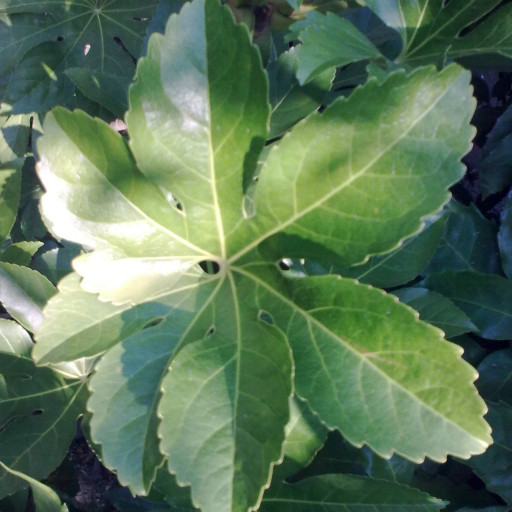
Plant Overview
Commonly known as the Japanese Aralia or the Paper Plant, this architectural beauty is a favorite for bringing a lush, "urban jungle" feel to the shadiest corners of a home or garden. Originating from the coastal woodlands of Japan and South Korea, it has earned a reputation for being nearly indestructible. In Victorian England, it was a prized "parlor plant" because it was one of the few species that could survive the dim light and coal smoke of 19th-century houses.
🔍 How to Identify
- 🍃 Lush Foliage: Features massive, glossy green leaves that are "palmate" (shaped like an open hand) with 7 to 9 deeply cut lobes.
- 📏 Architectural Form: It grows as a sturdy, multi-stemmed shrub. In a pot, it stays a manageable size, but outdoors, it can reach over 8 feet tall.
- ❄️ Winter Blooms: In late autumn, it produces exotic, creamy-white flower clusters that look like tiny pom-poms, followed by small, round black berries.
🏡 In Your Garden
- 🌑 Shade Specialist: Unlike most tropical-looking plants, Fatsia thrives in deep shade. Direct afternoon sun will actually "bleach" or scorch the leaves, so it is perfect for north-facing rooms or dark garden nooks.
- 🌬️ Cool & Hardy: It prefers cooler temperatures and higher humidity. If you see the leaf edges turning brown and crispy, it’s likely a sign of dry indoor air rather than a lack of water.
- 🪴 Feeding Nuance: It is a heavy feeder during the spring and summer. To keep those leaves looking deep green and waxy, provide a balanced liquid fertilizer once a month during the growing season.
⚠️ Safety & Toxicity
- ✅ Pet Friendly: Good news for pet owners! Fatsia japonica is generally considered non-toxic to cats and dogs, making it a safe alternative to the similar-looking (but toxic) Philodendron.
- 🧴 Sap Irritation: While not poisonous, the milky sap can cause mild skin irritation or a "contact rash" in some people. It is best to wear gloves when pruning the stems.
✨ Fun Fact
The name "Fatsia" is a Latinization of the old Japanese word fatsi, which means "eight." This refers to the eight lobes typically found on its iconic, hand-shaped leaves!

Detailed Care Instructions
Yes, Fatsia spider web plants are known to be hardy, evergreen shrubs. When given the right conditions, they can be grown both indoors and outdoors, and do not often have many problems.
How do you prune Fatsia spider web?
It is best to prune in the late spring. To do this, simply cut away any damaged leaves or stems. Feel free to reduce the size of the plant as well. This will keep the plant manageable as well as encourage it to grow bushier.
Can Fatsia spider web be grown indoors?
Yes, Fatsia spider web is a popular evergreen shrub to add to houseplant collections. Its hardy nature allows it to be grown both indoors and outdoors.
To grow a Fatsia Japonica plant, also known as Japanese aralia, follow these steps:
- Choose a suitable planting location: Fatsia Japonica prefers partial shade or filtered sunlight. It can tolerate full shade, but avoid placing it in direct sunlight as it may scorch the leaves. Ensure the location has well-draining soil.
- Propagation: Fatsia Japonica can be propagated by seed or stem cuttings. If using seeds, sow them in a seed tray or pots filled with a well-draining planting mix. Cover the seeds lightly with soil and keep them consistently moist until they germinate. For stem cuttings, take a 6-inch cutting from a healthy plant and plant it in a pot filled with moist potting soil. Keep the soil moist until the cutting roots.
- Planting: When the Fatsia Japonica seedlings or cuttings are ready to be transplanted, choose a pot or planting location with enough space to accommodate the mature plant. Dig a hole in the soil large enough to fit the root ball of the plant. Place the plant in the hole, ensuring it is at the same depth as it was in the previous container. Backfill the hole with soil and gently firm it around the plant.
- Watering: Fatsia Japonica prefers consistently moist soil, but avoid overwatering, as it can lead to root rot. Water the plant deeply whenever the top inch of soil feels dry. Reduce watering during the winter months.
- Fertilization: Apply a balanced, slow-release fertilizer in early spring and again in early summer to provide nutrients. Follow the package instructions for the recommended amount to use.
- Pruning: Regular pruning is not necessary for Fatsia Japonica, but you can remove any dead or damaged leaves or branches. This will help maintain the appearance and health of the plant.
- Overwintering: Fatsia Japonica is hardy in USDA zones 8-11. If you live in a colder climate, consider growing it in a container and bringing it indoors for winter. Place it in a cool, bright location with indirect sunlight and reduce watering.
By following these steps and providing the proper care, your Fatsia Japonica plant should grow healthily and thrive.

Place in a window with dappled sun or a spot in the middle of a room. Or directly in a window facing west or east.

To water this plant, it is important to first check the soil moisture level with a moisture meter or by sticking your finger about an inch into the soil. If the soil feels dry, it is time to water.
When watering, use room temperature water and apply it to the soil, rather than directly on the leaves. Water until the soil is damp but not waterlogged.
It is also important to ensure proper drainage by using a pot with drainage holes and not letting the plant sit in standing water.
During the growing season, typically spring and summer, water more frequently. In the winter, allow the soil to dry out a bit before watering again.
Overall, it is important to water consistently and avoid over or under watering to ensure the plant's health and growth.
To fertilize this plant, you should use a balanced fertilizer with equal amounts of nitrogen, phosphorous, and potassium. Apply the fertilizer at half strength every two weeks during the growing season, which is typically from spring to fall. Avoid fertilizing during the dormant season in winter. Be sure to water the plant thoroughly before and after fertilizing to prevent fertilizer burn. Also, avoid getting the fertilizer on the foliage or stem of the plant, as it can be harmful.
The optimal soil for the plant should be well-draining and rich in organic matter. A pH level of 5.5-7.0 is preferred. The soil should have good moisture retention, but not be water-logged as the species is susceptible to root rot. It is recommended to avoid sandy soils and soils with high levels of salts or alkalinity. Adding compost or other organic matter to the soil can improve its structure and nutrient content. The plant should be planted at the same depth it was in its original container, with the soil gently firmed around the root ball.
Fatsia Japonica can be propagated through stem cuttings or by division.
To propagate through stem cuttings, select a healthy stem that is at least 4 inches long and has a few leaves. Remove the leaves from the lower half of the stem and dip the cut end in rooting hormone. Plant the stem in moist potting mix and keep it in a warm, humid environment until it roots.
To propagate through division, dig up the plant and carefully separate the root ball into smaller sections. Each section should have healthy roots and stems. Plant these sections in a new location or in separate pots with fresh potting mix.
Both methods of propagation should be done during the plant's active growing season.
Common pests of the japanese fatsia include Scale insect, mealybugs, spider mites, thrips. Make a habit of checking your japanese fatsia frequently for pests so that any infestations can be caught and managed early.








