Plant Overview
Meet the small but fierce-looking Faucaria bosscheana, a succulent that brings a bit of "bite" to your windowsill! Often called the "Tiger Jaws," this South African native mimics the jagged maw of a predator to deter thirsty animals in the wild. Despite its aggressive appearance, it is a docile, slow-growing gem that rewards keepers with stunning, oversized golden blooms when the seasons change.
🔍 How to Identify
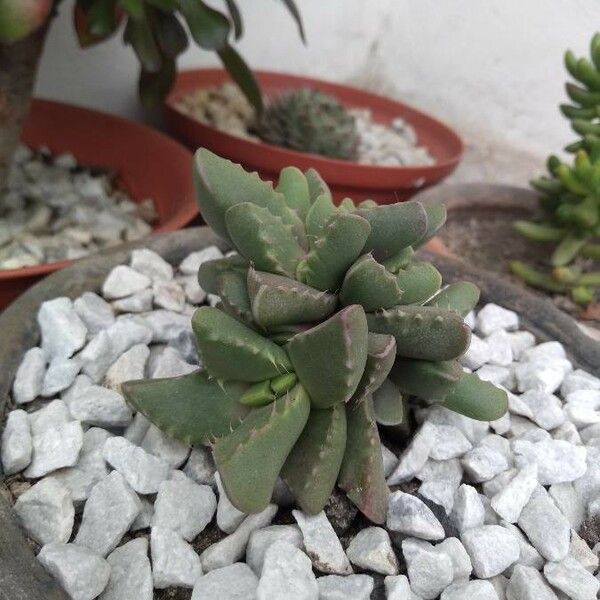
- 🦷 The "Jaws": Its hallmark feature is the pair of thick, boat-shaped leaves that grow in a cross-pattern, edged with soft, white, tooth-like spikes that look like a miniature shark's mouth.
- 🎨 Leaf Texture: Unlike some of its fleshier cousins, F. bosscheana has narrower, smoother leaves with a waxy, grey-green finish that may turn reddish-purple when exposed to bright sun.
- ☀️ The Bloom: It produces silky, bright yellow daisy-like flowers. These blooms are famous for their "clock-watching" behavior—they typically open in the mid-afternoon and close tightly by dusk.
🏡 In Your Garden
- 🏜️ Sun Worshipper: This plant needs "hard" light to maintain its compact, toothy shape. If kept in a dim corner, the "jaws" will stretch out (etiolate), making the plant look weak and losing its fierce aesthetic.
- 💧 The Wrinkle Test: Faucaria is highly susceptible to root rot if overwatered. Instead of following a calendar, wait until the leaves feel slightly soft or show tiny wrinkles before giving it a deep soak.
- 🪨 Rocky Roots: In the wild, these plants tuck themselves into limestone crevices. At home, they thrive best in a very gritty, mineral-heavy substrate rather than standard organic potting soil.
⚠️ Safety & Toxicity
- ✅ Pet & Child Safe: Faucaria bosscheana is generally considered non-toxic to cats, dogs, and humans, making it a "bitey" plant that won't actually bite back.
- 🌵 Tactile Warning: While the "teeth" look sharp and intimidating, they are actually quite soft and flexible to the touch. However, avoid handling the leaves too frequently, as the natural oils from your skin can smudge the protective waxy coating on the plant.
✨ Fun Fact
The "teeth" on the edges of the leaves aren't just for defense; they act as a sophisticated irrigation system! In its arid South African home, these spikes help trap moisture from heavy mists and fog, funneling droplets down toward the base of the plant to keep the roots hydrated.

Detailed Care Instructions
| Humidity | High |
| Difficulty | Medium |
| Hibernation | Cold Period |
| Temperature | 26°C - 32°C |
| Hardiness Zones | 9B - 11 |
To grow Faucaria Bosscheana, also known as tiger jaws plant, you can follow these steps:
- Choose a suitable location: Faucaria Bosscheana thrives in bright sunlight, so choose a location that receives at least 4-6 hours of direct sunlight per day. It can also be grown indoors near a sunny window.
- Prepare the soil: Use well-draining soil that consists of a mixture of potting soil, sand, and perlite or pumice. This will prevent the plant from sitting in water, which can cause root rot.
- Planting: Fill a pot with the well-draining soil mixture. Gently place the Faucaria Bosscheana plant in the pot, ensuring that the roots are completely covered and the plant is upright. Press the soil gently around the plant to secure it.
- Watering: Allow the soil to dry out between waterings. Overwatering can cause the plant to rot. Depending on the temperature and humidity, water the plant every 7-10 days during the growing season (spring to fall). Reduce watering frequency during the winter when the plant goes dormant.
- Fertilizing: Fertilize the plant once a month with a balanced, water-soluble fertilizer during the growing season. Follow the instructions on the fertilizer package for the correct dilution ratio.
- Pruning: Prune the plant to maintain its shape and remove any dead or withered leaves. Use clean pruning shears to avoid spreading diseases.
- Propagation: Faucaria Bosscheana can be propagated through seeds or division. To propagate by division, gently remove the plant from its pot and separate the offshoots that have formed. Allow the offsets to dry out for a day or two before planting them in pots.
- Pests and diseases: Watch out for mealybugs and spider mites, which can occasionally infest the plant. Treat any pests promptly with an appropriate insecticidal soap or a horticultural oil spray.
By following these guidelines, you can successfully grow Faucaria Bosscheana and enjoy its unique, tiger-like appearance. Remember to research and understand the specific needs of this plant for optimal care and growth.

Place in a bright room that is sun drenched almost all day. Or directly in a south-facing window.

To water this succulent plant, it is necessary to ensure that the soil is completely dry before watering it again. Overwatering can cause root rot and damage the plant. Water the plant sparingly, once every two weeks, during the growing season. During the dormant period, water every four to six weeks. Be sure to water the soil directly and avoid getting water on the leaves or stems, which can cause them to rot. It is important to use well-draining soil and a pot with drainage holes to prevent water from collecting and causing damage to the plant. If the soil is dry to the touch, water the plant slowly and thoroughly until the soil is moist. Allow excess water to drain away before returning the plant to its regular location.
To fertilize this plant, use a balanced fertilizer with an equal ratio of nitrogen, phosphorus, and potassium. Dilute the fertilizer to half-strength and apply every two weeks during the plant's active growing season. Do not fertilize during periods of dormancy or stress. Water the plant thoroughly before and after fertilizing to avoid fertilizer burn.
The ideal soil for the plant in question is a well-draining, sandy soil mixture with good aeration. The soil should be free of any contaminants or chemical residues that may harm the plant. Organic amendments such as compost, peat moss or perlite may be added to improve soil quality and drainage. Additionally, a slightly acidic to neutral pH range of 6.0 to 7.0 is suitable for the plant's growth and development. It is important to avoid compacted or heavy soils as this may lead to root rot and other issues.
Propagation of this plant can be done by carefully removing offsets from the mother plant. These offsets should be allowed to callus for a few days before being planted in a well-draining soil mixture. They should be watered sparingly until established and kept in a bright location out of direct sunlight.
Common pests of the tiger jaws include Scale insect, mealybugs, thrips. Make a habit of checking your tiger jaws frequently for pests so that any infestations can be caught and managed early.








