Plant Overview
Known as the "Willow-leaved Faujasia," this rare island beauty hails exclusively from the volcanic slopes of Réunion Island in the Indian Ocean. Despite its delicate, willow-like foliage, it is a rugged survivor, perfectly adapted to the harsh winds and rocky terrains of high-altitude scrublands. It offers a unique tropical flair, blending the graceful structure of a willow with the cheerful blooms of the daisy family.
🔍 How to Identify
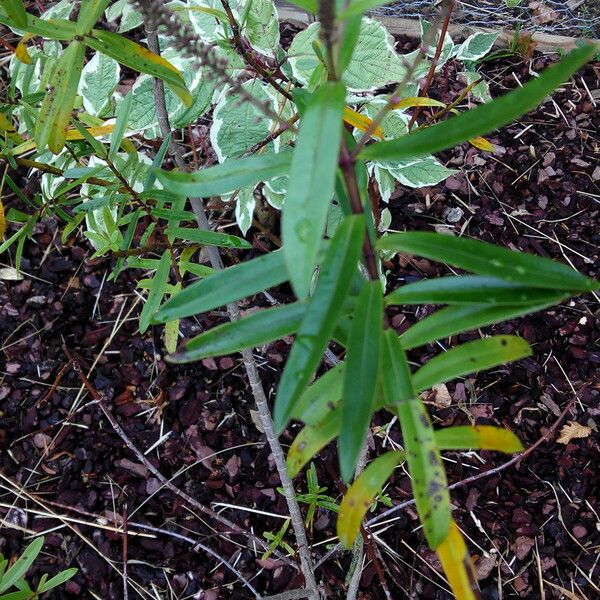
- 🍃 Willow-Like Foliage: The species name salicifolia literally translates to "willow-leaved," referencing its long, slender, and lance-shaped leaves that drape elegantly from the stems.
- 🌼 Golden Bloom Clusters: It produces small, bright yellow flowers that gather in dense clusters at the tips of the branches, revealing its botanical relationship to sunflowers and daisies.
- 🪵 Woody Architecture: Unlike many common garden perennials, this species develops a sturdy, woody trunk and a branching habit, often taking the shape of a sculptural miniature tree or large shrub.
🏡 In Your Garden
- 🌋 Volcanic Roots: In its native habitat, it thrives in porous, well-drained volcanic soil. If you are growing it in a pot, prioritize "airy" mixes with plenty of perlite or grit to mimic the drainage of a mountain slope.
- ☀️ Sun & Wind Resilience: Adapted to the intense light of high-altitude islands, it craves a bright, sunny spot. Because it evolved on windy cliffs, it is surprisingly sturdy and can handle breezy balconies that would tatter softer-leaved plants.
⚠️ Safety & Toxicity
- ✅ Generally Safe: There is no significant record of Faujasia salicifolia being highly toxic to humans or animals.
- 🌿 Sensitivity Warning: As a member of the Asteraceae family, it contains compounds that may cause mild skin irritation or "daisy dermatitis" in particularly sensitive individuals or pets with allergies to ragweed or marigolds.
✨ Fun Fact
This plant is a true "endemic" treasure, meaning that in the wild, it is found absolutely nowhere else on Earth except for the island of Réunion. It is a specialist of the Piton de la Fournaise, one of the world's most active volcanoes!

Detailed Care Instructions

Place in a window with dappled sun or a spot in the middle of a room. Or directly in a window facing west or east.

Some plants require more regular watering than others, which should be done every few days. It's critical to maintain the soil moist all of the time. The water requirements of the same plant placed in pots with varying sizes will differ. Because the water in the smaller pot evaporates faster than the water in the larger pot, it will require more watering. Regardless of pot size, the surface should constantly be maintained moist.








